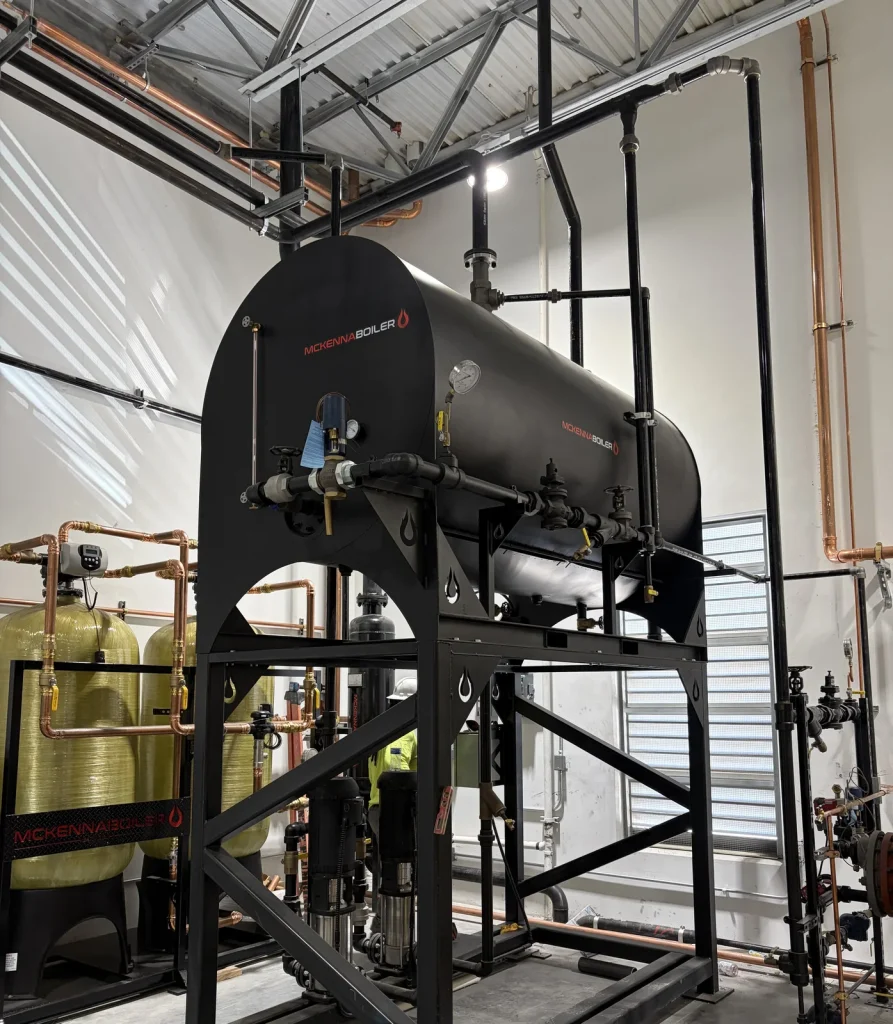

A low NOx steam boiler keeps nitrogen oxide emissions under the limit your air district sets. It does this mostly by keeping the flame cooler, with flue gas recirculation or premix and staged burners, or by cleaning the flue gas afterward with selective catalytic reduction. McKenna Boiler Works, Inc. builds firetube, firebox, and vertical steam boilers with a burner matched to the boiler and the emissions limit, and McKenna retrofits burners on boilers already in service.
Where does NOx come from in a gas-fired boiler?
Most of the NOx from a natural gas burner is thermal NOx. Nitrogen and oxygen from the combustion air combine in the hottest part of the flame, and the formation rate climbs steeply as peak flame temperature rises. Two other sources matter less. Prompt NOx forms at the flame front from fuel fragments reacting with nitrogen, and it becomes a meaningful share only at ultra-low levels. Fuel NOx comes from nitrogen bound in the fuel, which is negligible in natural gas and can be significant in heavier fuel oils.
So the levers are peak flame temperature, how much oxygen is available in the hottest zone, and how long the gases stay there. Every low NOx design works on one or more of those.
NOx limits are written in parts per million by volume, dry, corrected to 3% O2. The correction keeps a burner from meeting a limit by diluting the flue gas with extra air. The formula is: corrected ppm = measured ppm × (20.9 − 3) ÷ (20.9 − measured O2). A burner reading 8 ppm at 6% O2 is about 9.6 ppm corrected, which can be the difference between passing and failing a 9 ppm limit.
How do low NOx burners cut emissions?
The first three methods below lower NOx at the flame. SCR removes NOx from the flue gas after combustion.
| Method | How it works | Trade-offs |
|---|---|---|
| Flue gas recirculation (FGR) | Returns part of the flue gas to the combustion air. The inert gas absorbs heat and lowers peak flame temperature. | Larger fan and more fan power. Too much FGR makes the flame unstable and can limit turndown. |
| Lean premix | Mixes gas and air before ignition, with extra air, so the flame burns at a lower, more even temperature. | Runs at higher excess air, which raises stack loss. Needs tight fuel-air control across the firing range. |
| Staged fuel or staged air | Introduces fuel or air in steps so no zone burns at full intensity. | Longer flame. The furnace has to be long and wide enough. |
| Selective catalytic reduction (SCR) | Injects ammonia or urea ahead of a catalyst, which converts NOx to nitrogen and water vapor. | Works only in a set flue gas temperature window. Adds reagent storage, catalyst replacement, and a limit on ammonia slip. |
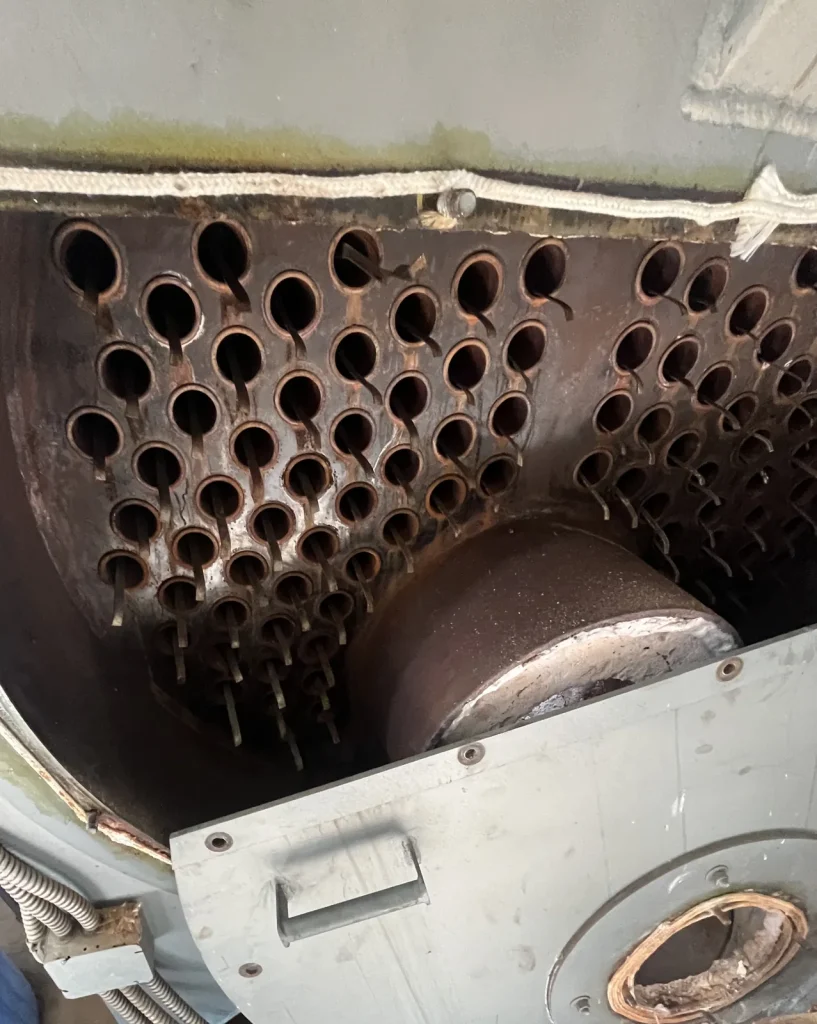
The furnace matters as much as the burner. If the flame is longer or wider than the furnace, it touches the furnace wall, CO rises, and the metal runs hot. That is why a burner has to be matched to the boiler’s furnace diameter and length as well as its firing rate.
What NOx limit applies to my boiler in California?
Your air district and your boiler’s rated heat input in MMBtu/hr set the limit. The main rules for boilers, steam generators, and process heaters are:
| Air district | Rule | Size covered |
|---|---|---|
| South Coast AQMD | Rule 1146 | 5 MMBtu/hr and larger |
| South Coast AQMD | Rule 1146.1 | Larger than 2 and smaller than 5 MMBtu/hr |
| South Coast AQMD | Rule 1146.2 | 2 MMBtu/hr and smaller. 2024 amendments phase in zero-emission NOx standards for new and replacement units, with compliance dates from 2026 through 2033. |
| San Joaquin Valley APCD | Rules 4306 and 4320 | Larger than 5 MMBtu/hr. Rule 4320 sets lower limits than 4306, or an annual emissions fee in place of meeting them. |
| San Joaquin Valley APCD | Rule 4307 | 2 to 5 MMBtu/hr |
| Bay Area AQMD | Regulation 9, Rule 7 | Larger than 2 MMBtu/hr |
In South Coast, most units under Rules 1146 and 1146.1 face limits in the single digits of ppm, and South Coast has been amending these rules, so check the current rule text before you buy. Other districts have their own rules, so check with yours. Permits also set CO limits, periodic checks with a portable analyzer, and source tests on a schedule written into the permit. Above the district’s permit exemption size, a new boiler or a burner replacement needs an air district permit before it is installed, and an initial source test or emissions check to show it meets the limit. The air permit is separate from the Cal/OSHA permit to operate.
Should I retrofit the burner or replace the boiler?
A burner retrofit makes sense when the pressure vessel is sound, the boiler still fits the load, and the furnace is large enough for an ultra-low NOx flame. Before committing to a new burner, check the furnace dimensions against the burner maker’s flame dimensions, the gas supply pressure the new burner needs, the electrical service for a larger fan motor, and the controls. Many older boilers run single-point linkage, and most ultra-low NOx burners need parallel positioning, and many need O2 trim, to hold their emissions across the range.
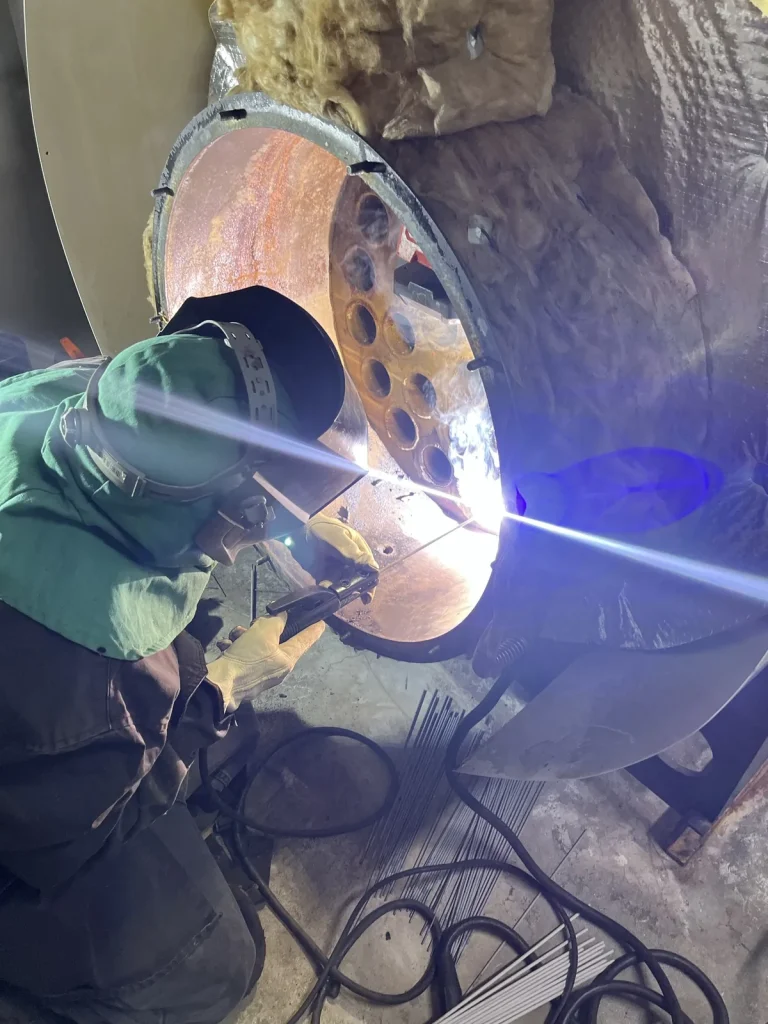
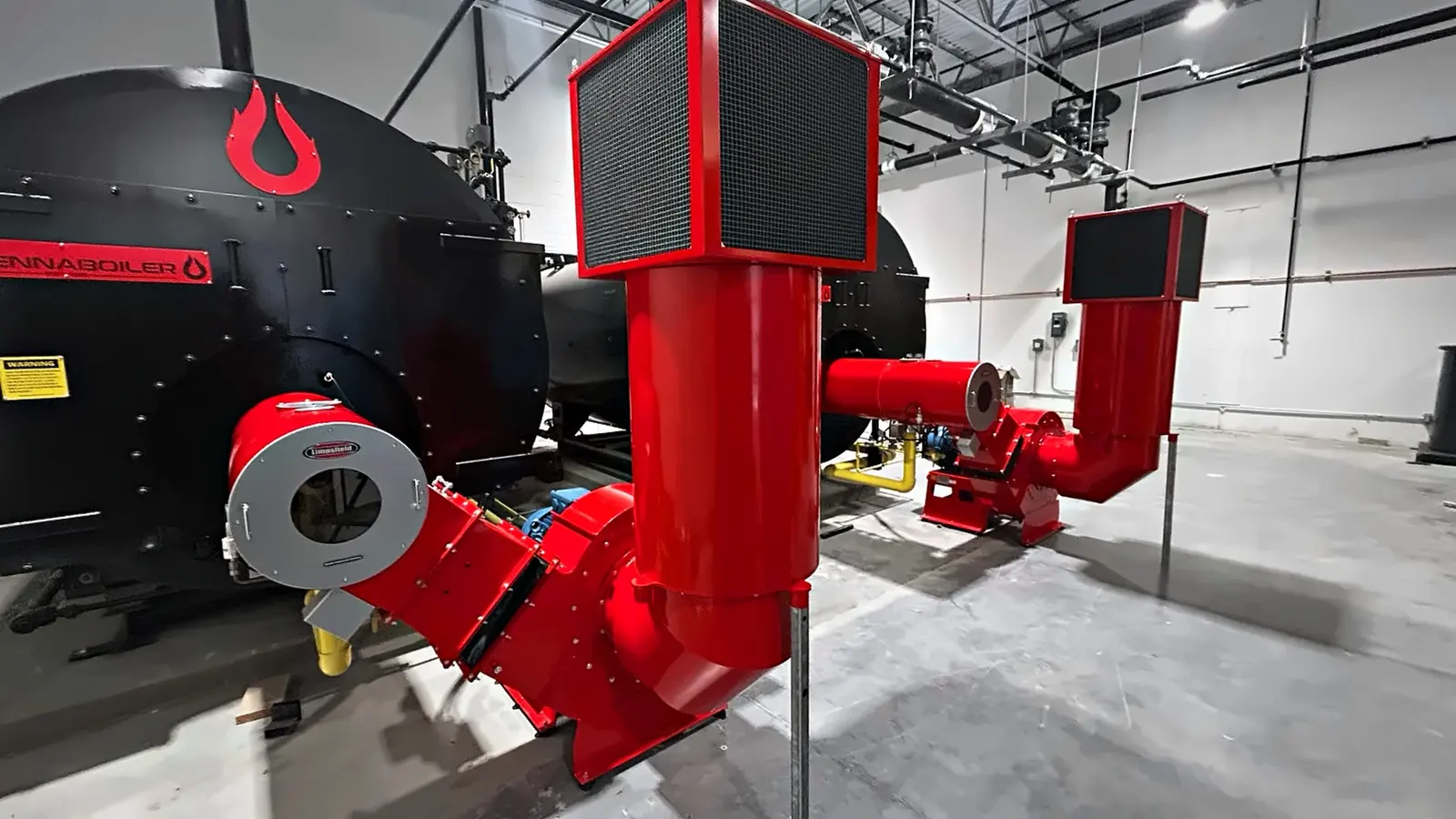
Replacement makes more sense when the shell, tubesheets, or furnace are worn, the load has changed, or the retrofit plus repairs comes close to the cost of a new boiler. New McKenna boilers come with Autoflame controls as a standard option and a burner matched to the boiler and the emissions limit. McKenna installs, sets up, and tunes burners and controls from any manufacturer, including a brand an engineer has already specified. Limpsfield, Autoflame, and Power Flame are what McKenna can recommend, but they are not the only options.
Expect some trade-off. Ultra-low NOx burners often run more excess air and less turndown than the burner they replace. Ask for numbers in writing before you buy.
What to check before you buy or retrofit
- Find the rated heat input on the boiler and burner nameplates, and confirm which district rule applies.
- Read your current permit: the NOx and CO limits, the monitoring schedule, and the next source test date.
- Ask for guaranteed NOx and CO, corrected to 3% O2, at low, middle, and high fire, plus the O2 at each point and the turndown ratio.
- Confirm gas pressure at the burner at full fire, the fan motor size, and the control system the burner needs.
- Log analyzer readings (O2, CO, NOx, stack temperature) after each tune-up and compare them over time. Drift is a warning.
- Do not change fuel-air settings on a permitted burner yourself. A wrong setting can put the boiler out of compliance and produce CO. Follow the manufacturer’s instructions, lockout/tagout, and your site’s procedures for burner work.
- Schedule combustion tuning ahead of a planned source test so there is time to correct drift.
Common questions
What does “corrected to 3% O2” mean?
It converts the measured NOx to what it would be at 3% oxygen in the flue gas. Without the correction, a burner could dilute its exhaust with extra air and read lower. The California air district rules in the table above state their ppm limits corrected to 3% O2.
Do ultra-low NOx burners use more fuel?
Often a little, because many run at higher excess air, and heating that extra air raises stack loss. The size of the penalty depends on the burner and how well it is tuned. Ask the supplier for O2 and efficiency at each firing rate.
Can my existing boiler meet a lower NOx limit?
Often it can with an ultra-low NOx burner retrofit, if the furnace is large enough and the pressure vessel is in good condition. McKenna Boiler Works, Inc. checks the furnace, gas supply, electrical service, and controls before recommending a retrofit or a new boiler.
Does a rental boiler need an air permit?
Yes, where the district requires one for its size. Some McKenna Boiler Works, Inc. rental boilers carry South Coast AQMD permits. Elsewhere, check the local rules before the rental arrives.
Who holds the air permit?
The owner or operator of the boiler holds the permit and is responsible for meeting its conditions. The burner and boiler supplier provides the emissions data and guarantees the application needs.
To compare a burner retrofit with a new boiler for your district’s limit, see ultra-low NOx burner retrofits or call (323) 987-1816. A live person answers 24/7.