
Retube a firetube boiler when the shell, tubesheets, and furnace are sound and the boiler still fits the load and can meet its emissions limit. Replace it when the pressure vessel itself is worn, the load has changed, or a retube plus the burner work needed to meet current NOx rules costs close to a new boiler. On an inspection, McKenna Boiler Works, Inc. gives you two numbers, the cost to repair and upgrade the boiler you have and the cost of a new McKenna boiler.
How do you know the tubes are failing?
Tubes are the thinnest pressure parts in a firetube boiler and usually the first to go. Watch for these signs:
- Leaks at the tube ends. Weeping at the tubesheet, wet soot, or water at the tube ends or in the furnace after a shutdown.
- Tube failures in service. A split or ruptured tube forces a shutdown.
- Pitting. Oxygen pitting on the water side, from dissolved oxygen in the feedwater or poor layup while the boiler sits idle.
- Scale. Scale insulates the tube, so the metal runs hotter than it should. It also shows up as a rising stack temperature.
- Thinning on ultrasonic testing (UT). Thickness readings that approach or fall below what the inspector will accept.
One failed tube does not mean every tube is bad. A pattern of failures, or thinning across many tubes on UT, usually does.
Common causes of tube failure include scale or sludge that insulates the tube so the metal overheats, oil or grease in the boiler water, oxygen pitting from dissolved oxygen, low water, cold water added to a warm boiler, fast warm-ups and short cycling, and electrolysis (galvanic corrosion). Follow the water quality guidelines in your boiler manufacturer’s manual, and work with your water treatment company to build a program around them. McKenna is not a water treatment company. Your water treatment company should be on site during the inspection to check and monitor the water side. Fix the cause first, or new tubes will fail the same way.
What does a retube involve?
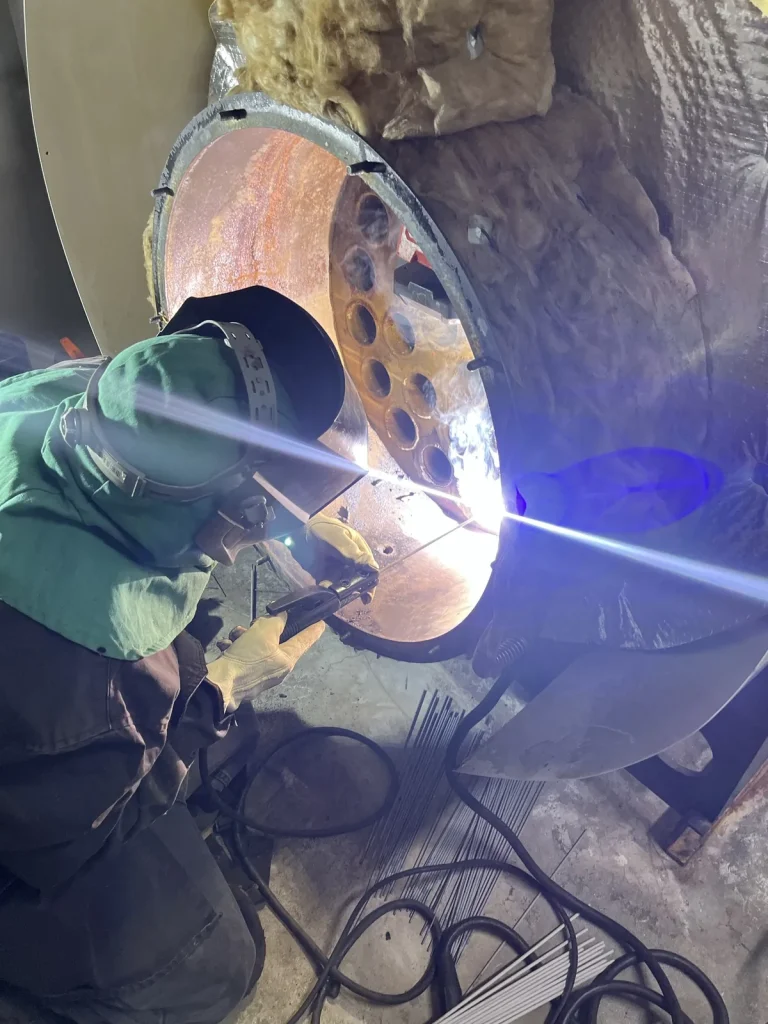
A retube replaces all of the fire tubes in the boiler. In most cases, replacing rolled and beaded tubes is not an R stamp repair; confirm with your Authorized Inspector. When the tubes are seal welded or the work involves welding on the tubesheet, it is an R stamp repair under NBIC Part 3, made by a National Board R certificate holder and documented on Form R-1. The basic sequence:
- Shut down, cool, drain, and open the boiler. Open the front and rear doors and pull the burner if needed.
- Remove the old tubes. Cut them, collapse the ends, and pull them out.
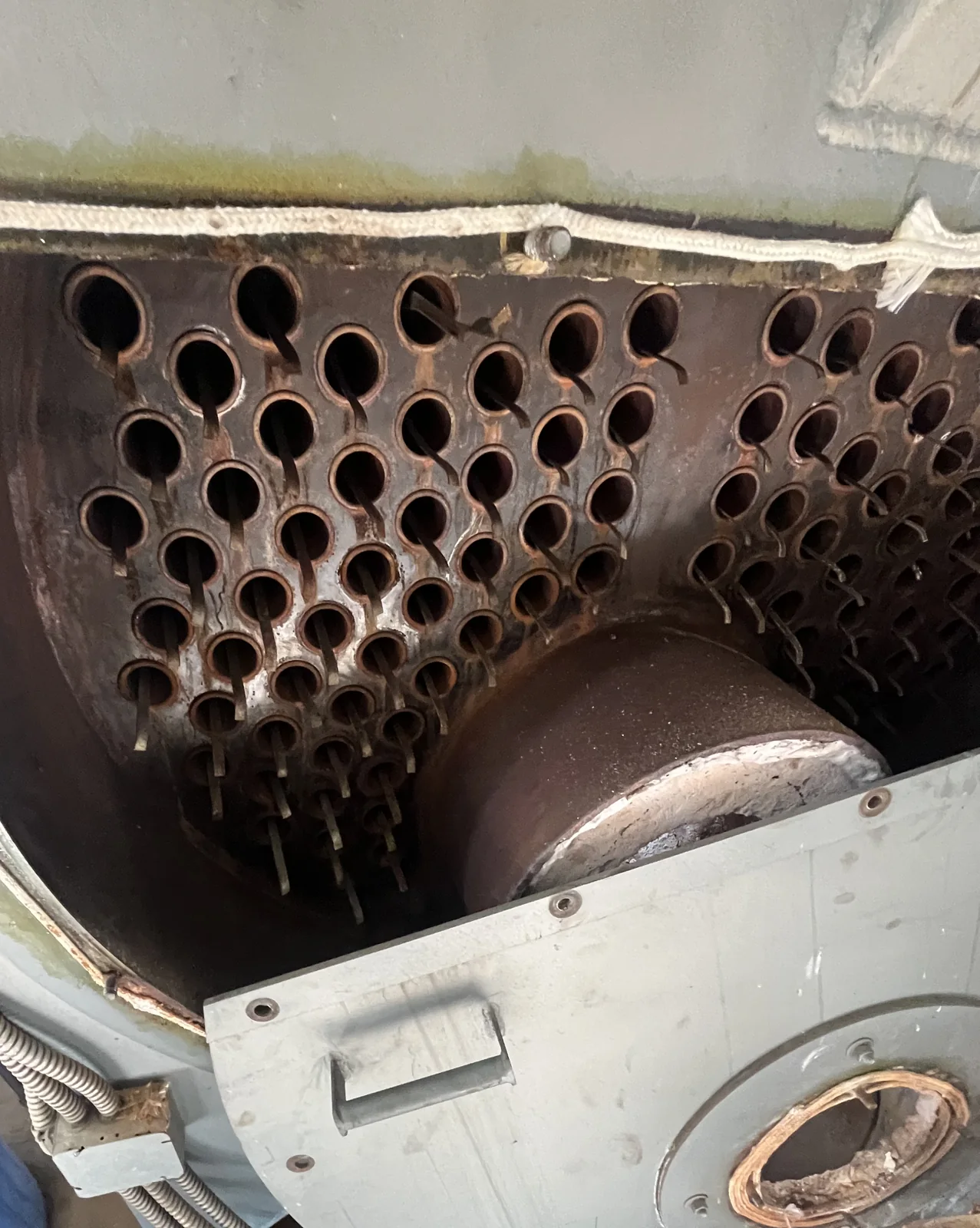
- Inspect the tubesheets. Clean the tube holes and check them for size, cracks between holes (ligament cracks), and corrosion. Inspect the furnace and shell while the boiler is open.
- Install the new tubes. Each tube is expanded (rolled) into the tubesheets, then beaded, seal welded, or both, to match the boiler’s design and its code of construction. Seal welded tubes are rolled again after welding.
- Hydrostatic test. The boiler is filled and pressure tested, with the Authorized Inspector witnessing when the repair or your jurisdiction requires it.
- Close out. Replace door gaskets and refractory as needed, complete the R-1 if the work was an R stamp repair, and return the boiler to service.
Downtime depends on boiler size, tube count, and how fast tubes and materials arrive. The tubesheet inspection matters most. If the tubesheets or furnace have problems, the scope grows, and that can change the decision.
When does a retube make sense?
A retube is a good investment when the rest of the boiler is in good shape. Check these points before you commit:
- Shell, tubesheets, and furnace. A retube does not replace these. Ligament cracks, a bulged or distorted furnace, or thinning in the shell can make a retube a poor investment.
- Age and history. An older boiler with a clean history can be worth retubing. One with repeated weld repairs to the pressure vessel may not be.
- Efficiency. New tubes restore heat transfer lost to scale and fouling, but they do not change the boiler’s design. If the design is inefficient, a retube will not fix it.
- Emissions limits. In the South Coast AQMD, Rules 1146, 1146.1, and 1146.2 set NOx limits by boiler size, and the limits have come down over time. Rule 1146.2, which covers units of 2 million Btu/hr and smaller, now phases in zero-emission requirements. Other California air districts have their own rules. A retube does not change NOx. If the burner cannot meet the current limit, the usual options are an ultra-low NOx retrofit or a new boiler. Check the current rule and your permit before you decide.
- Burner and controls. If the burner and controls are near the end of their life, add that cost to the retube number.
- Parts availability. If parts for the burner, controls, or boiler are no longer available, every future repair takes longer.
- Load. If your steam or hot water demand has changed, the boiler may be oversized and short cycling, or undersized and running flat out. A retube keeps the same capacity.
How does a retube compare with a new boiler?
| Retube | New boiler | |
|---|---|---|
| Downtime | The boiler is out of service for the whole job. Length depends on tube count, inspection findings, and material lead time. | The new boiler is built while the old one keeps running, if it can. Downtime covers removal, installation, and startup. A McKenna rental boiler can carry the load. |
| Scope | Replace fire tubes, inspect tubesheets, furnace, and shell, hydro test. | Remove the old boiler, set the new one, connect piping, fuel, and controls, start up and tune. |
| What it fixes | Leaking, pitted, scaled, or thin tubes. Restores heat transfer. | The pressure vessel, burner, controls, efficiency, emissions, and sizing to the current load. |
| What it does not fix | Shell, furnace, or tubesheet damage. An old burner and controls. NOx compliance. A boiler sized wrong for the load. | Poor water treatment. A new boiler still needs a water treatment program. |
| Paperwork | Form R-1 under NBIC Part 3 when the retube is an R stamp repair (seal-welded tubes or tubesheet welding). | New ASME Manufacturer’s Data Report, permit to operate, and air permit as required. |
| Upfront cost | Lower. | Higher. |
When does replacement make more sense?
Replace the boiler when the pressure vessel is the problem, when a retube plus a burner and controls upgrade gets close to the cost of a new boiler, or when the boiler no longer fits the load or the emissions rule.
McKenna builds firetube, firebox, and vertical boilers in its own ASME shop in California, as standard models or custom-designed to your specifications and to fit the room. New boilers come with Autoflame controls as a standard option and a burner matched to the boiler and the emissions limit. McKenna handles the boiler replacement, installation, and startup in Los Angeles and across California, and does startup and commissioning in any state.
How to decide between a retube and a new boiler
Start with an inspection. Have the boiler opened and the tubes and tubesheets inspected. If you need UT thickness readings on the tubes and shell, McKenna can prepare a proposal for them. Review the burner, the controls, and the air permit at the same time.
Then get both numbers. On an inspection, McKenna gives you the cost to repair and upgrade the boiler you have, and the cost of a new McKenna boiler. Compare them over the years you expect to run the equipment. Include the upfront price, fuel, maintenance, expected downtime, and what it will take to meet the NOx limit.
When a retube involves welding, such as seal-welded tubes or tubesheet repairs, McKenna makes that R stamp repair under its National Board R certificate, on boilers and pressure vessels from any manufacturer.
Schedule a retube inspection
If your tubes are leaking or your last inspection flagged thinning, see McKenna’s boiler retube service. Call (323) 987-1816 to schedule an inspection.
Common questions
How long does a firetube boiler retube take?
It depends on the boiler size, the number of tubes, and how quickly tubes and materials arrive. Problems found on the tubesheets or furnace can add time. Plan the shutdown with some margin and arrange backup steam or heat if you have no redundant boiler.
Is a boiler retube a code repair?
In most cases, replacing rolled and beaded tubes is not an R stamp repair; check with your Authorized Inspector before the work starts. When the tubes are seal welded or the work involves welding on the tubesheet or other pressure parts, it is an R stamp repair under NBIC Part 3, made by a National Board R certificate holder, inspected by an Authorized Inspector, and documented on Form R-1. Your Authorized Inspector can confirm what your jurisdiction requires before the work starts.
Will retubing lower my NOx emissions?
No. NOx is set mainly by the burner, how it is tuned, and the furnace it fires into. New tubes do not change it. If your burner cannot meet your air district’s current limit, the usual options are an ultra-low NOx burner retrofit or a new boiler. Check the current rule for your unit size first.
How do I know if my tubesheets are still good?
A visual inspection and UT readings with the boiler open give a first look. The full check happens with the tubes out, when the tube holes can be checked for size, cracks between holes, and corrosion. If the tubesheets need major repair, compare that cost with a new boiler before you go ahead.