
The commercial boiler grew from near-atmospheric pumping engines in the 1700s, through higher-pressure shell and firetube boilers in the 1800s, to today’s packaged firetube and water-tube boilers with automatic controls and low-NOx burners. Boiler explosions along the way produced the ASME Boiler and Pressure Vessel Code and the National Board, which still govern how boilers are built, inspected, and repaired. McKenna Boiler Works, Inc. has been part of that history in California since 1921, and this post traces the main steps in the history of boilers and what they mean for a boiler room today.
How did steam power start?
Hero of Alexandria’s aeolipile, in the first century AD, showed that steam could make motion, but it did no useful work. Practical steam began with mine drainage in England. Thomas Savery patented a steam pump in 1698 that used steam pressure directly to push water up, with no piston; its vessels were prone to bursting. Thomas Newcomen’s engine of 1712 was safer because it ran at barely above atmospheric pressure. Its “haystack” boiler, a copper or iron vessel over a fire, filled a cylinder with steam, the steam was condensed with a water spray, and atmospheric pressure pushed the piston down.
When did boilers start running at higher pressure?
James Watt added a separate condenser (patented in 1769), which cut fuel use sharply, but he kept pressures to a few psi because he distrusted high-pressure steam. After Watt’s patent expired in 1800, Richard Trevithick built high-pressure engines and, around 1812, the Cornish boiler: a long horizontal shell with a single large internal flue. The Lancashire boiler of 1844 added a second flue for more heating surface. These shell boilers ran factories and mills through the 19th century.
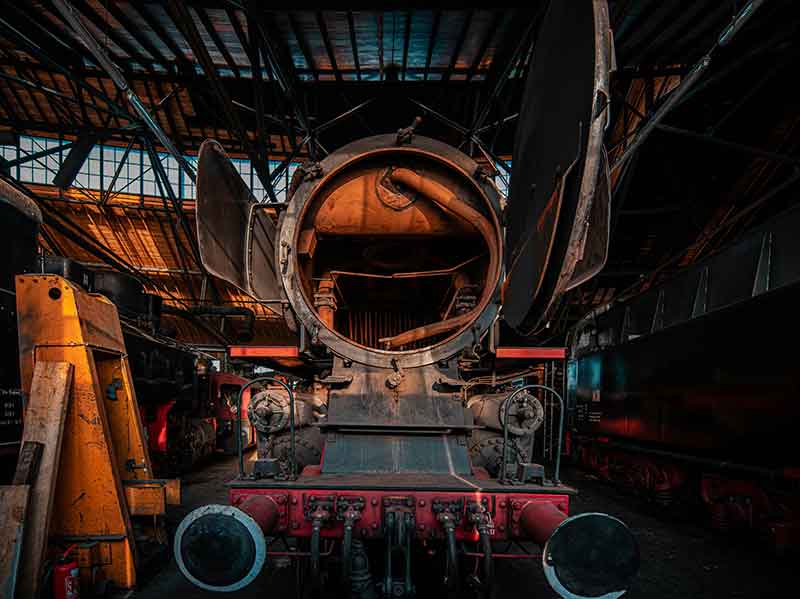
Where did firetube and water-tube boilers come from?
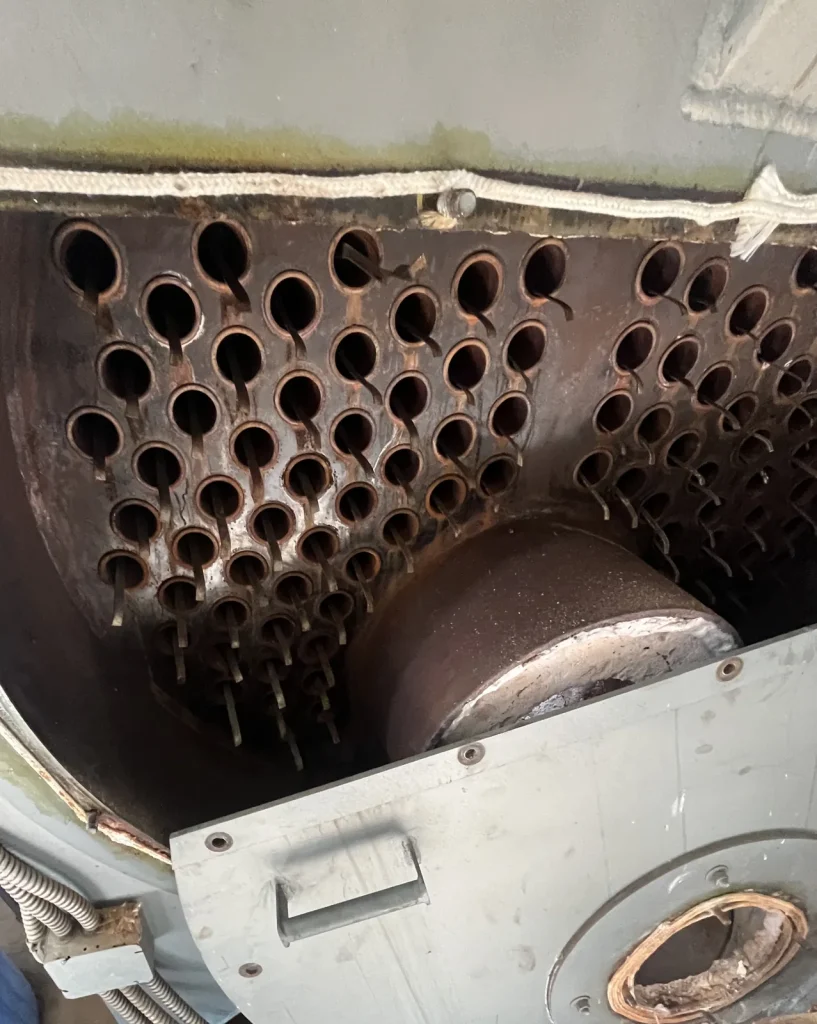
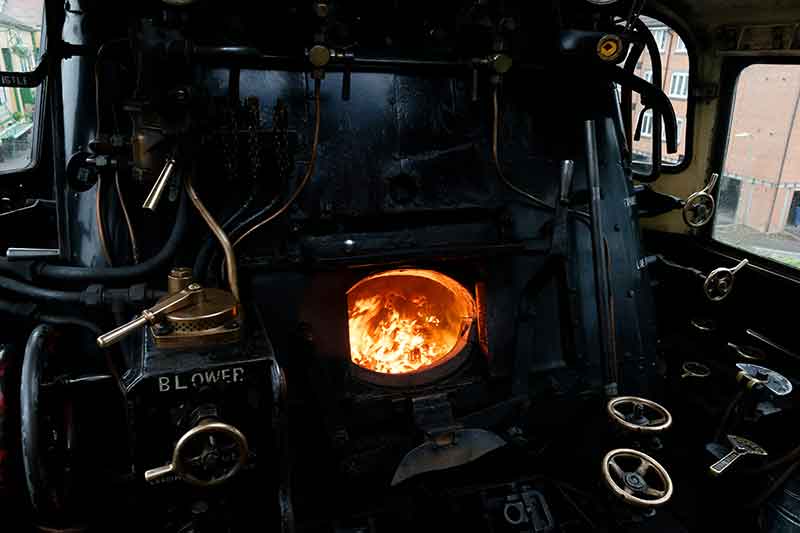
The next step was to send the hot gas through many small tubes instead of one or two large flues. Stephenson’s Rocket locomotive (1829) proved the idea. At sea, the Scotch marine boiler, a short, wide shell with one or more round furnaces inside and return tubes above them, became standard on ships in the late 19th century. The Scotch marine boiler is the direct ancestor of today’s packaged firetube boiler. The locomotive’s water-jacketed firebox lives on in the firebox boiler.
In the mid-20th century, the packaged boiler became the norm for commercial and industrial plants: the boiler, burner, controls, and trim built and tested in the factory on one base, then shipped ready to connect.
Shell boilers are limited in pressure because shell stress rises with diameter. Putting the water inside small tubes and the fire outside them allowed much higher pressures. George Babcock and Stephen Wilcox patented a water-tube boiler in 1867, and water-tube designs went on to dominate power plants and very large steam loads. Firetube boilers stayed the common choice for commercial and industrial loads at moderate pressures.
Why do boiler codes and inspections exist?
Through the 1800s, boiler explosions killed thousands of people in the United States. The steamboat Sultana’s boilers exploded on the Mississippi in 1865, killing well over a thousand people. In 1905, a boiler explosion at the Grover Shoe Factory in Brockton, Massachusetts, killed 58 people and destroyed the building. Massachusetts adopted boiler rules in 1907, and ASME published its first Boiler Code in 1914 to 1915. The National Board of Boiler and Pressure Vessel Inspectors was formed in 1919 so that states would accept each other’s inspections and boilers would carry a common registration.
| Year | Milestone |
|---|---|
| 1698 | Savery steam pump |
| 1712 | Newcomen engine and haystack boiler |
| 1769 | Watt’s separate condenser patent |
| c. 1812 | Trevithick’s Cornish boiler |
| 1829 | Stephenson’s Rocket, multi-tube firetube boiler |
| 1867 | Babcock and Wilcox water-tube boiler patent |
| 1887 | J.B. McKenna servicing boilers in Los Angeles |
| 1905 | Grover Shoe Factory explosion |
| 1914 to 1915 | First ASME Boiler Code |
| 1919 | National Board formed |
| 1921 | McKenna Boiler Works, Inc. founded |
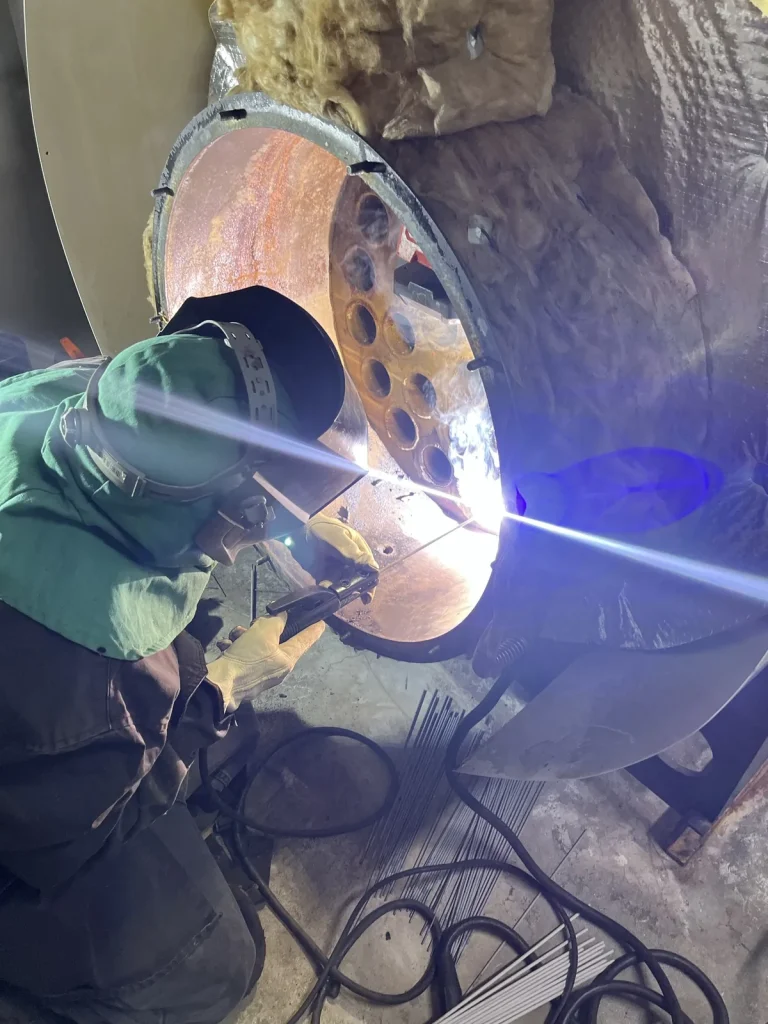
Those rules are why a boiler today carries an ASME stamp and a National Board number, why California requires a Cal/OSHA permit to operate for power boilers, and why welded repairs to pressure parts, such as seal-welded tubes and tubesheet repairs, are made under the National Board Inspection Code (NBIC) Part 3 by a holder of a National Board R certificate.
What changed in the modern era?
- Automatic controls. Flame safeguards, low water cutoffs, and limit controls now shut a boiler down without waiting for an operator. ASME CSD-1 sets the requirements for controls and safety devices on automatically fired boilers under 12.5 million Btu/hr input, and NFPA 85 covers larger units.
- Efficiency. Economizers, better burners, and O2 trim cut stack losses. Condensing boilers arrived for low-temperature hot water systems.
- Emissions. California air districts have tightened boiler NOx limits over several decades, for example South Coast AQMD Rules 1146, 1146.1, and 1146.2. Low-NOx and ultra-low NOx burners, flue gas recirculation, and in some cases selective catalytic reduction meet those limits.
How does McKenna fit into this history?
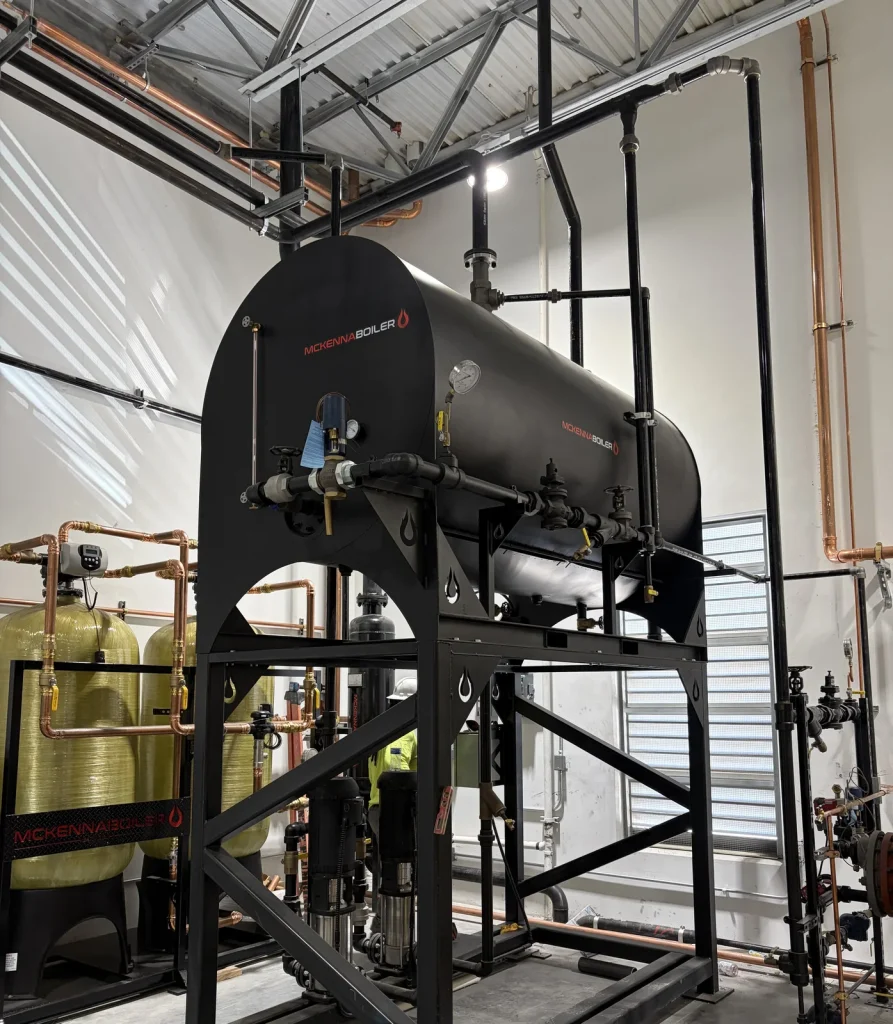
J.B. McKenna was servicing boilers in Los Angeles from 1887. McKenna Boiler Works, Inc. was founded in 1921 and is now a fifth-generation, family-owned company. McKenna builds firetube, firebox, and vertical boilers, feedwater systems, blowdown tanks and separators, and ASME tanks and vessels in California. McKenna holds ASME S, H, M, and U certificates and National Board R certificate No. 11037, and services and repairs other brands.
What the history means for your boiler room
- Keep the boiler’s ASME data report, National Board number, and Cal/OSHA permit on file.
- Have welded repairs to pressure parts made by a National Board R certificate holder under NBIC Part 3, and keep the repair records. In most cases, replacing rolled and beaded tubes is not an R stamp repair; check with your Authorized Inspector.
- Never adjust, plug, or remove a safety valve; have a qualified repair organization service it.
- Test low water cutoffs and the flame safeguard on the manufacturer’s schedule, following lockout/tagout and site procedures. If a control does not trip during a test, shut the burner off manually and call for service.
- Read the inspector’s report after each inspection and close out every finding.
Common questions
When was the first ASME Boiler Code published?
The first edition of the ASME Boiler Code was approved in 1914 and published in 1915. It followed years of deadly explosions, including the 1905 Grover Shoe Factory disaster in Brockton, Massachusetts.
What is the ancestor of today’s packaged firetube boiler?
The Scotch marine boiler, which put round furnaces inside a short, wide shell with tubes above them. Packaged firetube boilers keep that layout and add a forced-draft burner and automatic controls on one base.
What does the National Board do?
The National Board of Boiler and Pressure Vessel Inspectors, formed in 1919, commissions inspectors, registers boilers and pressure vessels, and publishes the National Board Inspection Code. NBIC Part 3 covers repairs and alterations; welded repairs and alterations are made by organizations holding a National Board R certificate.
Why did early boilers explode so often?
Common causes were low water that let heating surfaces overheat, safety valves that were stuck or tied down, poor materials and riveting, and corrosion and scale nobody inspected. Codes, inspection, and automatic controls address each of those.
McKenna Boiler Works, Inc. builds boilers in California and repairs boilers and pressure vessels from any manufacturer under its National Board R certificate. For code repairs, see R stamp repairs, or for scheduled testing, boiler inspections and testing. Call (323) 987-1816.