
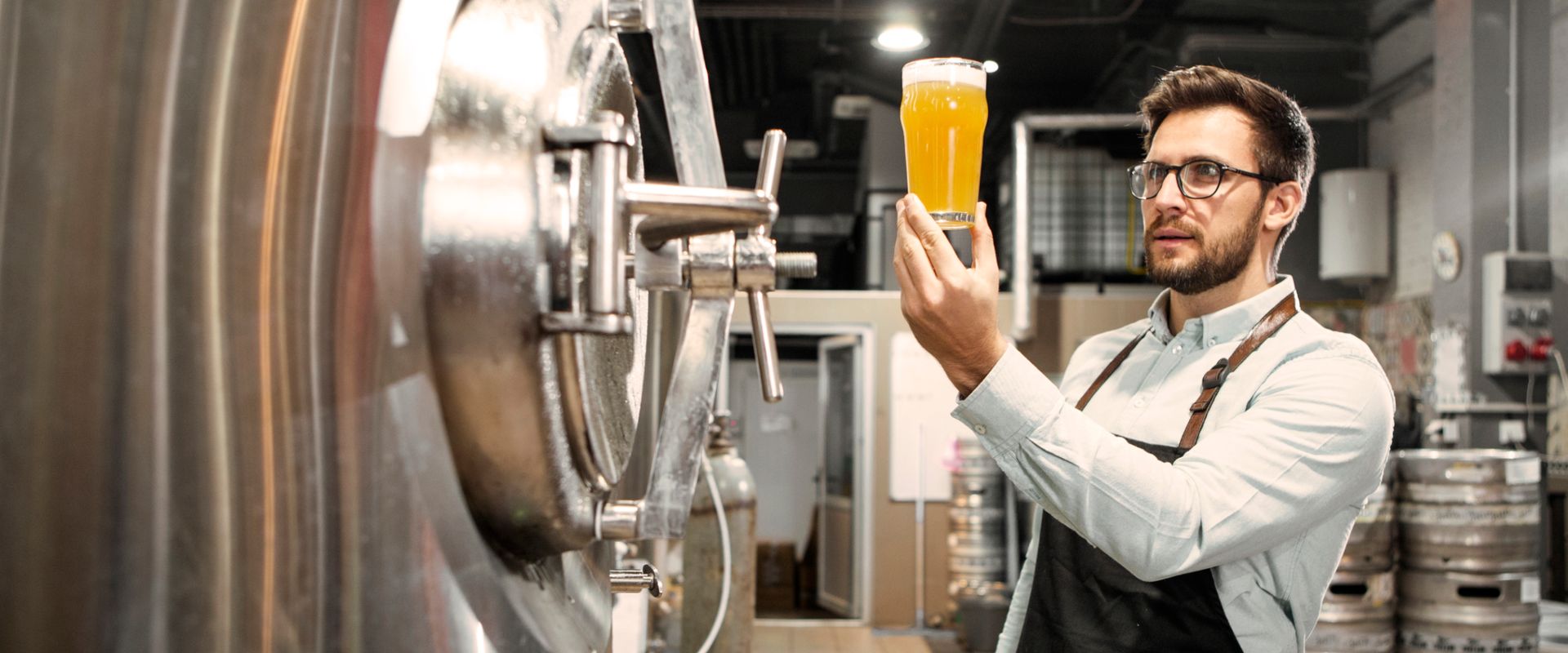
A brewery steam boiler heats the mash tun and kettle jackets, often feeds the hot liquor tank and cleaning water, and sees sharp load swings when the kettle comes to a boil. Keeping it reliable comes down to four things: steam traps that drain, condensate that comes back, softened and treated makeup water, and a regular service schedule. McKenna Boiler Works, Inc. builds steam boilers in California and services and repairs other brands; this guide covers what to look at in a brewhouse boiler plant.
How does a brewhouse use steam?
Steam heats by condensing. When it touches the cooler jacket wall it gives up its latent heat, close to 950 Btu per pound at typical brewhouse pressures, and it does so at a fixed temperature set by the pressure. Saturated steam at 15 psig is about 250°F. That is why steam gives even heating across a kettle jacket and why brewers control wort temperature by controlling steam pressure.
- Mash tun jacket: steady heat for mash rests and step mashing.
- Brew kettle jacket or internal calandria: the biggest load, during heat-up and the boil.
- Hot liquor tank: heating brewing water.
- Cleaning (CIP): hot water and caustic heating for tanks and lines.
Many brewhouses run their jackets on low-pressure steam, at or below 15 psig, which puts the boiler under ASME Section IV. Larger plants often run a higher-pressure Section I boiler and reduce pressure at each vessel. Either way, the steam supplied to a jacket must never exceed the jacket’s nameplate maximum allowable working pressure, and the pressure reducing station needs its own relief valve.
Why do brewery loads cause boiler problems?
When the kettle valve opens, steam demand jumps. Boiler pressure drops, the burner drives to high fire, and the water in the boiler swells as steam bubbles in it expand at the lower pressure. The level control sees a high level and cuts back feedwater. When the kettle valve closes, pressure recovers, the bubbles collapse, and the level shrinks, sometimes far enough to trip the low water cutoff. Fast swings can also carry water out with the steam, which leads to wet steam, water hammer, and damaged traps and valves.
Sizing matters. The boiler has to cover the brewhouse peak, which is often the kettle heat-up while the hot liquor tank and CIP are also calling. Oversize it and it short-cycles between brews; undersize it and pressure sags on every boil. Turndown, meaning how low the burner can fire while staying stable, decides how well one boiler handles both the peak and the quiet hours. The boiler sizing calculator is a starting point, and a load list of every vessel with its steam rate is the real answer.
What fails on the steam and condensate side?
Jacketed vessels are usually drained by float and thermostatic traps, because the load changes constantly and the trap has to drain condensate as fast as it forms and vent air at startup. Air in a jacket insulates the wall and slows heat-up.
| Trap condition | What happens | What you see |
|---|---|---|
| Failed open (blowing through) | Live steam passes into the condensate return | Steam plume at the condensate tank vent, hot return lines, higher gas use, feed pump cavitation |
| Failed closed | Condensate backs up in the jacket | Slow heat-up, weak boil, banging in the lines (water hammer) |
| Air bound | Air is not vented from the jacket | Slow heat-up at the start of a brew |
Returned condensate is hot, already treated, and low in dissolved solids. Every pound that comes back is a pound of makeup water you do not have to soften, heat, and treat. If there is any chance of product getting into the condensate through a leaking jacket, talk with your water treatment company about monitoring the return. A steam trap audit tests each trap with ultrasonic and temperature checks and reports which have failed open, failed closed, or are leaking.
What does the water side need?
Hardness in makeup water forms scale on the tubes, and scale insulates the steel so it runs hotter. Dissolved oxygen causes pitting. A softener removes hardness, a heated feedwater system drives off much of the oxygen, and a chemical program controls the rest along with alkalinity and pH. Bottom blowdown removes the solids that concentrate as water boils off.
Your water treatment company sets the chemical program and the blowdown schedule from your water analysis and boiler pressure, and it should be on site during inspections to check and monitor the water side. If any steam touches product directly, boiler water additives are limited to those allowed under FDA rules (21 CFR 173.310); your water treatment company selects them.
What to check: a brewery boiler routine
Follow the boiler manufacturer’s instructions, lockout/tagout, and your site’s procedures for every task that involves pressure, water level, or fuel.
- Every shift: check the gauge glass; blow down the low water cutoff as the manufacturer directs and confirm the burner shuts off. If it does not, shut the burner off manually and call for service before running the boiler again. Log steam pressure and stack temperature.
- Every day: test softener outlet hardness, check chemical feed levels, and do bottom blowdown on the schedule your water treatment company set.
- Brew day: open jacket steam valves slowly, drain condensate from cold lines first, and listen for water hammer.
- Monthly: walk the traps at each jacket, look at the condensate tank vent for a heavy steam plume, and check the safety valve and its discharge for weeping.
- Annually: internal inspection, Cal/OSHA inspection where it applies, combustion tune, and a full trap survey. See boiler inspections and testing.
Common questions
What steam pressure do brewery jackets use?
Many brewhouses run jackets at or below 15 psig, which gives about 250°F steam. The right pressure depends on the vessel design, and it must never exceed the jacket’s nameplate rating. Higher-pressure plants reduce pressure at each vessel with a reducing station and relief valve.
Why does our boiler trip on low water during the boil?
Fast load changes cause the water level to swell and then shrink, and the shrink can reach the low water cutoff. Check feed pump capacity, level control settings, and whether the boiler is sized for the kettle peak. Repeated low water trips are a reason to call for service, never a reason to adjust or bypass the cutoff.
Should a brewery return its condensate?
In most plants, yes. Condensate is hot and treated, so returning it saves fuel, water, and chemicals. Where product could leak into a jacket, your water treatment company can set up monitoring on the return.
How often should brewery steam traps be tested?
Many plants survey every trap at least once a year and check the jacket traps more often, because they affect brew times. Tag and log every trap so failures can be tracked from one survey to the next.
Does a brewery boiler need a Cal/OSHA permit?
Power boilers (steam above 15 psig) need a Cal/OSHA permit to operate and an annual inspection. Low-pressure boilers, which many brewhouses run, are exempt from the annual inspection and permit under 8 CCR 771, but must still meet the Boiler Safety Orders and keep their automatic controls working. Check with Cal/OSHA’s Pressure Vessel Unit for your boiler, and ask your local air district about burner permits.
McKenna builds new steam boilers in California and services existing brewery boilers, including other brands. For a service schedule, trap survey, or a boiler sized to your brewhouse, see preventative maintenance or call (323) 987-1816.