
When an industrial boiler fails, there are three paths: repair the part that failed, retube or rebuild a larger section of the pressure vessel, or replace the boiler. The right one depends on the condition of the shell, tubesheets, and furnace, what the code requires for the repair, and whether the boiler still fits the load and the emissions limit. McKenna Boiler Works, Inc. builds firetube, firebox, and vertical boilers and services and repairs other brands, so McKenna can price a repair and a replacement side by side. See commercial and industrial boiler repair and service for everything McKenna handles.
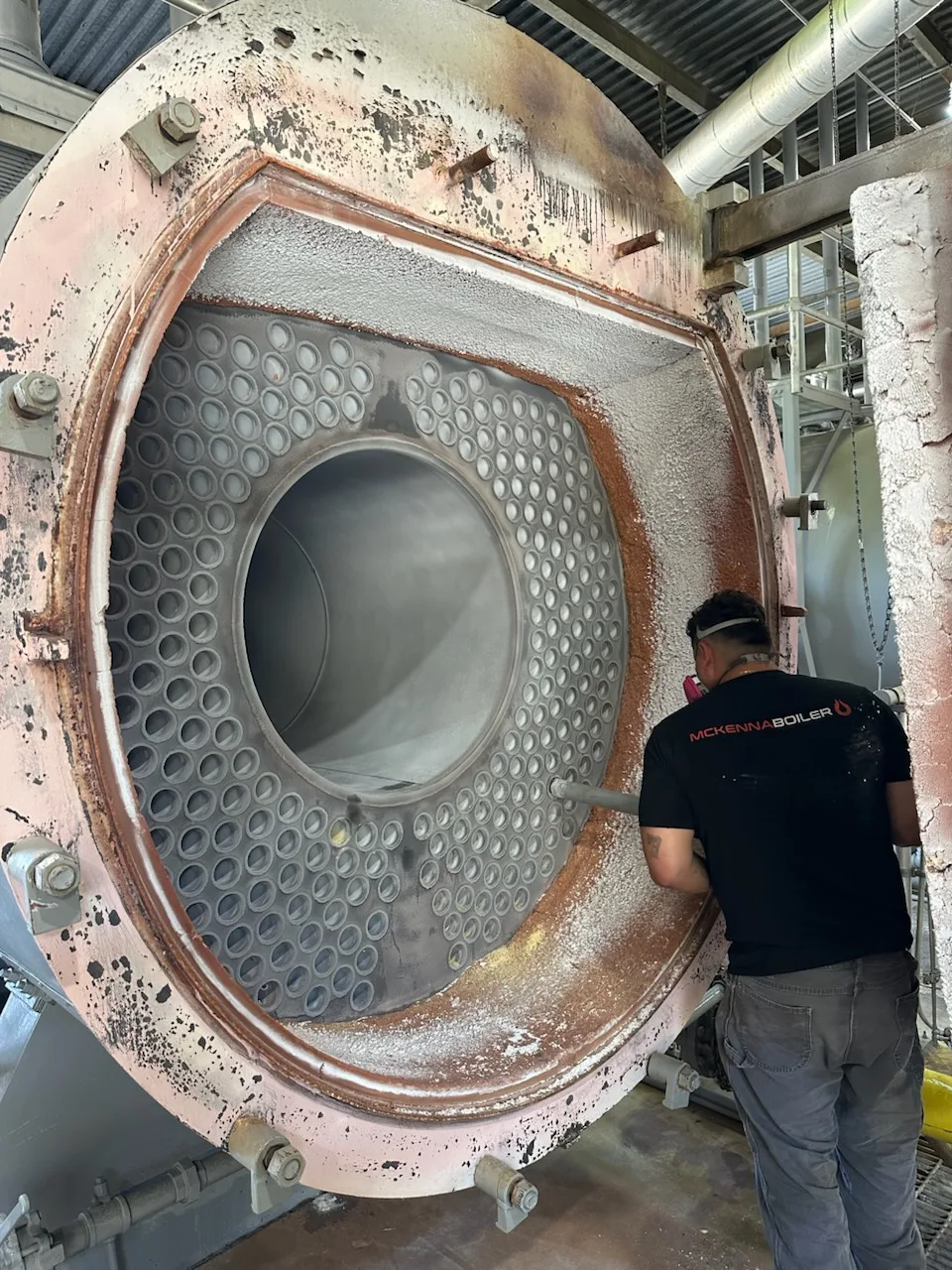
What usually fails, and what does it point to?
The symptom tells you where to look. Most failures fall into a few groups:
| Symptom | Likely cause | Usual path |
|---|---|---|
| Flame failure lockout | Flame scanner, ignition, pilot or main gas pressure, fuel-air ratio | Burner and control repair, then retune |
| Low water cutoff trip | Feed pump, feedwater valve, level control, condensate return | Find the cause. If the boiler ran low and overheated, it needs inspection before restart. |
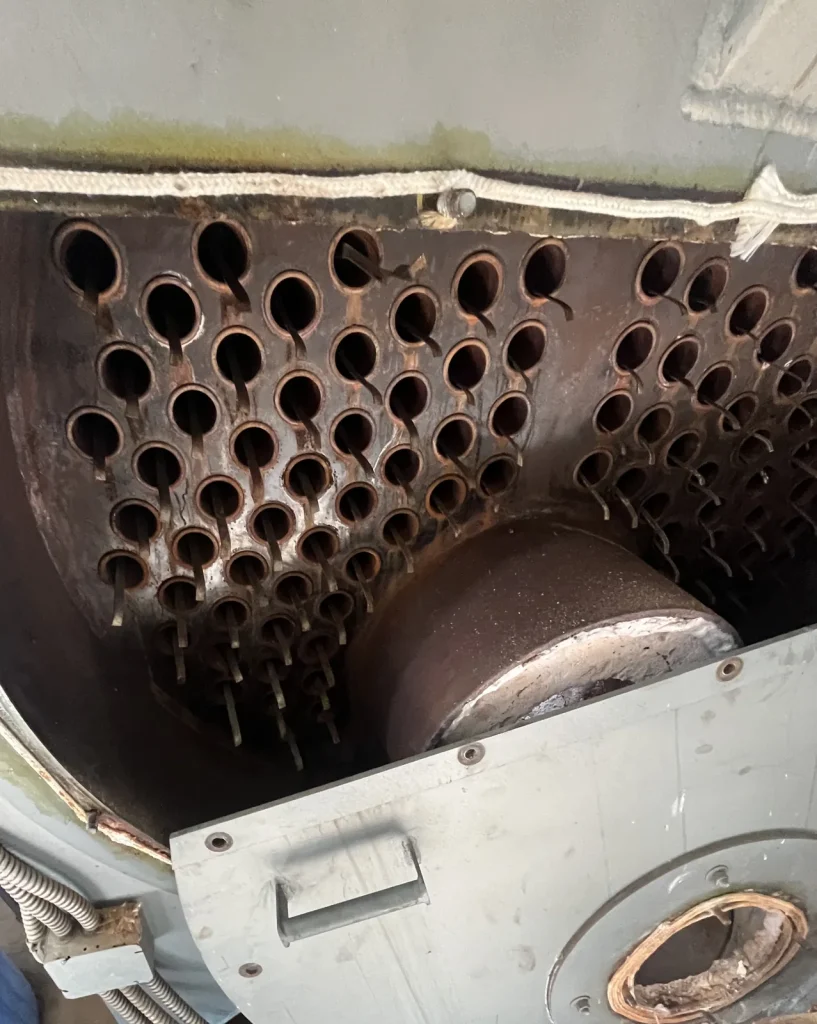
| Leaks at tube ends, wet soot | Scale, corrosion, overheating, thermal cycling | Re-roll or replace tubes; retube if failures are widespread |
| Cracked or missing refractory | Thermal cycling, flame impingement, age | Refractory repair at the rear door or target wall |
| Safety valve weeping | Operating too close to set pressure, seat damage | Replace with a valve of the correct set pressure and capacity, or have it repaired by a holder of a National Board VR certificate. Never adjust, plug, or gag a safety valve. |
| Bulged furnace, cracked tubesheet ligaments | Low water, scale, or overfiring | Code repair if practical; compare against replacement |
One tube failure does not condemn a boiler. Repeated failures in the same area, or thinning across many tubes on ultrasonic thickness readings, usually point to water chemistry or operation. Fix the cause, or the repair fails the same way. McKenna is not a water treatment company; your water treatment company sets the program and should be on site during the inspection to check the water side.
Which repairs are code repairs, and who can make them?
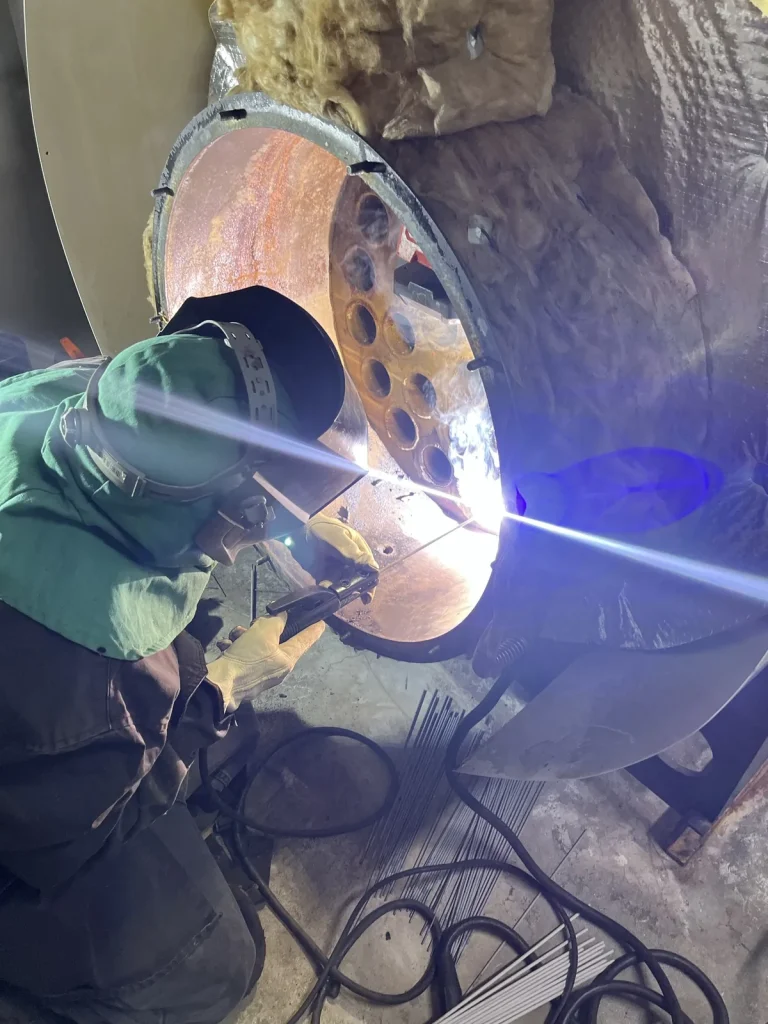
Repairs and alterations to pressure-retaining parts of a boiler in service fall under the National Board Inspection Code (NBIC), Part 3. A repair restores the boiler to a safe condition without changing its design: replacing seal-welded tubes, seal welding leaking tube ends, welding a patch into a furnace or shell, or building up wasted metal. In most cases, replacing rolled and beaded tubes is not an R stamp repair; check with your Authorized Inspector. An alteration changes the design, such as a change in pressure rating, and needs engineering and the inspector’s acceptance before the work begins.
The work is done by an organization holding a National Board R certificate, using qualified welding procedures and welders, with an Authorized Inspector involved from the start and accepting the finished work. Repairs are documented on Form R-1 and alterations on Form R-2. In California, Cal/OSHA is the jurisdiction. Ask your inspector whether the boiler needs an inspection before it returns to service and whether the repair affects the permit to operate.
McKenna holds National Board R certificate No. 11037 and ASME S, H, M, and U certificates, and maintains a written quality control manual for its code work. McKenna makes code repairs under its National Board R certificate on boilers and pressure vessels from any manufacturer.
Burner, control, pump, gasket, and refractory work does not need an R certificate, though it still needs trained technicians. McKenna installs, sets up, and tunes burners and controls from any manufacturer.

Retube or replace?
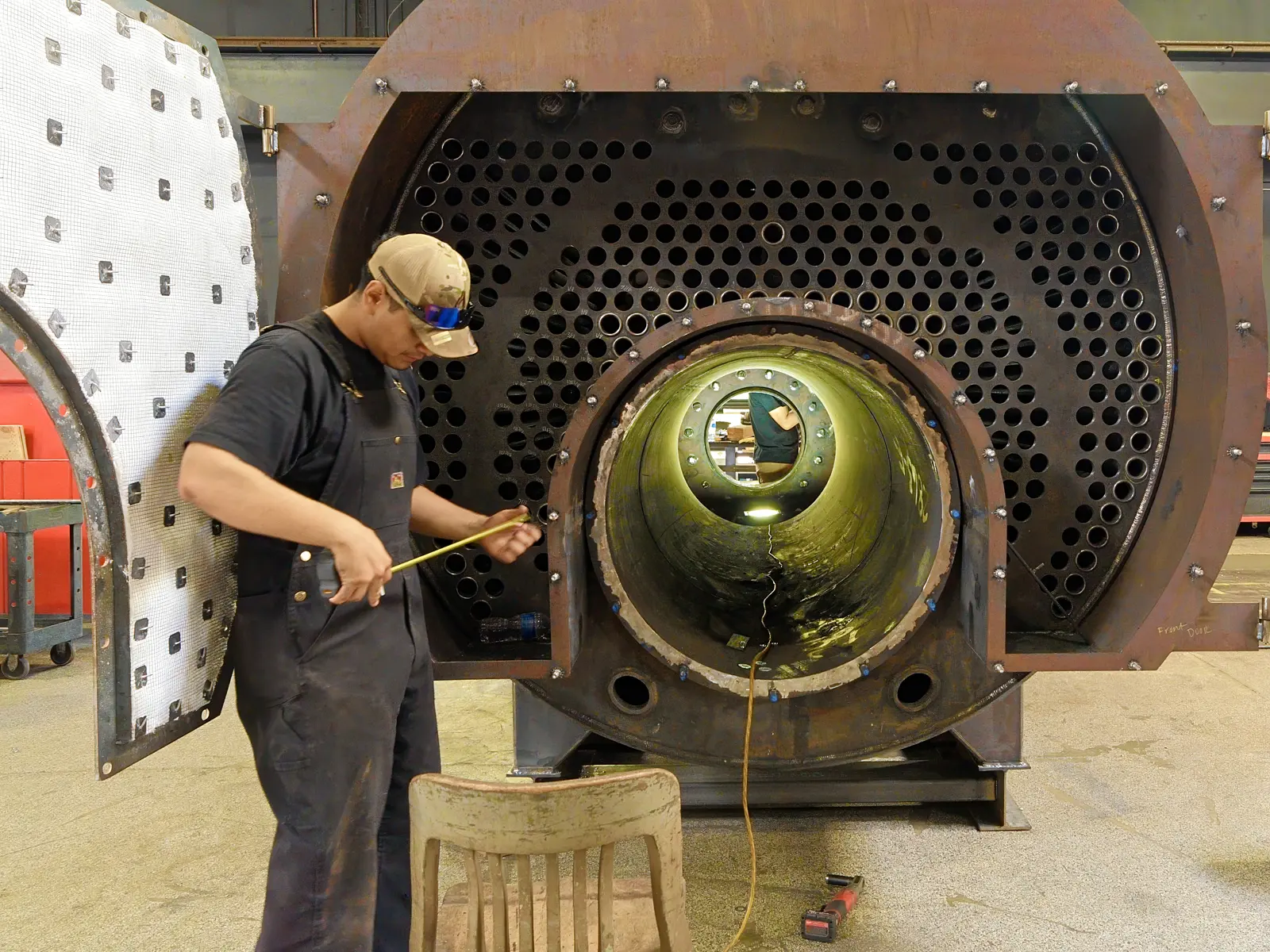
A retube replaces all of the fire tubes. It is a good investment when the shell, tubesheets, and furnace are sound and the boiler still fits the load. With the tubes out, the tube holes can be checked for size, cracks between holes, and corrosion. Problems found there can change the decision.
Replacement makes more sense when:
- The pressure vessel itself is worn: a distorted furnace, thinning shell, or repeated weld repairs.
- The load has changed, and the boiler short-cycles at light load or cannot keep up at peak.
- The burner cannot meet your air district’s current NOx limit, and a retrofit plus the repair approaches the cost of a new boiler.
McKenna gives you both numbers: the cost to repair and upgrade the boiler you have, and the cost of a new McKenna boiler built to fit your room. McKenna isn’t always the cheapest. The reason to choose it is one accountable company for the boiler, from the repair or new build through startup and service.
How do you keep the plant running during the repair?
If there is no redundant boiler, a rental boiler can carry the load. To size it, have ready the steam pressure or hot water temperature, the load in lb/hr or MBH, the fuel and available gas pressure, the electrical service, and where feedwater, condensate, and the stack will connect. The customer is responsible for all permits for a rental boiler: a Cal/OSHA permit to operate where it applies, and an air district permit where the district requires one. Some McKenna rental boilers carry South Coast AQMD permits; elsewhere, check local rules.
Lead times drive the plan. Tubes and burner parts for older boilers can take time to arrive, so order parts as soon as the scope is known.
What to do when the boiler goes down
- Make it safe. If you suspect low water, shut the burner off and do not add feedwater to a boiler that may have overheated. Let it cool and have it inspected. Follow the manufacturer’s instructions, lockout/tagout, and your site’s procedures.
- Record the lockout code or alarm on the flame safeguard before you reset anything. Do not reset a lockout repeatedly; find the cause.
- Write down the pressure, water level, what the boiler was doing when it failed, and any recent changes.
- Have the nameplate data ready: manufacturer, National Board number, maximum allowable working pressure, burner make and model, and fuel.
- Before anyone welds on a pressure part, confirm the firm’s National Board R certificate and that the Authorized Inspector has been notified.
- Ask for written findings and a repair-versus-replace comparison.
- Keep the signed R-1 or R-2 with the boiler records.
Common questions
Does every boiler repair need an Authorized Inspector?
Welded repairs and alterations to pressure-retaining parts do, under NBIC Part 3. Burner, control, and refractory work does not. When in doubt, ask the inspector before the work starts.
Does McKenna repair boilers it did not build?
Yes. McKenna Boiler Works, Inc. services and repairs other brands and makes code repairs on boilers and pressure vessels from any manufacturer under its National Board R certificate.
What is the difference between a repair and an alteration?
A repair restores the boiler to its original design and safe condition. An alteration changes the design, for example the pressure rating, and needs engineering and the inspector’s acceptance before work begins. Repairs go on Form R-1 and alterations on Form R-2.
How long does a repair take?
It depends on the scope and on parts. A burner or control repair can be quick; a retube depends on boiler size, tube count, and how fast tubes arrive. Problems found once the boiler is open can add time.
For a boiler that is down now, see emergency boiler service or call (323) 987-1816. A live person answers 24/7.