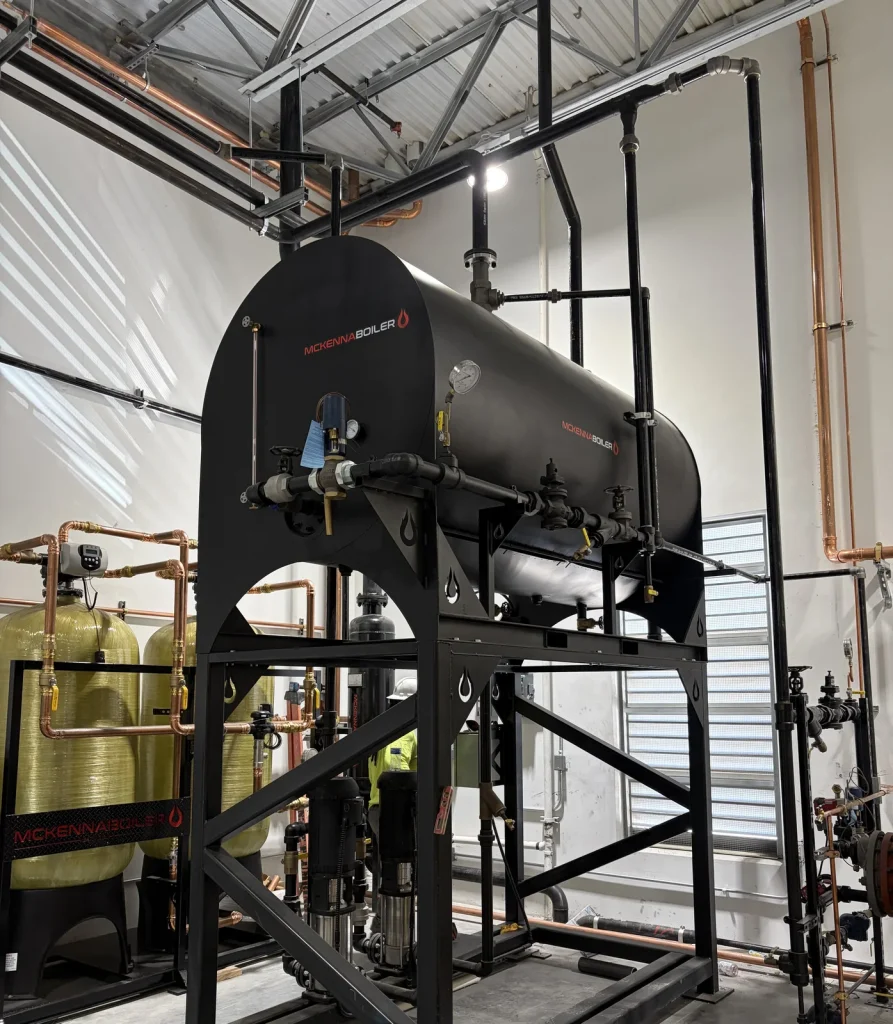

A planned rental boiler carries your steam or hot water load while the permanent boiler is retubed, inspected, replaced, or while a new boiler room is built. Planning ahead lets the rental be sized from real load data, permitted before it arrives, and tied in at connections built for it, so the cutover itself is short. McKenna Boiler Works, Inc. has rental boilers, some of which carry South Coast AQMD permits, and this post covers how to plan one for a scheduled outage: sizing, permits, site work, hookup, and the cutover back.

When does a planned rental make sense?
A rental is worth planning whenever the only boiler that can carry the load will be out of service longer than the plant can go without steam or hot water. The common cases:
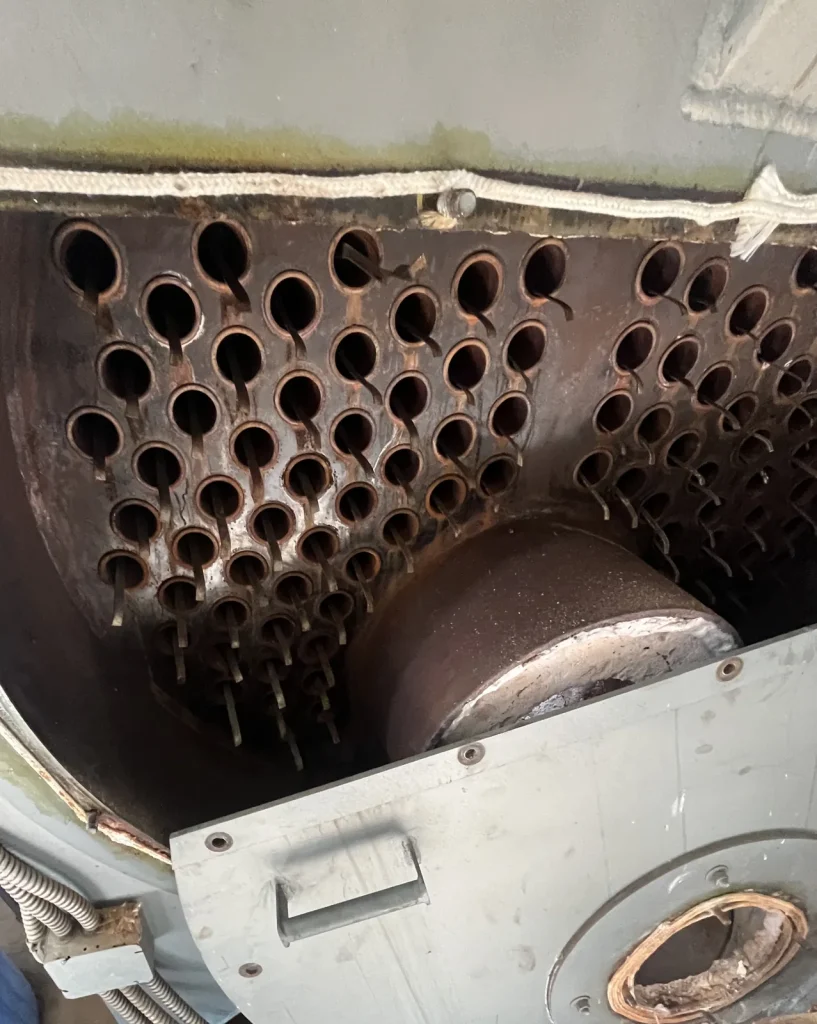
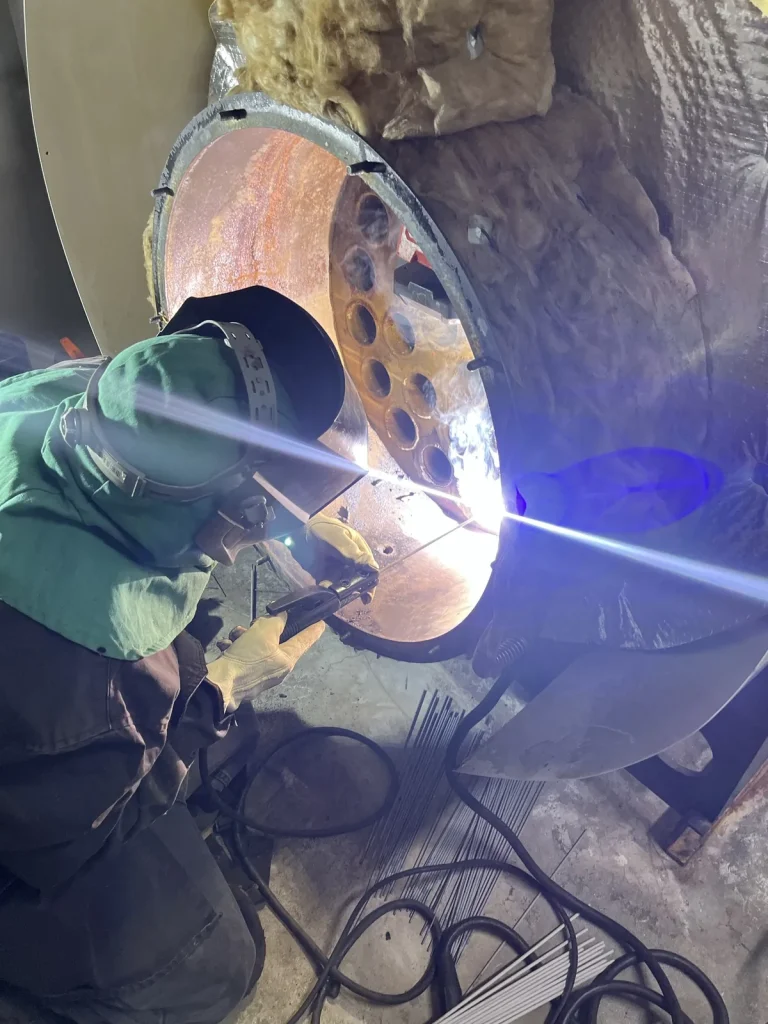
- Retubes: a firetube retube takes the boiler out of service for days to weeks, longer if the inspection finds tube sheet or furnace work.
- Boiler replacement: the old boiler comes out and the new one is set, piped, permitted, and commissioned. See boiler replacement.
- Major repairs and inspections: refractory replacement, furnace repairs, or an internal inspection on a single-boiler plant.
- Construction: a new building or plant that needs steam or heat before its permanent boiler room is finished.
- Seasonal peaks: a load that exceeds the installed boilers for a few months a year.
If a second permanent boiler can carry the load during the outage season, you may not need a rental at all. Check that boiler’s capacity against the measured load before deciding.
How should a planned rental be sized?
Size it for the load during the outage, which is not always the boiler’s nameplate rating. A plant whose winter peak needs a 300 hp boiler may carry its summer load on a much smaller rental, and that matters because smaller rentals are easier to place, permit, and connect. Use data from the same season: gas meter readings converted to heat input, or steam flow meter readings. One boiler horsepower is 33,475 Btu/hr, or 34.5 lb/hr of steam from and at 212°F; the boiler sizing calculator converts between units.
Match the operating condition as well as the capacity. A steam rental has to deliver the pressure your highest-pressure user needs, with its safety valve set no higher than the rental’s own maximum allowable working pressure. Any downstream equipment rated lower than that needs its own pressure reducing valve and relief valve. A hot water rental has to match supply temperature, flow, and system pressure. Too large a rental short-cycles at your actual load, which wears the burner and controls and makes pressure harder to hold.
What permits and approvals does a planned rental need?
Planned work leaves time to settle permits before the rental arrives, which is the main advantage over an emergency. The customer is responsible for all permits for a McKenna rental.
| Approval | What it covers | What to do |
|---|---|---|
| Cal/OSHA permit to operate | Power boilers (steam above 15 psig) under the Title 8 Boiler and Fired Pressure Vessel Safety Orders; low-pressure boilers are exempt under 8 CCR 771 if their controls are maintained | Confirm with McKenna how the rental’s inspection status applies at your site; the customer holds the permit |
| Air district permit | NOx and CO limits and operating conditions, by district and unit size | Some McKenna rentals carry South Coast AQMD permits; in other districts, check the rules for temporary units early |
| Local building or fire approvals | Gas piping, electrical work, placement, and any temporary structures | Check with your local building department and fire authority |
| Insurer | Coverage for the rental while it runs at your site | Notify your boiler insurer before delivery |
What site work and hookup should be ready before delivery?
The faster cutovers come from plants that build permanent tie-in points once and reuse them for every outage. A set of valved, capped connections outside the boiler room turns each future rental into a short hookup.
- Placement: a level pad or paved area with truck and crane or forklift access, clear of building air intakes, doors, and windows for the stack.
- Steam or hot water: a valved connection to the header or the supply and return, with a check valve or non-return valve on the rental outlet. A check valve alone is not isolation for people working on the permanent boiler; that boiler’s own stop valves are closed and locked.
- Gas: a valved connection sized for the rental’s full-fire flow at the burner’s required supply pressure. Confirm with the gas utility if the meter or regulator is marginal.
- Electrical: a disconnect matching the rental’s voltage, phase, and amperage.
- Feedwater and makeup water: decide whether the rental uses your feedwater tank and pumps or brings its own, and provide softened makeup water.
- Blowdown and drains: a route to a blowdown tank or separator so hot blowdown is cooled before it reaches the drain.
- Water treatment: your water treatment company sets the program for the rental and should have chemical feed and testing ready when it fills.
The tie-in can be done by your plant crew, your mechanical contractor, or McKenna. McKenna does the startup and commissioning: low water cutoff and flame safeguard tests, safety valve check, and combustion tuning to the air permit limit.
What to do: planned rental timeline
- As soon as outage dates are set, call to reserve a rental in the size and pressure you need; planned dates are easiest to hold when booked early.
- Pull same-season load data and confirm the rental size.
- Start air district and Cal/OSHA questions, and notify your insurer.
- Build or check the tie-in points, gas, electrical, and blowdown route.
- Line up your water treatment company for the rental’s first fill.
- On delivery day, connect, fill, and have the rental commissioned before the permanent boiler is shut down.
- Transfer the load, then isolate the permanent boiler: close and lock its steam stop valves and lock out its fuel and power per your site’s procedures before work starts.
- At the end of the work, commission the permanent boiler, test its low water cutoffs and flame safeguard (if either does not trip, shut the burner off manually and call for service), transfer the load back, and release the rental.
Common questions
How far ahead should a planned rental be booked?
As soon as the outage dates are known. Booking early gives time for permits, site work, and confirming the size from load data. It also makes it more likely the size and pressure you need are available on your dates.
Can the rental run on our existing feedwater system?
Often, if your feedwater tank and pumps have the capacity and pressure for the rental and can stay in service during the outage. If the feedwater system is part of the work, the rental needs its own. Decide this during planning.
Who installs a rental boiler?
Your plant crew, your mechanical contractor, or McKenna can make the tie-in. McKenna does the startup and commissioning so the rental’s safety controls are verified and combustion is tuned before it carries the load.
Do rental boilers come with air permits?
Some McKenna rental boilers carry South Coast AQMD permits. In other districts, check the district’s rules for temporary units early in planning, since the permit or exemption has to be in place before the rental runs.
Should we build permanent tie-in points for rentals?
If you expect to rent again for future retubes, inspections, or emergencies, yes. Valved, capped connections for steam or hot water, gas, electrical, and blowdown shorten every future hookup.
Planning a rental
For sizes, availability, and which units carry South Coast AQMD permits, see McKenna rental boilers or call (323) 987-1816.