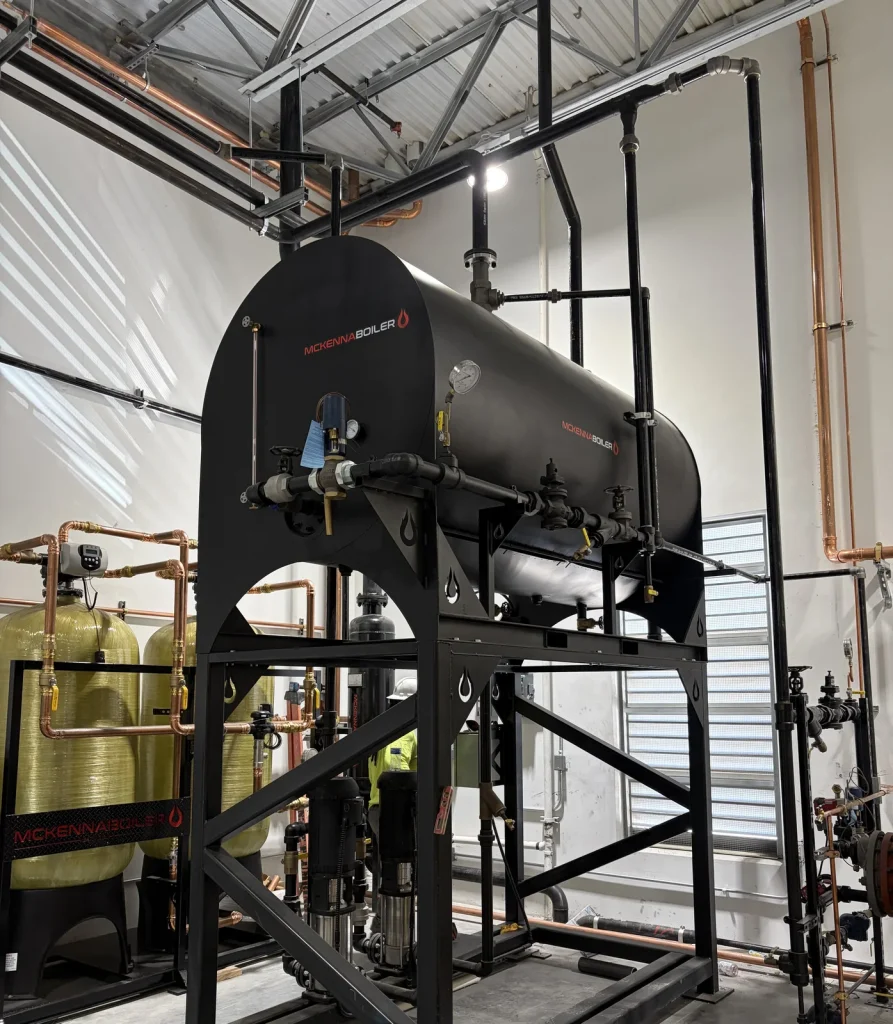


An apartment building’s central boiler needs annual professional service, regular tests of its relief valve and low water cutoff, a hot water system kept at the right fill and expansion tank pressure, clear combustion air, and a quick response to leaks, noises, and carbon monoxide alarms. McKenna Boiler Works, Inc. services and repairs apartment building boilers from other manufacturers as well as its own, across Los Angeles and all of California. This post sets out what owners and building engineers should do, and why each step matters.

What kind of boiler does an apartment building have, and what rules apply?
Most apartment buildings have low-pressure heating boilers: hot water boilers for space heat, domestic hot water boilers or water heaters, and in some older buildings low-pressure steam. Boilers in that range are built to ASME Section IV (steam at 15 psig or less, hot water at 160 psig and 250°F or less); small domestic water heaters are built and listed to their own standards.
- Cal/OSHA. Under 8 CCR 771, low-pressure boilers are not subject to annual state inspection and do not require a permit to operate, provided they meet the rest of the Boiler and Fired Pressure Vessel Safety Orders, carry the controls the Orders require for automatically fired low-pressure boilers, and keep all automatic controls in operating condition. A Cal/OSHA safety engineer can still require an exempt boiler to be prepared for inspection. The exemption is no reason to skip annual service, and many insurance carriers inspect these boilers.
- Air district. In the South Coast AQMD, natural gas boilers and water heaters up to 2 million Btu/hr input fall under Rule 1146.2 (small residential water heaters fall under Rule 1121 instead), and larger units under Rules 1146.1 or 1146 with their own testing and record requirements. Rule 1146.2 was amended in 2024 to phase in zero-emission requirements, with dates that depend on the unit type, whether the building is new or existing, and the unit’s age, so check the current rule before replacing a unit. Other districts have their own rules. Check the permit or the unit’s certification for what applies.
- Carbon monoxide alarms. California Health and Safety Code Section 17926 requires owners to install carbon monoxide devices in existing dwelling units, apartments included, that have a fossil fuel burning heater or appliance, a fireplace, or an attached garage, and the building code sets CO alarm rules for new construction and alterations. Ask the local building or fire official how those rules apply to units in a building served by a central boiler. A CO alarm in the boiler room is good practice as well.
How should the hot water heating system be set up?
- Fill pressure. The system must stay full at the top floor. The pressure-reducing (fill) valve is set for the building height plus a margin, and the gauge at the boiler should read close to the same value every day when the system is cold.
- Expansion tank. Water expands as it heats. The tank’s air charge, set to match the fill pressure, absorbs that expansion. A waterlogged tank or one with a failed bladder makes pressure climb quickly on each heat cycle and the relief valve weep.
- Air removal. Air in the loop causes noise, cold radiators, and corrosion. An air separator removes it at the boiler; bleed radiators and high points as needed.
- Return water temperature. Non-condensing boilers need return water warm enough to keep flue gas from condensing inside them, as the manufacturer specifies; condensate in a non-condensing boiler is acidic and corrodes it. Condensing boilers need cool return water to condense, and usually a condensate neutralizer at the drain, as the manufacturer and local code require.
What about domestic hot water?
Domestic hot water has two opposing risks: Legionella bacteria grow in lukewarm water, and very hot water scalds. A common approach is to store water hot, often 140°F, and mix it down to a safe delivery temperature with a master thermostatic mixing valve listed to ASSE 1017. Follow the building’s water management plan and the equipment manufacturer’s settings. Keep recirculation pumps running so the far ends of the building stay hot.
Which safety devices need testing, and how?
Testing must follow the manufacturer’s instructions, lockout/tagout, and the building’s procedures. Some tests release hot water or steam and should be done by a trained person.
| Device | What it does | Test |
|---|---|---|
| Relief valve | Opens if pressure exceeds its set point | Test lever as the valve manufacturer directs, standing clear of the discharge; if it does not open, shut the burner off and call for service; if it leaks or fails to reseat, have it replaced |
| Low water cutoff | Shuts the burner off on low water | Test as the manufacturer directs; if the burner does not shut off, shut it off manually and call for service |
| High limit | Shuts the burner off on high temperature or pressure | Checked by a technician at annual service |
| Flame safeguard | Shuts fuel off if the flame fails | Flame failure test by a technician at annual service |
Never block, plug, or adjust a relief valve, and never jump out a low water cutoff or limit to get heat back on.
What to do: an apartment building boiler maintenance schedule
Weekly walk-through (building engineer or manager):
- Read pressure and temperature gauges and compare with last week.
- Look for water under the boiler, pumps, and valves, and for drips from the relief valve discharge.
- Listen for new noises: banging, rumbling, or whistling.
- Check that combustion air openings are clear and nothing is stored against the boiler.
- Look for soot at the burner or flue, which means poor combustion.
Annual service (qualified technician, see preventative maintenance):
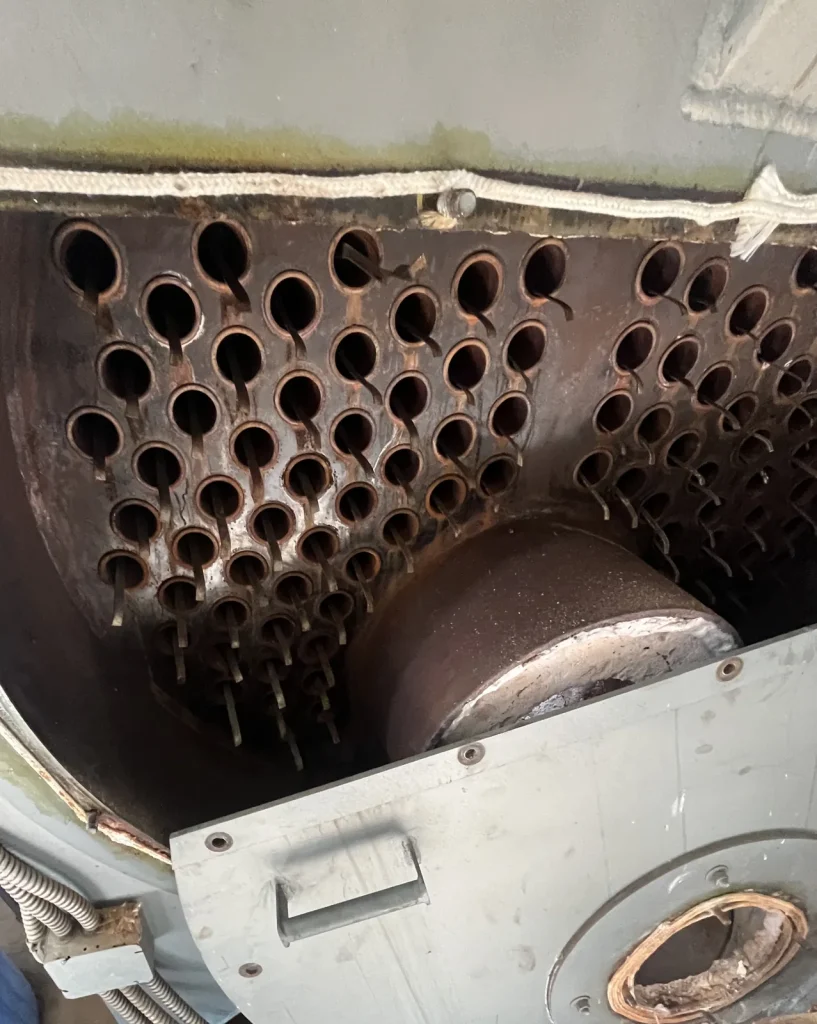
- Clean the fire side and inspect the heat exchanger or tubes.
- Test the flame safeguard, limits, and low water cutoff.
- Combustion analysis and tuning, with a written report kept for the air district if the permit requires it.
- Check the expansion tank charge, fill valve, and relief valve.
- Inspect the vent and flue connections.
If residents report no heat, no hot water, a gas smell, or a CO alarm, treat it as urgent. For a gas smell or CO alarm, get people out, follow the building’s emergency procedure, call the gas utility or 911 as appropriate, and call for emergency service.
Common questions
Does my apartment building boiler need a Cal/OSHA inspection?
Most apartment building boilers are low-pressure boilers, which 8 CCR 771 exempts from annual inspection and a permit to operate. They must still meet the Safety Orders and keep their automatic controls working. Your insurance carrier may also require inspections.
Why does my relief valve keep dripping?
On a hot water system, the most common cause is a waterlogged expansion tank or one with a lost air charge, which lets pressure spike on each heat cycle. A fill valve set too high or a worn relief valve can also cause it. Have a technician find the cause, and never cap or plug the valve.
How often should an apartment boiler be serviced?
At least once a year by a qualified technician, before the heating season. Buildings that run boilers year-round for domestic hot water often add a mid-year check.
Why are some radiators cold while others are hot?
Air trapped in the system, low fill pressure, a failed circulating pump, or unbalanced piping are the usual causes. Bleed the radiators and check the fill pressure first, then call for service if the problem stays.
Should I replace an old apartment boiler or repair it?
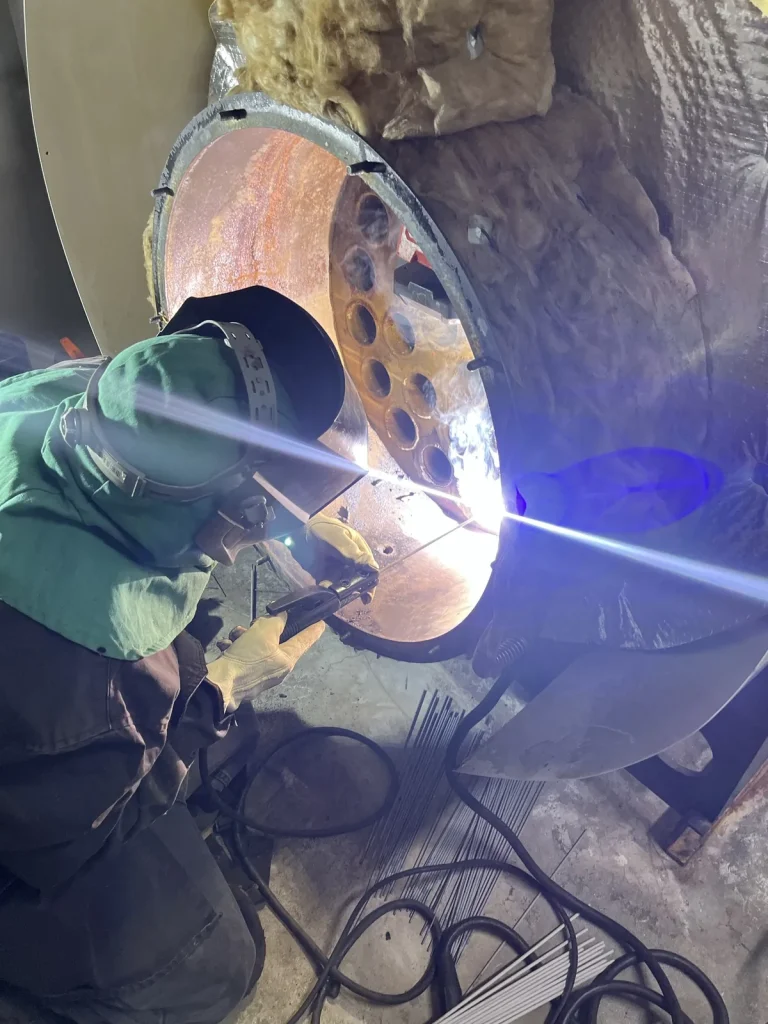
Repair makes sense when the heat exchanger or pressure vessel is sound and parts are available. Replace when the heat exchanger leaks, efficiency or emissions limits cannot be met, or repairs keep repeating.
McKenna Boiler Works, Inc. builds turnkey boiler systems in California and services and repairs other brands in apartment buildings across Los Angeles and all of California. For scheduled service and testing on a set calendar, see annual service contracts. A live person answers 24/7: call (323) 987-1816.