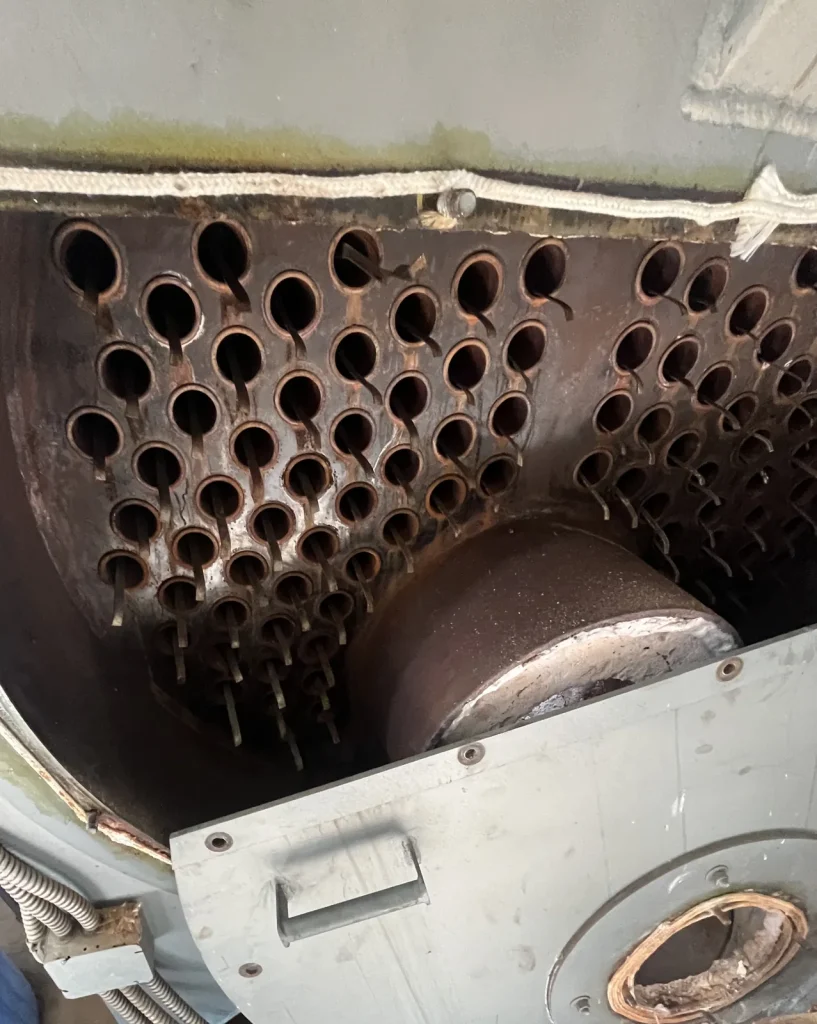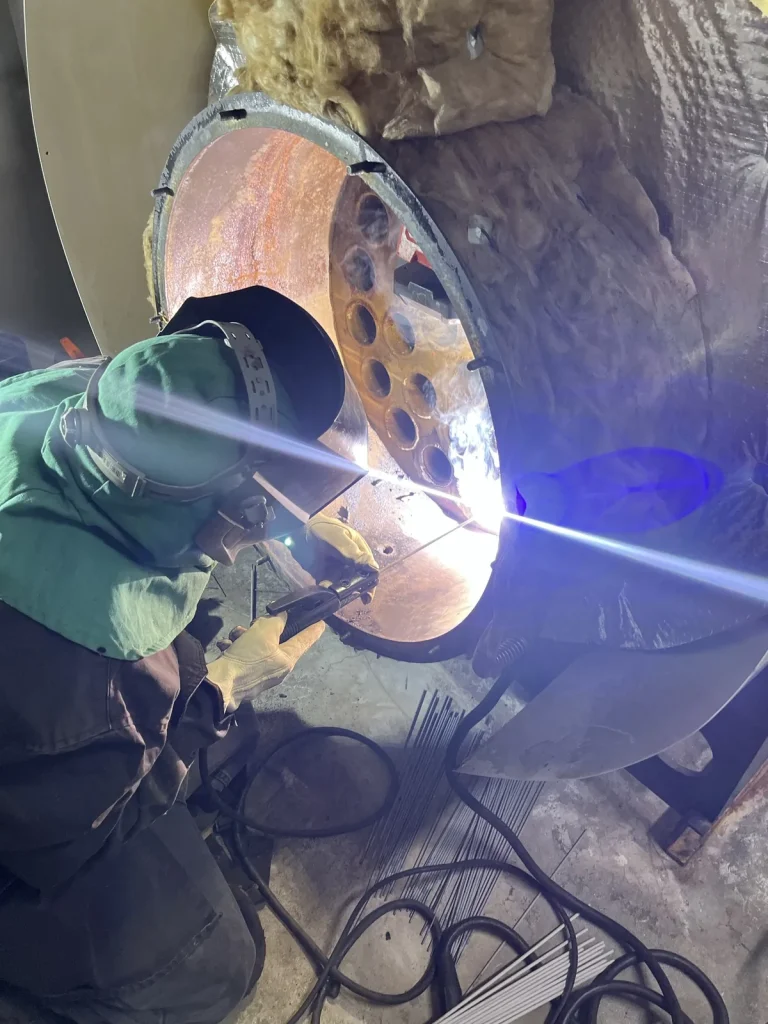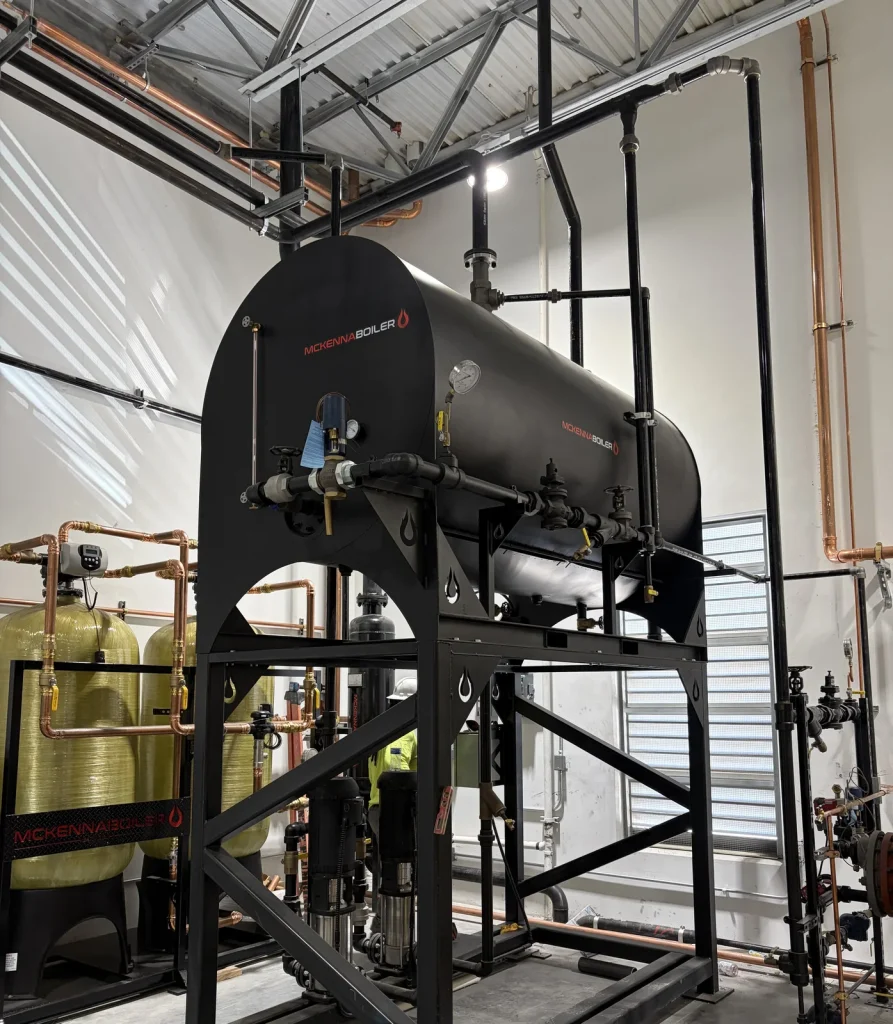
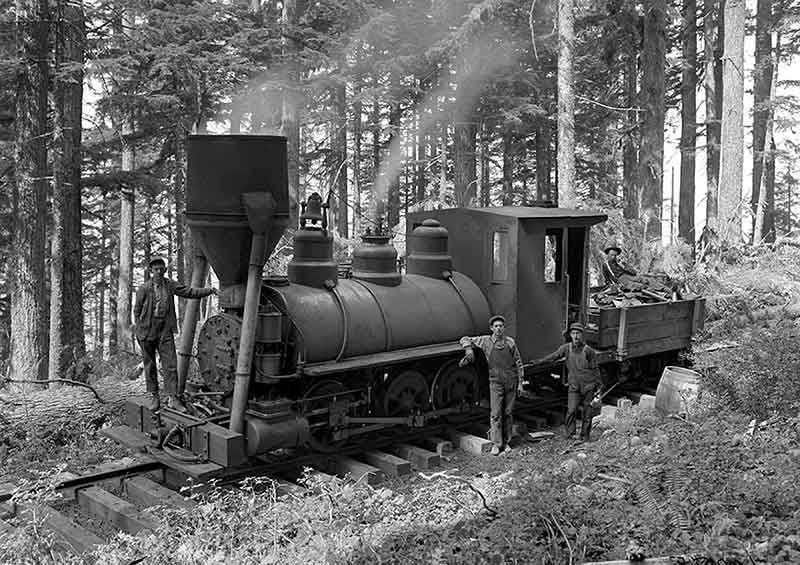
A steam locomotive boiler was a firetube boiler: fire burned in a water-jacketed firebox at the back, and hot gases ran forward through a bundle of tubes in a long water-filled barrel to the smokebox and chimney. McKenna Boiler Works, Inc. builds firetube and firebox boilers today, and the locomotive boiler is where much of that design, and the most important safety lesson in boiler operation, comes from. This post covers how those boilers worked, why they failed, and what an operator of a modern boiler should take from them.
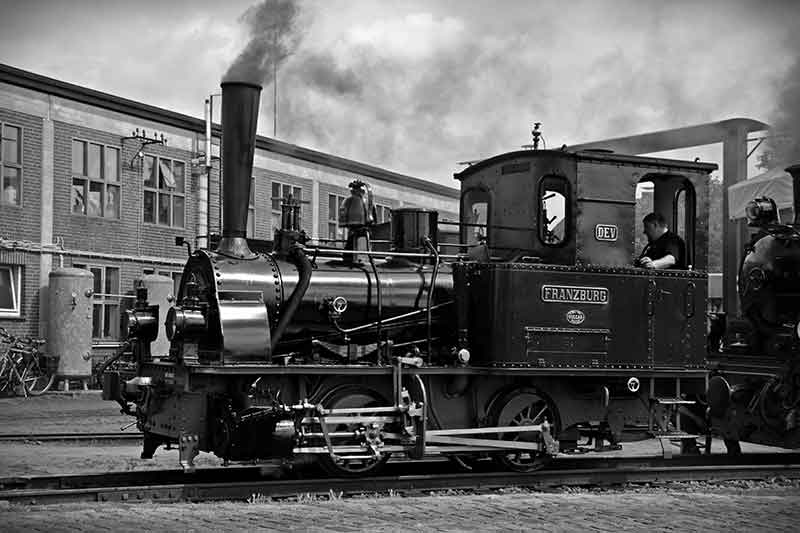
How did a locomotive boiler make steam?
Early engines such as Stephenson’s Locomotion No. 1 (1825) used a single large flue through the water, which gave little heating surface and limited how much steam the engine could make. Stephenson’s Rocket of 1829 brought together the two ideas that every later locomotive used: a separate firebox surrounded by water, and many small fire tubes through the barrel. Splitting the gas flow into many tubes multiplied the surface the hot gas touched, so the same fire boiled far more water.
The main parts, in the order the heat met them:
- Firebox. An inner box of copper or steel where coal or oil burned, held off the outer shell by rows of staybolts. The space between the two, the water legs, was full of boiler water. The flat top of the inner firebox, the crown sheet, took the most heat of any surface in the boiler.
- Tubes and flues. Gas left the firebox through the tube sheet and ran the length of the barrel, giving up heat by convection to the water around the tubes.
- Smokebox and blast pipe. Exhaust steam from the cylinders blasted up the chimney through the smokebox, pulling a draft through the fire. The harder the engine worked, the harder the draft, so the steam supply rose with demand.
- Steam dome and throttle. Steam was taken from a dome on top of the barrel, the highest and driest point, through the throttle (regulator) valve.
- Safety valves, water glass, and injectors. Safety valves capped the pressure. A water glass and gauge cocks showed the level. Injectors, introduced in 1858, used a steam jet to force feedwater into the boiler against boiler pressure.
Why did locomotive boilers explode?
The classic failure was low water. If the level fell below the crown sheet, the crown sheet was no longer cooled by water. Steel and copper lose strength quickly as they heat, and a crown sheet with the fire still under it could soften until boiler pressure tore it off its staybolts. Once that happened, the water in the boiler, which was far above 212°F, flashed to steam at once and released the boiler’s stored energy in a fraction of a second.
Engineers had two defenses. The water glass and gauge cocks let the crew see the level, and a fusible plug, a threaded plug filled with a low-melting alloy, was set in the crown sheet. If the plug was uncovered, the alloy melted and a jet of steam into the firebox warned the crew and damped the fire. Neither device worked if the crew ignored it.
Other failures came from overpressure (safety valves tied down or stuck), broken staybolts, and scale. Hard water left scale on the firebox sheets and tubes, and scale insulates the metal from the water, so the metal runs hotter than it should. Railroads treated water at trackside plants for this reason.
How did superheating and higher pressure change the boiler?
Saturated steam loses heat in the cylinders and partly condenses. From the early 1900s, superheaters became standard: steam from the dome was sent back through elements laid inside enlarged flues, where the hot gas raised its temperature above saturation before it reached the cylinders. Superheated steam does not condense as readily in the cylinders, so more of its energy does work.
Boiler pressures also rose. Late American steam locomotives commonly ran at roughly 200 to 300 psi, which required thicker shells, better steel, and better riveting and, later, welding. Railroads tried water-tube locomotive boilers, such as the LNER’s No. 10000 in 1929, but weight, vibration, and water quality made them hard to keep in service, and the firetube locomotive boiler stayed standard until diesel-electric locomotives replaced steam on most U.S. railroads by about 1960.
What did locomotive boilers leave to today’s boiler rooms?
| Locomotive practice | Modern equivalent |
|---|---|
| Many small fire tubes for heating surface | Multi-pass packaged firetube boilers |
| Water-jacketed firebox with stayed flat sheets | Firebox boilers with water legs |
| Water glass, gauge cocks, fusible plug | Gauge glass plus automatic low water cutoffs that shut the burner off |
| Safety valves | ASME-stamped safety valves sized to the boiler’s capacity |
| Trackside water treatment | Softening and a chemical program set by the site’s water treatment company |
| Federal boiler inspection (Locomotive Boiler Inspection Act of 1911) | Cal/OSHA permits and inspections, insurance inspectors, ASME and National Board rules |
The ASME Boiler Code was first published in 1914 to 1915 and the National Board was formed in 1919, after decades of stationary and locomotive boiler explosions. The physics has not changed: a low water condition with the burner on is still the most dangerous thing that can happen to a firetube boiler.
What to check: the low-water lesson in a modern boiler room
These checks apply to steam boilers. Follow the boiler and burner manufacturer’s instructions, lockout/tagout rules, and your site’s procedures for every step.
- Read the gauge glass every shift. The level should be visible and should move slightly with the boiler running. A level that sits perfectly still can mean a plugged glass or column connection.
- Blow down the gauge glass and water column on the schedule the manufacturer gives, using the valve sequence in the manual, so the glass shows the true level.
- Test the low water cutoff as the manufacturer directs. The burner must shut off when the level reaches the cutoff point. If the burner does not shut off, shut it off manually, keep it off, and call for service.
- If the water is out of sight in the glass, shut the burner off. Do not feed water into a boiler that may have run low until it has cooled and a qualified person has checked it. Cold water on overheated metal can crack it.
- Never plug, gag, or adjust a safety valve. A valve that leaks or lifts below its set pressure needs service by a qualified repair organization.
- Keep the water treatment company’s program running and have them on site during inspections to check the water side. Scale on a modern firetube does the same damage it did on a locomotive.
Common questions
What was the crown sheet on a steam locomotive?
The crown sheet was the flat top plate of the inner firebox, directly over the fire. It had to stay covered with water at all times. When the level dropped below it, the plate overheated, lost strength, and could fail under boiler pressure.
Do modern boilers still use fusible plugs?
Some older and marine boilers still have them. Modern packaged boilers rely on automatic low water cutoffs that shut the burner off before the heating surfaces are uncovered, with a gauge glass so the operator can see the level. These controls only protect the boiler if they are tested and kept working.
Why did railroads keep firetube boilers instead of water-tube designs?
Firetube locomotive boilers held a large volume of water, tolerated poor feedwater, and were simple to build and repair in railroad shops. The water-tube locomotive boilers that were tried were heavier, more sensitive to vibration and water quality, and harder to maintain on the road.
Are steam locomotive boilers still inspected today?
Yes. Steam locomotives still running in the United States, including on tourist and heritage railroads, fall under the Federal Railroad Administration’s steam locomotive inspection rules in 49 CFR Part 230. Stationary boilers in California fall under Cal/OSHA’s Boiler and Fired Pressure Vessel Safety Orders.
Is a modern packaged firetube boiler a locomotive boiler?
Not exactly. The packaged firetube descends more directly from the Scotch marine boiler, which has a round furnace inside the shell, while the firebox boiler keeps the locomotive’s water-jacketed firebox. Both use the many-tube layout the locomotive proved.
McKenna Boiler Works, Inc. was founded in 1921, and J.B. McKenna was servicing boilers in Los Angeles from 1887. Today McKenna builds firetube, firebox, and vertical boilers in California, and services and repairs other brands. For operator training on gauge glass checks, low water cutoff testing, and safe startup, see boiler operator training or call (323) 987-1816.