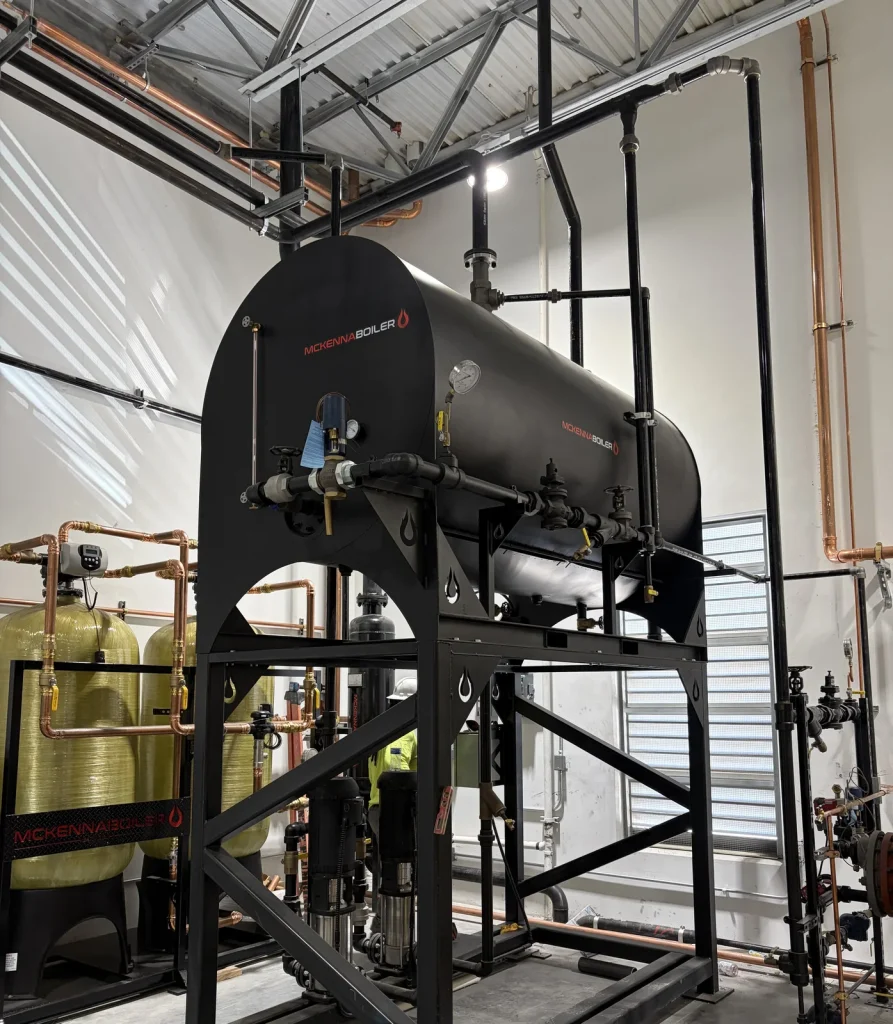

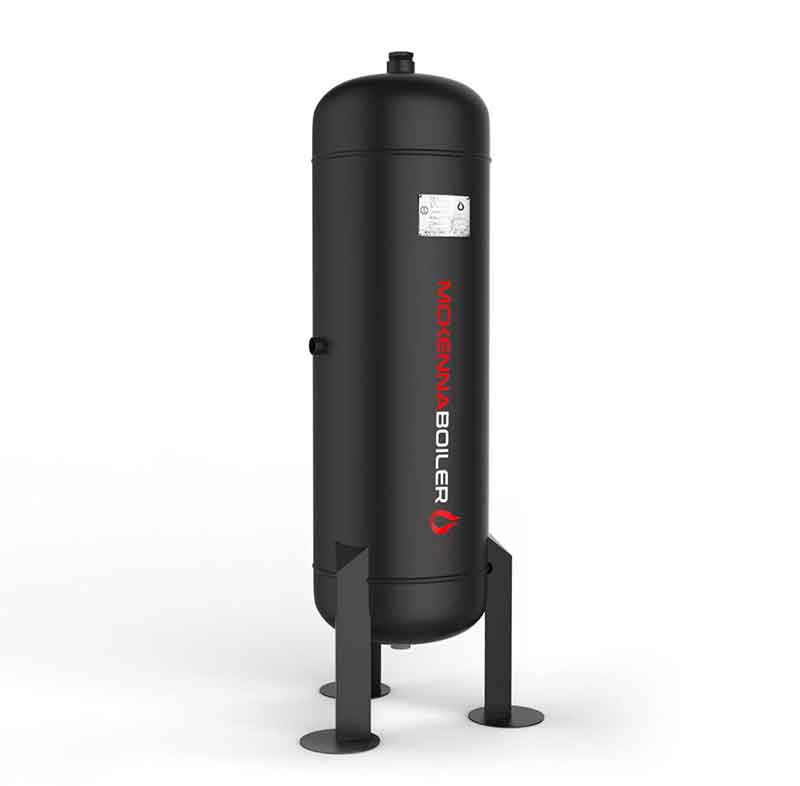
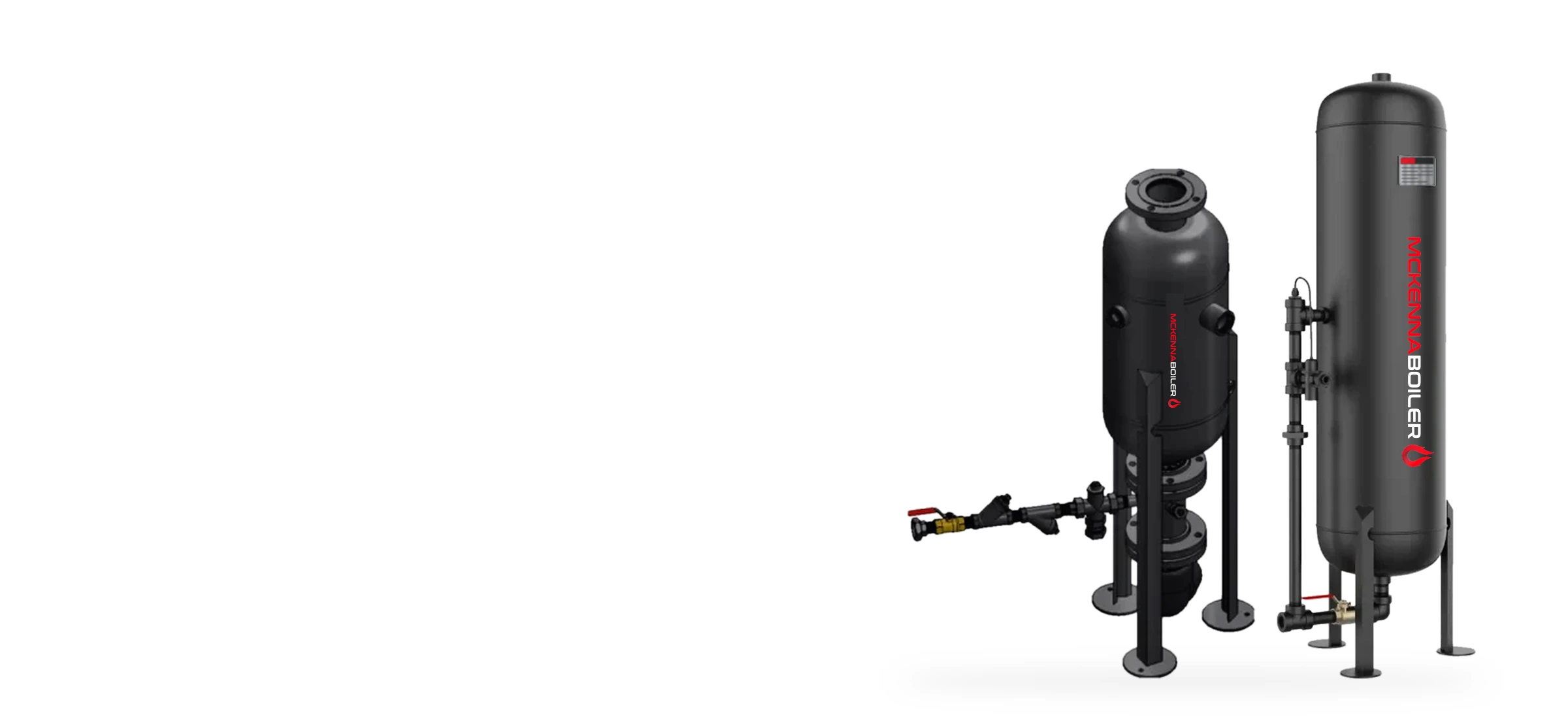
A blowdown tank or blowdown separator receives the hot, pressurized water a boiler discharges during blowdown, lets the flash steam escape through a vent, and cools the remaining water before it reaches the drain. A tank does the cooling by holding a volume of water; a separator holds no water and uses an aftercooler that mixes in cold water. McKenna Boiler Works, Inc. builds both in California, in carbon steel to ASME Section VIII with the U stamp, sized to discharge under 140°F.
What happens to blowdown water when it leaves the boiler?
Boiler water sits at the saturation temperature for the boiler’s pressure, which is well above 212°F on any steam boiler running above atmospheric pressure. When that water leaves the boiler and its pressure drops to atmospheric, it cannot stay liquid at that temperature. Part of it flashes to steam, and the rest drops to 212°F.
The flash fraction comes straight from the steam tables: the heat in the water at boiler pressure, minus the heat in water at 212°F, divided by the heat needed to evaporate a pound of water at atmospheric pressure. From a boiler at 100 psig, about 13 percent of the blowdown flashes to steam. At 150 psig it is about 16 percent. That steam has to leave through a vent, and the water left behind is still far too hot for a drain.
Two California rules set the requirements. Title 8 Section 764 of the Boiler and Fired Pressure Vessel Safety Orders does not allow blowoff to discharge directly into a sewer, requires the piping to end at a safe place of discharge, and requires a blowoff tank to be built for the highest pressure and temperature expected during blowdown, with a safety factor of at least 4 and a way to clean and inspect it. California Plumbing Code Section 810.1 does not allow water above 140°F to be discharged under pressure directly into a drainage system. Where the discharge ends up in a sewer, Section 764 also says to consult the local plumbing code.
Blowdown tank or separator: which one fits?
| Blowdown tank | Blowdown separator with aftercooler | |
|---|---|---|
| Holds water | Yes. Water from the last blowdown cools between blows and quenches the next one. | No. Flash steam separates and vents, and the water drains straight out. |
| How it cools | Mixing with the water it holds, plus natural cooling between blowdowns | An aftercooler mixes in cold water through a tempering valve |
| Cooling water | May not need any if sized for the blowdown schedule; an aftercooler can be added | Needs a cooling water supply every time the boiler blows down |
| Floor space | Larger vessel | Smaller vessel |
| Typical fit | Rooms with space, where the plant wants to limit cooling water use | Tight rooms where cooling water is available |
Plants with steady continuous surface blowdown often add heat recovery. The continuous blowdown goes to a flash tank, where the flash steam can be piped to the feedwater tank, and the remaining hot water runs through a heat exchanger that preheats incoming makeup water before going to drain. Bottom blowdown from the same boilers still goes to a blowdown tank or separator.
How is a blowdown vessel sized and built?
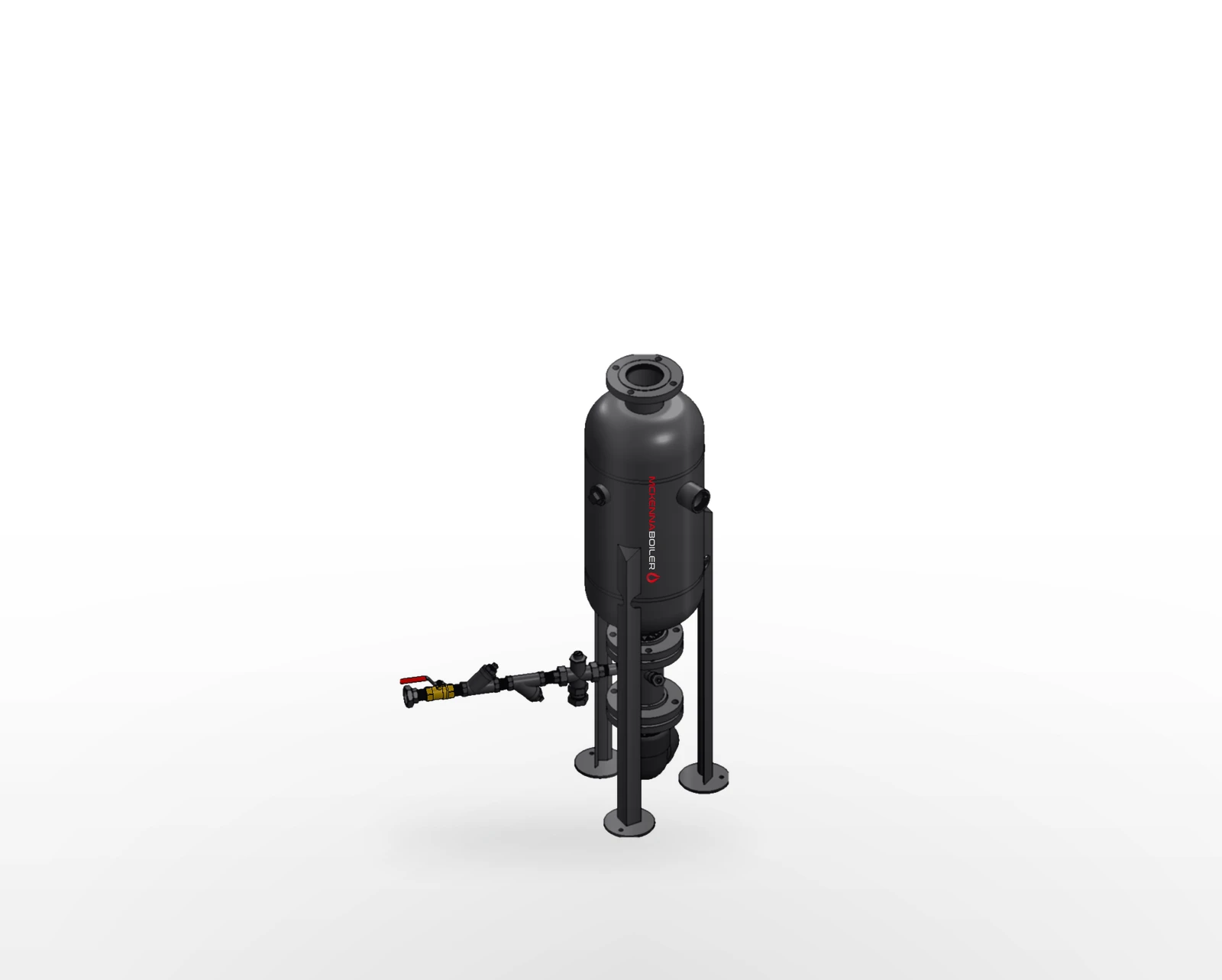
The National Board’s NB-27 guide for blowoff vessels covers the design points. The vent is the most important. It has to be large enough to carry off the flash steam so the vessel stays near atmospheric pressure, it connects at the top of the vessel, it runs at least full size to a safe point of discharge, and it has no stop valve in it. Open blowoff vessels are built to ASME Section VIII, Division 1, for at least 50 psi or the boiler manufacturer’s recommendation and the jurisdiction’s requirements.
Sizing depends on the boiler’s pressure, the size of the bottom blowdown connection, how often the boilers blow down, and how many boilers feed the vessel. When several boilers blow down one after another into one vessel, the water in a tank warms with each blow, so the system needs an aftercooler or a cold water line to keep the discharge at 140°F or less. A pressure gauge and a thermometer on the vessel let the operator see what it is doing.
An aftercooler is available for McKenna blowdown tanks. A McKenna engineer can tell you which vessel fits your boilers, your blowdown schedule, and your room.
How do you operate and maintain a blowdown tank?
Before each blowdown, the operator checks that the vent is clear, the drain is open, and, on a separator or a tank with an aftercooler, that the cooling water is on. During the blowdown, watch the boiler’s gauge glass and the vessel’s gauge and thermometer. Blow down one boiler and one line at a time.
If the vessel’s pressure gauge climbs during a blowdown, the vent is blocked or too small, or the blowdown is more than the vessel was sized for. Stop the blowdown and do not blow down again until the vent has been cleared and checked. Never try to open, unbolt, or drain a blowdown vessel that is under pressure.
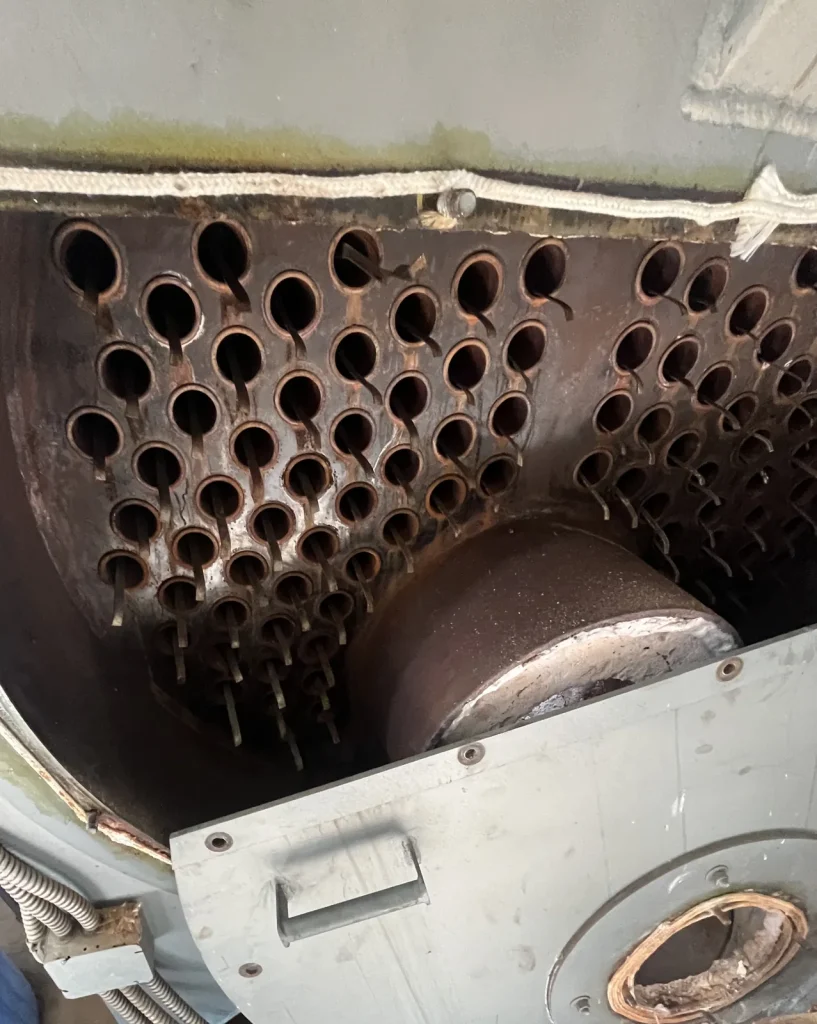
Blowdown tanks corrode over time from the hot, wet, oxygen-bearing water inside them. Regular inspection catches the thinning, and the tank is replaced when the shell is no longer sound. Your water treatment company sets the boiler’s blowdown rate within the limits in the boiler manufacturer’s manual, and that rate sets how hard the vessel works.
What to check
- The vent line is open, unobstructed, full size, and has no valve in it.
- The drain from the vessel is open and flowing.
- Discharge to the drain stays under 140°F during and after a blowdown.
- The vessel’s pressure gauge stays near zero during blowdown. If it climbs, stop and have the vent checked.
- On a separator or aftercooler, the cooling water supply, strainer, and tempering valve work.
- The shell is inspected for corrosion and thinning. The inspection opening is used only with the vessel cool, isolated, and at zero pressure.
- The nameplate and U stamp are readable for the inspector.
- Any insulation or guard for personnel protection is intact, since the shell runs hot.
Common questions
Do I need a blowdown tank or a separator?
A tank suits rooms with space where the plant wants to use little or no cooling water. A separator suits tight rooms with a reliable cooling water supply for its aftercooler. Boiler pressure, blowdown frequency, and how many boilers share the vessel decide the size either way.
Why does the 140°F limit matter?
California Plumbing Code Section 810.1 does not allow water above 140°F to be discharged under pressure directly into a drainage system. Hotter water can damage drain piping and flash to steam in the sewer. The vessel and any aftercooler are sized to keep the discharge below that limit.
Can several boilers share one blowdown tank?
Yes, if the vessel is sized for it and the boilers blow down one at a time. Back-to-back blowdowns warm the water in the tank, so a shared vessel usually needs an aftercooler or a cold water line to hold the discharge at 140°F or less.
What happens if the vent is blocked?
The flash steam has nowhere to go, so pressure builds in a vessel that was designed to run near atmospheric. Stop blowing down until the vent is cleared and checked. A vent never has a valve in it.
Does continuous blowdown need its own equipment?
Continuous surface blowdown can be piped to a flash tank and heat exchanger to recover heat, because it runs all the time. Bottom blowdown is intermittent and still goes to a blowdown tank or separator.
See McKenna’s blowdown tanks and separators, the related feedwater systems, and blowdown service under preventive maintenance. To size a blowdown vessel for your boiler room, call (323) 987-1816.