

A real boiler maintenance program splits the work two ways. Operators handle the shift and weekly checks and keep the log, and a qualified service company does the safety control testing, combustion tuning, and annual inspection work that needs instruments, training, and code authority. McKenna Boiler Works, Inc. offers preventative maintenance and annual service contracts for McKenna boilers and other brands across California, and this guide covers what the work includes and how to judge any service company, McKenna included.
Which tasks belong to operators, and which to a contractor?
For automatically fired boilers with fuel input under 12.5 MMBtu/hr, ASME CSD-1 sets the controls and safety devices and requires that they be tested and the results logged. Larger units fall under NFPA 85. In both cases the manufacturer’s instructions set the specific test steps and frequencies. A typical split looks like this:
| Task | How often | Who |
|---|---|---|
| Read and log steam pressure or water temperature, water level, flame signal, stack temperature, gas pressure | Each shift | Operator |
| Blow down the gauge glass and the low water cutoff float chamber on steam boilers | Per the manufacturer; commonly daily or weekly | Operator |
| Water tests and blowdown | Daily, to the water treatment program | Operator, with the program set by the water treatment company |
| Check combustion air openings and burner air filter | Daily to weekly | Operator |
| Flame failure, limit, and interlock tests | Per CSD-1 and the manufacturer | Operator or technician, depending on the test |
| Low water cutoff evaporation or slow drain test | Per the manufacturer and insurer | Technician, or a trained operator under the site procedure |
| Safety valve test | Per the manufacturer and insurer | Technician |
| Combustion analysis and tune-up | At least annually, or as the air permit requires | Technician |
| Safety shutoff valve leak test | Per the valve manufacturer, typically annually | Technician |
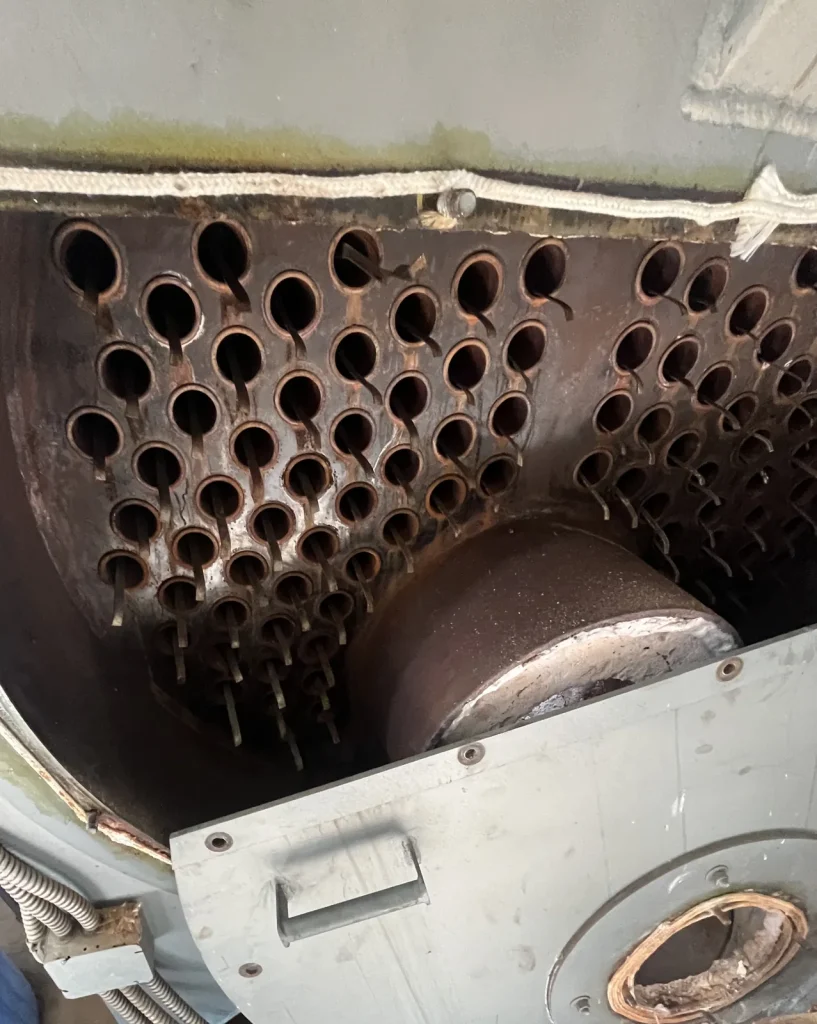
| Open the boiler, clean, and inspect the fire side and water side | Annually | Technician and inspector, with the water treatment company on site |
The low water cutoff is the control that most often gets misassigned. On a steam boiler, blowing down the float chamber is a routine operator task, and the burner should shut off when the water in the chamber drops. A full evaporation or slow drain test, where the boiler is fired while the water level is slowly lowered, is a controlled test done to the manufacturer’s procedure. If the burner does not shut off at the cutoff’s marked level, the person running the test shuts the burner off manually, and the boiler stays off until the cutoff is repaired.
What does the annual inspection involve in California?
Under the Cal/OSHA Boiler and Fired Pressure Vessel Safety Orders and Labor Code section 7682, power boilers (steam above 15 psig) get an internal and external inspection at least once a year, by a Cal/OSHA safety engineer or a certified inspector, usually from the insurer. The permit to operate is issued after the inspection, so note its expiration date and schedule ahead of it. For plants with strong maintenance programs, the Division can approve longer intervals between internal inspections, up to 36 months for fired boilers.
Low-pressure boilers and miniature boilers are exempt from the annual inspection and the permit to operate under Title 8, section 771. They must still meet the Safety Orders and keep their automatic controls working, and insurers and local jurisdictions may still require inspections.
To prepare for an internal inspection, the boiler is shut down, cooled, drained, locked out, and opened: manways, handholes, and plugs on the water column connections. Have your water treatment company on site to check and monitor the water side while the boiler is open. McKenna is not a water treatment company. See boiler inspections and testing.
Where do maintenance savings actually come from?
Savings come from specific mechanisms, and each one can be measured.
- Excess air. The U.S. Department of Energy rule of thumb is about 1 percent efficiency for each 15 percent cut in excess air, or each 40°F drop in stack temperature. Combustion tuning works on both.
- Clean heating surfaces. Soot on the fire side and scale on the water side both raise stack temperature.
- Steam traps and condensate. Failed-open traps blow live steam, and every pound of condensate not returned has to be replaced with cold makeup water that must be heated and treated.
As an example: on a boiler that burns 100,000 therms a year, each 1 percent of fuel saved is 1,000 therms. Multiply by your gas rate to see what a point of efficiency is worth to you.
How do you judge a boiler service company?
Ask these questions before you sign:
- What is your California contractor license number, and do its classifications cover the work? You can check any license, its classifications, and its status on the CSLB website. McKenna’s license is CA Lic. #1044490, classification C-4 (Boiler, Hot Water Heating and Steam Fitting).
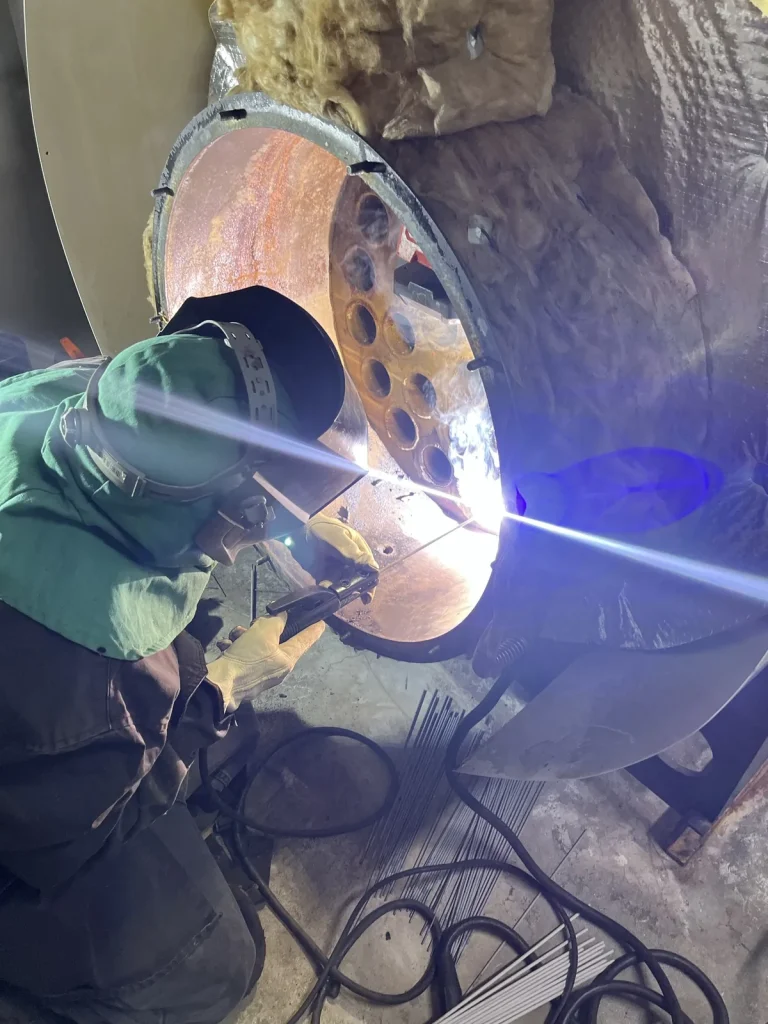
- Do you hold a National Board R certificate for welded repairs to pressure parts, and ASME certificates if you build equipment? McKenna holds National Board R certificate No. 11037 and ASME S, H, M, and U certificates.
- Who answers the phone at 2 a.m.? A live person, or a voicemail box?
- Will I get written reports with analyzer readings, safety control test results, findings, and photos?
- Can you supply a rental boiler if mine has to come down?
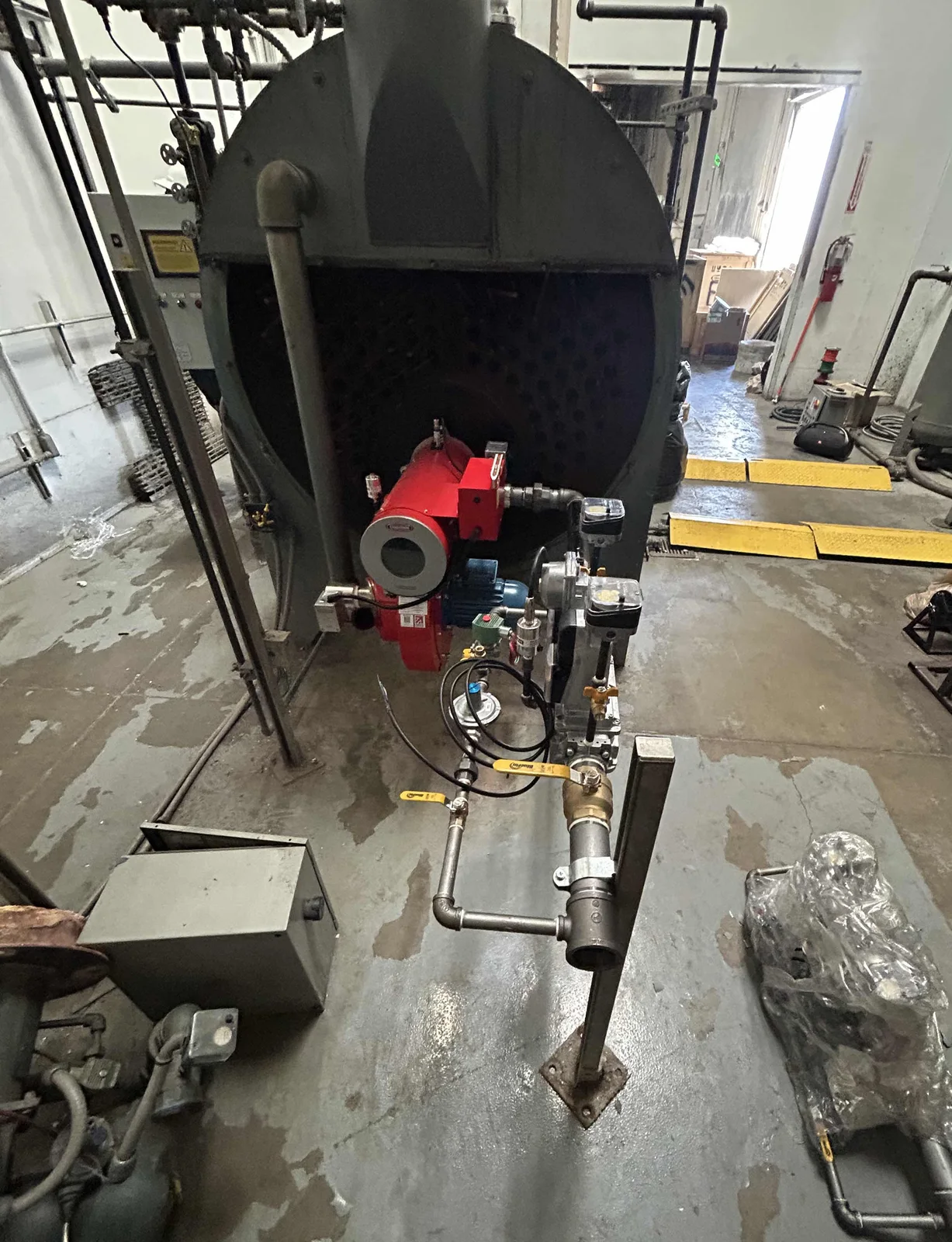
- Do you work on my burner and controls? McKenna installs, sets up, and tunes burners and controls from any manufacturer.
- Do you know my air district’s rules, tune-up records, and source test requirements?
Warning signs: a technician who jumpers out a safety control to get a boiler running, an annual that never opens the boiler, a tune-up with no analyzer printout, and no written records. On price, McKenna isn’t always the cheapest. The reason to choose McKenna is one accountable company for the boiler.
What to do: setting up your program
- Post a shift log at the boiler and record readings every shift. Trends catch problems early.
- Learn the low water cutoff test from the manufacturer’s instructions. When the float chamber is blown down, the burner should shut off. If it does not, close the blowdown valve, shut the burner off manually, and call for service. Do not run the boiler until the cutoff is repaired.
- If any other safety test fails, such as a flame failure test that does not lock out, a limit that does not shut the burner off, or a safety valve that does not open or does not reseat on a try-lever test, shut the burner off manually and call for service. Do not run the boiler until it is fixed.
- Never bypass, jumper, or disable a safety control. Follow the manufacturer’s instructions, lockout/tagout, and your site’s procedures for all work on the boiler.
- Put the permit to operate expiration date and the air district test dates on the calendar.
- Keep CSD-1 test records, combustion reports, R-1 forms, and water treatment logs together.
- Write the scope of your service contract down: visits per year, tests included, response time, and what is billed separately.
Common questions
How often should a commercial boiler be serviced?
Operators check it every shift. A technician should test controls, tune the burner, and open the boiler for inspection at least once a year, with more visits where the load, the air permit, or the insurer calls for them.
Does my boiler need a Cal/OSHA permit to operate?
Power boilers in California need a permit to operate, issued after an annual inspection. Low-pressure and miniature boilers are exempt from the annual inspection and permit under Title 8, section 771, but must still meet the Safety Orders.
Who should test the low water cutoff?
Operators blow down the float chamber on the manufacturer’s schedule and confirm the burner shuts off. Fuller tests, such as the evaporation test, are done to the manufacturer’s procedure by a technician or a trained operator.
What is ASME CSD-1?
ASME CSD-1 covers controls and safety devices on automatically fired boilers with fuel input under 12.5 MMBtu/hr. It sets the required controls and calls for periodic testing and a log. Larger boilers fall under NFPA 85.
What should a service contract include?
A clear visit schedule, the safety control tests and tune-ups covered, written reports, emergency response terms, and pricing for parts and extra work. McKenna Boiler Works, Inc. writes annual service contracts around your boiler, your permit, and your load.
To set up preventative maintenance for your boilers, see preventative maintenance or call (323) 987-1816. A live person answers 24/7.