

A well-run steel firetube boiler commonly lasts 25 years or more; ASHRAE lists a median service life of about 25 years, and many boilers run far longer with retubes and code repairs. What decides the number is mostly the water side, how the boiler is fired and cycled, and how quickly problems found at inspection are repaired. McKenna Boiler Works, Inc. builds new boilers and repairs existing ones in California, and this post explains what wears a boiler out and what extends its life.
What does “boiler life” actually mean?
A firetube boiler is mostly repairable. Tubes can be replaced, refractory rebuilt, burners and controls upgraded, and many pressure part defects repaired under the National Board Inspection Code (NBIC) Part 3. The parts that are hard or uneconomical to replace are the shell, the furnace, and the tube sheets. In practice, a boiler reaches the end of its life when one of these is too thin, cracked, or distorted to repair economically, when it can no longer meet the air district’s emissions limit, or when the plant’s load has changed so much that it no longer fits.
What shortens a boiler’s life?
| Cause | What happens | What you see |
|---|---|---|
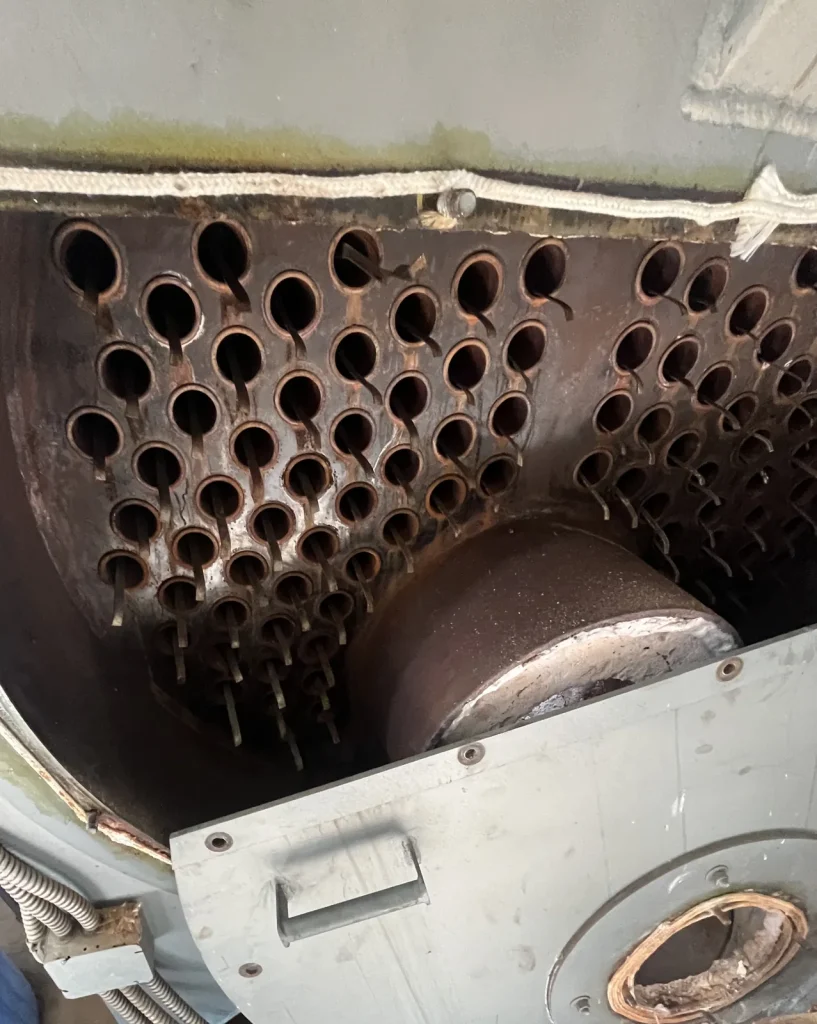
| Scale | Hardness deposits insulate tubes and furnace from the water, so the metal runs hotter | Rising stack temperature, bulged or blistered furnace, tube failures |
| Oxygen pitting | Dissolved oxygen in feedwater attacks steel in deep, local pits | Pitted tubes at inspection, pinhole leaks |
| Low water | Heating surfaces uncovered while firing | Warped furnace, leaking tube ends, cracked tube sheets |
| Thermal shock | Cold water or fast firing on a cold boiler stresses joints | Leaking tube ends, cracks in tube sheet ligaments |
| Short cycling | Many heat-up and cool-down cycles per hour | Fatigue cracking over years, worn ignition and controls |
| Poor combustion | Flame impingement or soot | Hot spots, damaged refractory, sooted tubes |
| Idle corrosion | A boiler left wet and untreated while off | Heavy corrosion found when an idle boiler is opened |
| Fire side condensation | Return water too cold on a non-condensing hot water boiler | Acidic corrosion of tubes and tube sheets |
Why does water treatment matter most?
Scale and corrosion work slowly, every hour the boiler runs, and both are prevented on the water side. Softening removes hardness; heating the feedwater and adding an oxygen scavenger removes oxygen; blowdown keeps dissolved solids within limits. The site’s water treatment company sets that program, supplies the chemicals, tests the water, and should be on site during inspections to check and monitor the water side. Plant staff run the daily tests and blowdown the program calls for. Poor water treatment is one of the most common reasons a boiler is retired early.
How do sizing and operation affect life?
- Size for the real load. An undersized boiler runs at high fire constantly. An oversized one short cycles at light load. Two smaller boilers, or a burner with more turndown, often fit a varying load better.
- Warm up slowly from cold at low fire, as the manufacturer specifies, to limit thermal stress.
- Keep feedwater hot so cold water does not hit hot tube sheets.
- Lay up idle boilers correctly, wet or dry, as the boiler manufacturer’s manual specifies, with your water treatment company setting the chemistry.
- Keep combustion tuned so the flame is the right shape and does not impinge on the furnace.
When should you repair, and when replace?
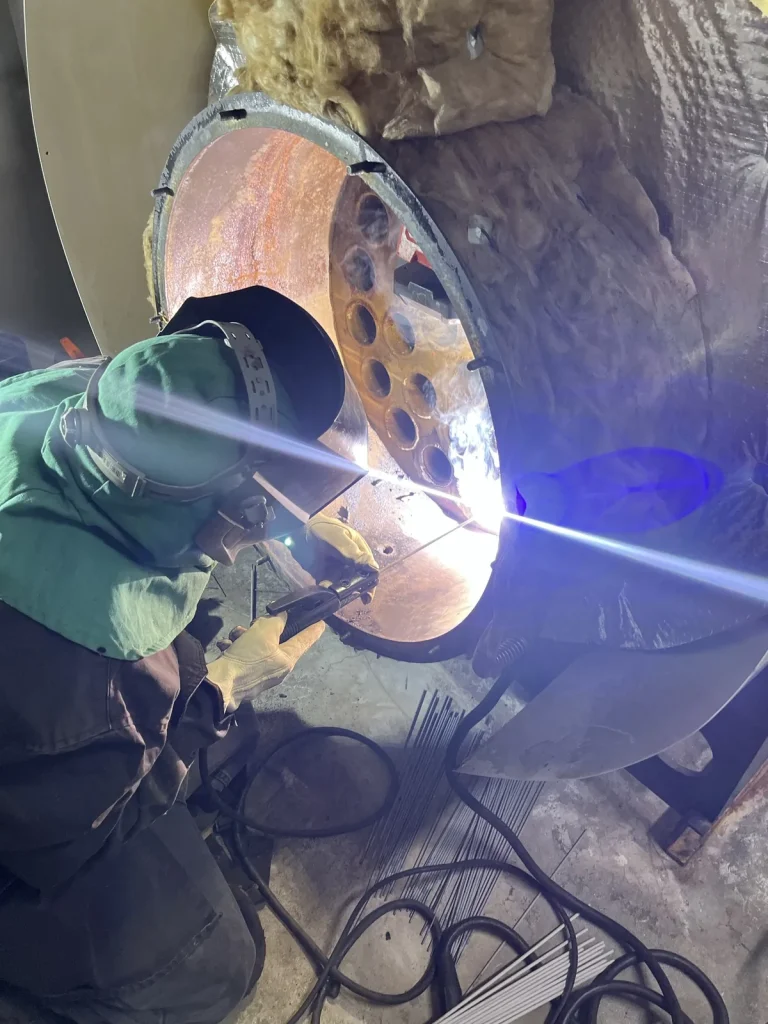
Repair first when the shell, furnace, and tube sheets are sound. Retubes, refractory repair, and burner and control upgrades can add many years. Welded repairs to pressure parts, such as seal-welded tubes or tubesheet repairs, are made under NBIC Part 3 by a holder of a National Board R certificate; In most cases, replacing rolled and beaded tubes is not an R stamp repair; check with your Authorized Inspector. McKenna holds National Board R certificate No. 11037; see R stamp repairs.
Consider replacement when:
- The inspector or an ultrasonic thickness survey finds the shell or furnace thinned beyond what repair can restore.
- Tube sheet cracking keeps returning.
- The air district’s NOx limit cannot be met with a burner retrofit on this boiler.
- The load has grown or shrunk so much that the boiler no longer fits.
- Repairs keep repeating and downtime costs more than a new boiler.
What to do to get the most years from a boiler
- Keep the water treatment program running and have the water treatment company at each inspection.
- Log stack temperature, steam pressure, water level, and feedwater temperature every shift.
- Test low water cutoffs and the flame safeguard on the manufacturer’s schedule, following lockout/tagout and site procedures. If a control does not trip, shut the burner off manually and call for service.
- Have the boiler serviced and tuned at least once a year, before the Cal/OSHA inspection for power boilers.
- Read the inspector’s report and fix every finding promptly; small leaks and minor thinning are cheaper to repair early.
- Keep the ASME data report, repair records, and inspection reports together; they show the boiler’s history.
Common questions
How long do industrial boilers last?
ASHRAE lists a median service life of about 25 years for steel firetube boilers, the most common industrial type. With good water treatment, correct sizing, and prompt repairs, many run considerably longer, and retubes can extend life further when the shell and furnace are sound.
What is the most common reason boilers fail early?
Water side problems: scale from hardness and pitting from dissolved oxygen. Both are prevented by a water treatment program set by the site’s water treatment company and followed every day by plant staff.
Is a retube worth it on an older boiler?
It is when the shell, furnace, and tube sheets are in good condition, which an inspection confirms, with ultrasonic thickness readings by proposal if needed. If those parts are thin or cracked, the money is usually better spent on a new boiler.
Who can repair a boiler’s pressure parts in California?
Welded repairs to pressure parts, such as seal-welded tubes or tubesheet repairs, are made under NBIC Part 3 by an organization holding a National Board R certificate, with an Authorized Inspector involved. In most cases, replacing rolled and beaded tubes is not an R stamp repair; check with your Authorized Inspector. Keep the repair documentation with the boiler’s records.
Does an oversized boiler last longer because it works less?
Usually the opposite. An oversized boiler short cycles at light load, and the repeated heating and cooling stresses tube joints and wears the burner and controls.
McKenna Boiler Works, Inc. builds firetube, firebox, and vertical boilers in California, standard or custom-sized, and services and repairs other brands. For an inspection and a clear picture of what your boiler needs, see boiler inspections and testing or call (323) 987-1816.