
Boiler blowdown removes boiler water that carries concentrated dissolved solids and settled sludge, so the water stays inside the limits in the boiler manufacturer’s manual and your water treatment program. Bottom blowdown is done by an operator on one boiler and one line at a time: open the quick-opening valve nearest the boiler first, then open the slow-opening valve, blow for the time the program calls for, and close them in reverse order while watching the gauge glass the whole time. McKenna Boiler Works, Inc. builds blowdown tanks and separators, and this guide covers why blowdown matters and how to do it safely.
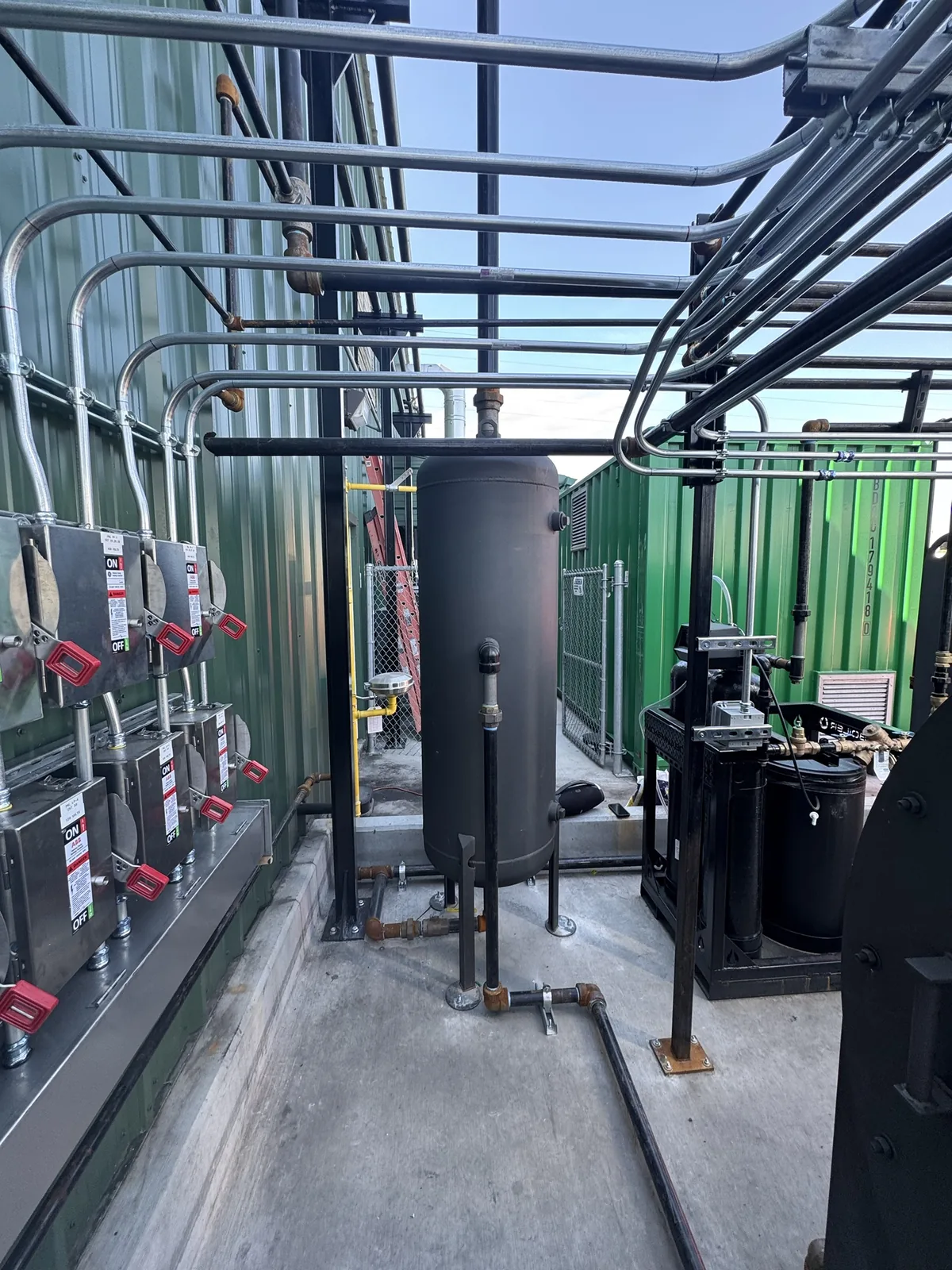
Why does a boiler need blowdown?
Steam leaves the boiler as nearly pure water vapor. The dissolved solids that came in with the feedwater stay behind, so every pound of steam made concentrates them a little more. The ratio of dissolved solids in the boiler water to dissolved solids in the feedwater is called cycles of concentration. Left alone, the concentration keeps rising.
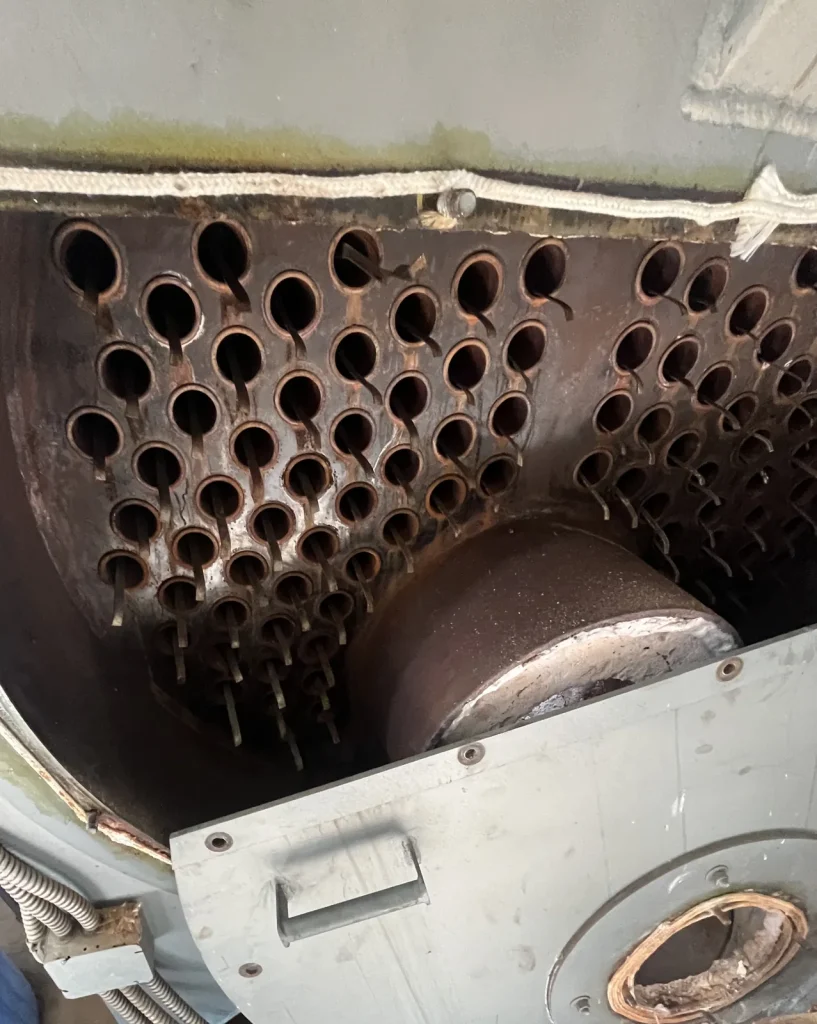
Two things go wrong when it does. High dissolved solids make the boiler water foam, and foam carries water and solids out with the steam. That carryover fouls traps and control valves, contaminates process steam, and puts slugs of water in the steam lines. Suspended solids and sludge, meanwhile, settle at the bottom of the boiler. Sludge and scale insulate the heating surfaces, so the steel underneath runs hotter than the water and can overheat.
Blowdown has a cost. Every pound blown down is water at boiler temperature, already treated and heated, going to drain. The boiler manufacturer’s manual gives the blowdown limits for your boiler, and your water treatment company sets the rate from your water analysis. The aim is enough blowdown to hold the program’s limits and no more, which is why the schedule belongs to the water treatment company.
What is the difference between surface and bottom blowdown?
| Continuous surface blowdown | Bottom blowdown | |
|---|---|---|
| Where it draws from | A skimmer line just below the water surface, where dissolved solids are most concentrated | The lowest point of the boiler, where sludge settles |
| What it controls | Dissolved solids, measured as conductivity | Sludge and settled solids |
| How it runs | A metered valve that runs steadily, often controlled automatically on conductivity | Short manual blows on a schedule |
| Heat recovery | Practical, because the flow is steady | Rarely worth it, because the flow is intermittent |
Blowing down the gauge glass, the water column, and the low water cutoff chamber is a separate, smaller job. It keeps those connections clear and proves the cutoff works, and it does not take the place of bottom blowdown.
Who sets the schedule, and what do the codes require?
Your water treatment company sets the conductivity limits, the cycles of concentration, and how often and how long to bottom blow down, working from the boiler manufacturer’s manual. Never blow down less often than the manual calls for. The water treatment company tests the water, reads your log, and adjusts the program. The operator’s job is to follow the program in place and record what was done.
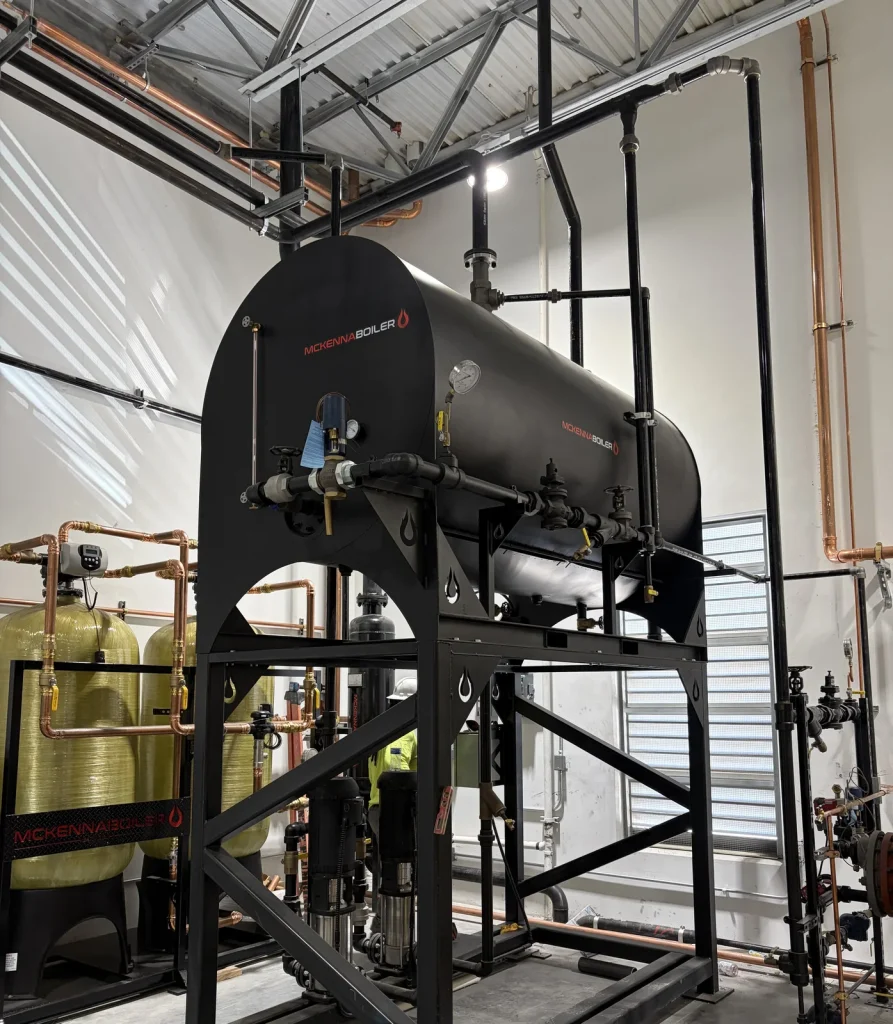
The equipment has rules of its own. ASME Section I power boilers with a maximum allowable working pressure over 100 psi need two blowoff valves in series: two slow-opening valves, or a quick-opening valve and a slow-opening valve. In California, Title 8 Section 764 of the Boiler and Fired Pressure Vessel Safety Orders requires blowoff piping to end at a safe place of discharge, to be supported so it does not strain the valves, and not to discharge directly into a sewer. California Plumbing Code Section 810.1 does not allow water above 140°F to be discharged under pressure directly into a drainage system. That is why blowdown goes through a blowdown tank or separator first.
How do you blow down a boiler safely?
- Check the program for how long to blow down. Many programs call for bottom blowdown at light load, when sludge has settled; follow yours.
- Check that the blowdown tank or separator vent is open and clear, the drain is open, and, on a separator, that the aftercooler’s cooling water is on. Make sure nobody is near the discharge.
- Confirm the water is at the normal level in the gauge glass. Blow down one boiler and one line at a time.
- Open the quick-opening valve, the one nearest the boiler, fully.
- Open the slow-opening valve slowly, to avoid hammering the piping. Blow down for the time the program sets.
- Keep a hand on the valve and your eyes on the gauge glass. Close it before the level drops below the low limit the manufacturer allows. Never leave an open blowdown valve unattended.
- Close the slow-opening valve, then close the quick-opening valve.
- If your procedure calls for it, open the slow-opening valve briefly to drain the line between the two valves, then close it.
- After the valves cool, check that the pipe downstream is cooling too. A pipe that stays hot means a valve is leaking through.
- Log the time, duration, and boiler, along with any readings the program asks for.
The order matters. The quick-opening valve is opened first and closed last so that the slow-opening valve does the throttling and takes the wear, which keeps the quick-opening valve tight as the sealing valve. If the water level drops out of sight in the gauge glass during a blowdown, close the blowdown valves, shut the burner off by hand if the low water cutoff has not already done it, do not add feedwater, and call for service.
What to check
- The blowdown schedule and duration come from your water treatment company and are posted at the boiler.
- The blowdown tank or separator vent is clear before every blowdown.
- One boiler and one line at a time, quick-opening valve first, slow-opening valve second, reverse order to close.
- The operator stays at the valve and watches the gauge glass for the entire blow.
- The discharge to drain stays under 140°F. Check it with a thermometer if the tank or aftercooler has one.
- Downstream piping cools after the valves close. A pipe that stays hot points to a leaking valve.
- Every blowdown is logged, and the log is there for the water treatment company and the inspector.
Common questions
How often should a boiler be blown down?
As often and as long as your water treatment program calls for, based on its water tests. The right rate depends on feedwater quality, how much condensate returns, and the boiler’s load. If test results drift out of range, call your water treatment company before you change the schedule.
Does blowdown improve boiler efficiency?
No. Blowdown sends heated, treated water to drain, so it costs fuel and water. It protects the heating surfaces and steam quality. Too little blowdown leads to scale and carryover, and too much wastes energy.
Why blow down only one line at a time?
With two lines open, the flow divides and neither line moves enough water to carry out the sludge. The level also falls faster and is harder to control. One line at a time keeps the blowdown effective and the water level in view.
Can blowdown go straight to a floor drain?
No. In California, Title 8 Section 764 does not allow blowoff to discharge directly into a sewer, and the plumbing code limits drain water to 140°F. A blowdown tank or separator lets the flash steam vent and cools the water first. Where the discharge ends up in a sewer, Section 764 also says to check the local plumbing code.
What does a hot pipe downstream of a closed blowdown valve mean?
One of the blowdown valves is leaking through. It wastes water and treated heat, and the line is not safe to work on. Have the valve repaired or replaced at the next opportunity.
McKenna builds blowdown tanks and separators, services blowdown valves and piping as part of preventive maintenance, and teaches the blowdown sequence in boiler operator training. For help with your blowdown setup, call (323) 987-1816. A live person answers 24/7.