
A cold steam boiler is brought on line by inspecting it, filling it with the vent open, proving the gauge glass and low water cutoff, letting the flame safeguard purge and light the burner, and then warming it slowly at low fire so the steel heats evenly. It is taken off line by shutting the burner off at the control, isolating and draining the steam lines, and letting it cool on its own with the water level held. McKenna Boiler Works, Inc. starts up new boilers and trains operators, and the steps below explain what each one protects against.
This is a general outline. Follow the boiler and burner manufacturer’s instructions and your plant’s written procedure, which take priority. Lockout/tagout stays in place until the inspection and any work on the boiler are finished, and no safety control is ever bypassed to get a boiler running.
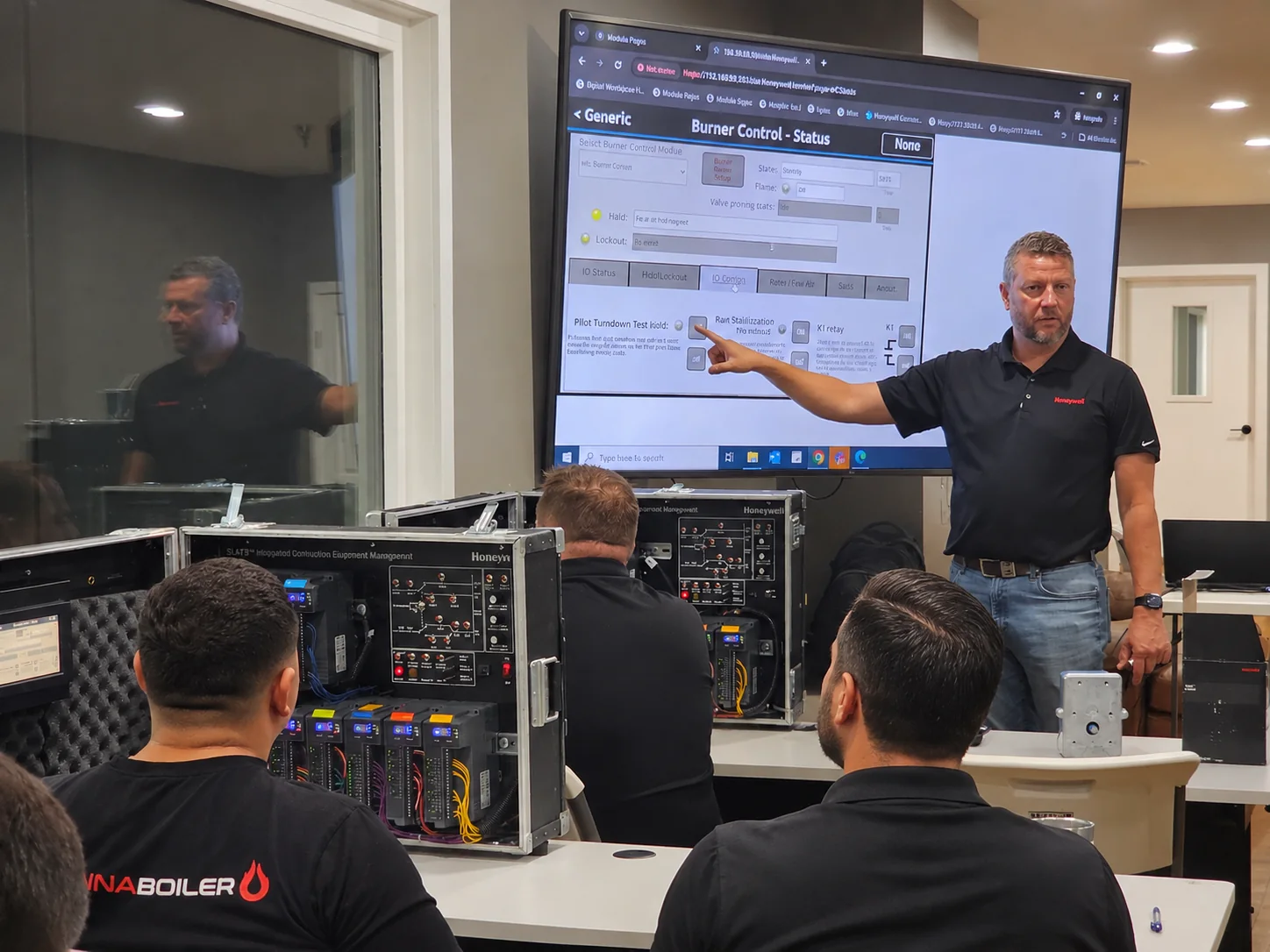
Why does a cold boiler need a slow start?
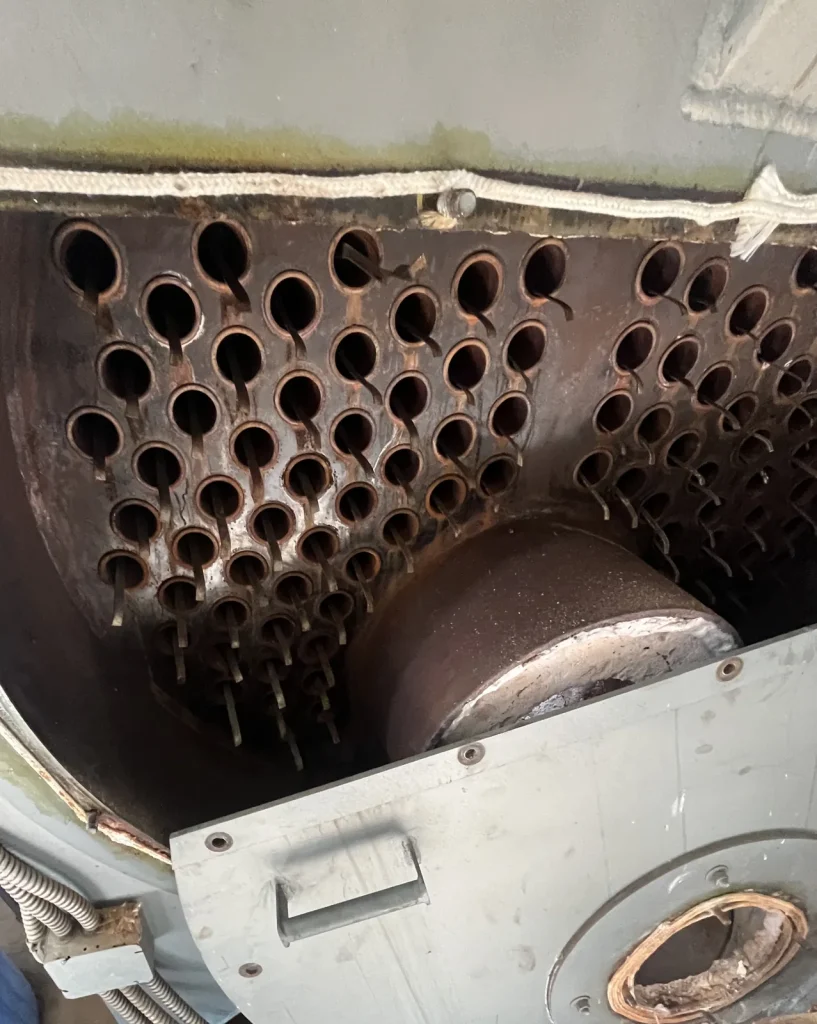
The parts of a boiler heat at different rates. Thin tubes reach water temperature quickly, while the thick shell, tubesheets, and furnace lag behind. On a firetube boiler the tubes are rolled or welded into the tubesheets, so fast firing on cold steel makes the tubes grow faster than the parts holding them. Repeated often enough, that differential expansion loosens rolled joints and starts cracks at the tube ends and in the tubesheet ligaments.
Refractory has the same problem. It heats slowly, and new or repaired refractory holds moisture that has to be driven off at the rate the refractory maker specifies. Cold surfaces also condense water vapor out of the flue gas during warm-up, especially on natural gas, and that wet fireside corrodes. A controlled low-fire warm-up gets the whole boiler through that stage evenly.
What should you inspect before a cold start?
- Every handhole, manway, and inspection opening is closed with a new gasket, and no tools, rags, or lights are left in the furnace, gas passes, or water side.
- The fuel train manual valves are closed until light-off, and the fuel train has been leak checked the way the manufacturer specifies.
- Gas supply pressure is within the burner’s range. On oil, the tank level and any oil heating equipment have been checked.
- Combustion air openings are clear, and the breeching and stack are open, with the damper open if there is one.
- Safety valve discharge piping is open to a safe place, with no cap or plug.
- The water softener and chemical feed are running, with the fill water treated the way your water treatment company specifies.
- Expansion joints and pipe supports are free to move as the piping heats.
- Lockout/tagout devices are removed by the people who placed them, following the site’s procedure.
How do you fill, fire, and warm a cold boiler?
- Open the boiler vent. Close the blowdown and drain valves. Open the feedwater valves.
- Fill the boiler to the normal operating level in the gauge glass. Check that the feed pump runs in the right direction and that the feedwater valve and condensate pumps are not leaking.
- Blow down the gauge glass and water column so you know the level is real. With the burner still off, confirm that the feed pump control starts and stops the pump.
- Prove the low water cutoff before firing. With the burner off, lower the level using the procedure the manufacturer gives until the low water cutoff and alarm indicate, confirm the burner will not start, then refill to the normal level.
- Open the manual fuel valves. Start the burner at the control and let the flame safeguard run its full prepurge, pilot trial, and main flame trial. If it locks out, find the cause and reset once; if it locks out again, stop and call.
- Hold the burner at low fire and warm the boiler at the rate the manufacturer allows. Some refractory-lined boilers call for low-fire cycles on and off during the first hours.
- Close the vent once steam, not air, is coming out.
- Open the drains on the steam lines, then warm the header and lines slowly through the warm-up bypass or by cracking the stop valve, so condensate drains before full steam flow.
- At operating pressure, test the low water cutoff again the way the manufacturer specifies, and check the operating and high limit pressure controls. If the burner does not shut off before the water drops out of sight in the gauge glass, shut it off by hand, do not add water, and call for service.
- Look for leaks at handholes, manways, and fittings as they heat. If a pressure part or gasket leaks, take the boiler off line and let a technician correct it; nobody works on a pressure part while it is under pressure.
- Switch the burner to automatic modulation and log the start-up.
How do you shut down a boiler for an outage?
- Bring the burner to low fire, then shut it off at the control so the flame safeguard closes the safety shutoff valves and completes the postpurge. Close the manual fuel valves.
- Close the main steam stop valve and open the steam line drains, and the superheater outlet drain if there is one.
- Keep the feedwater system running and hold the normal water level while the boiler cools.
- Open the vent when pressure falls close to zero, so the boiler does not pull a vacuum.
- Let the boiler cool on its own. Draining it hot, or flushing it with cold water to speed things up, thermally shocks the steel and can bake sludge onto the hot surfaces.
- Drain only when the boiler is at zero pressure and cool enough for the manufacturer’s procedure, then lock and tag out fuel, power, steam, feedwater, blowdown, and chemical feed before anyone opens it.
- If the boiler will sit idle, lay it up wet or dry as the boiler manufacturer’s manual specifies, with your water treatment company setting the chemistry. An idle boiler left half full of untreated water corrodes from the inside.
What to check
- The pre-start inspection list is filled out and signed.
- The vent is open during the fill and early warm-up, and closed once steam is steady.
- The gauge glass and low water cutoff are proved before light-off and again at pressure, with the results logged.
- The flame safeguard runs its full prepurge. No limit or interlock is jumpered.
- The burner stays at low fire through warm-up at the manufacturer’s rate.
- Steam lines are drained before full steam flow.
- On shutdown, the water level is held during cooldown and the vent opens near zero pressure.
- The boiler is not drained hot and is locked and tagged out before it is opened.
Common questions
How long should a cold boiler take to warm up?
That depends on the boiler’s size and design and on how much refractory it has, so use the warm-up rate in the manufacturer’s manual. A boiler that has just had refractory work may need a longer dry-out. Firing hard to save time is what loosens tube joints and cracks refractory.
Why keep the vent open during the fill and warm-up?
The vent lets air out of the steam space as the boiler fills and heats. Air trapped in the boiler carries oxygen that corrodes steel, and air in the steam lowers its temperature at the point of use. Once steam, not air, comes out of the vent, close it.
Can I drain a boiler right after shutting it down?
No. Let it cool first, at the rate the manufacturer allows, and keep the water level up while it cools. Draining hot shocks the steel and lets sludge bake onto hot surfaces, which makes the next inspection and cleaning harder.
Why drain the steam lines before opening the main valve?
Steam left in a cold line condenses into water that collects at low points. When the valve opens, steam can push that water down the pipe as a slug, which is water hammer, and it can break fittings and valves. Draining the lines and warming them slowly prevents it.
Who should start a boiler after an outage or a repair?
A trained operator who knows that boiler and its controls. After major work on the burner, controls, or pressure parts, have a technician run the start-up and check the controls before the boiler goes back on automatic.
McKenna offers boiler operator training on your own equipment, handles startup and commissioning of new boilers, and provides preventive maintenance so the controls test properly when you need them. If a boiler will not start or a control fails a test, call (323) 987-1816. A live person answers 24/7.