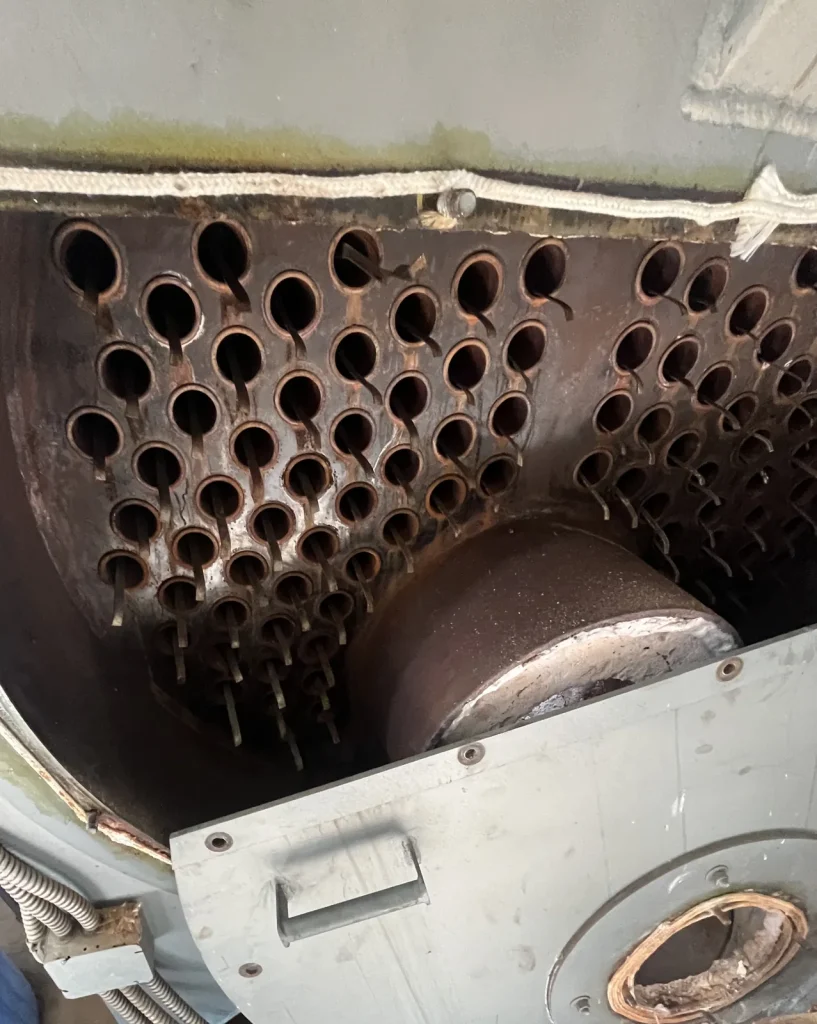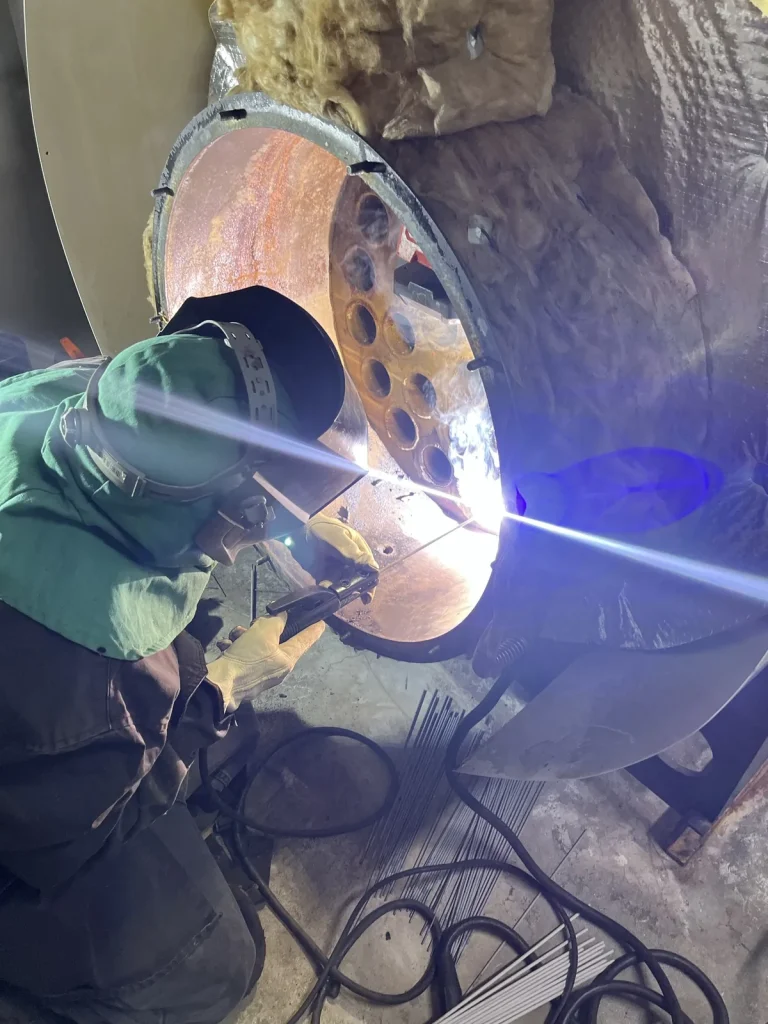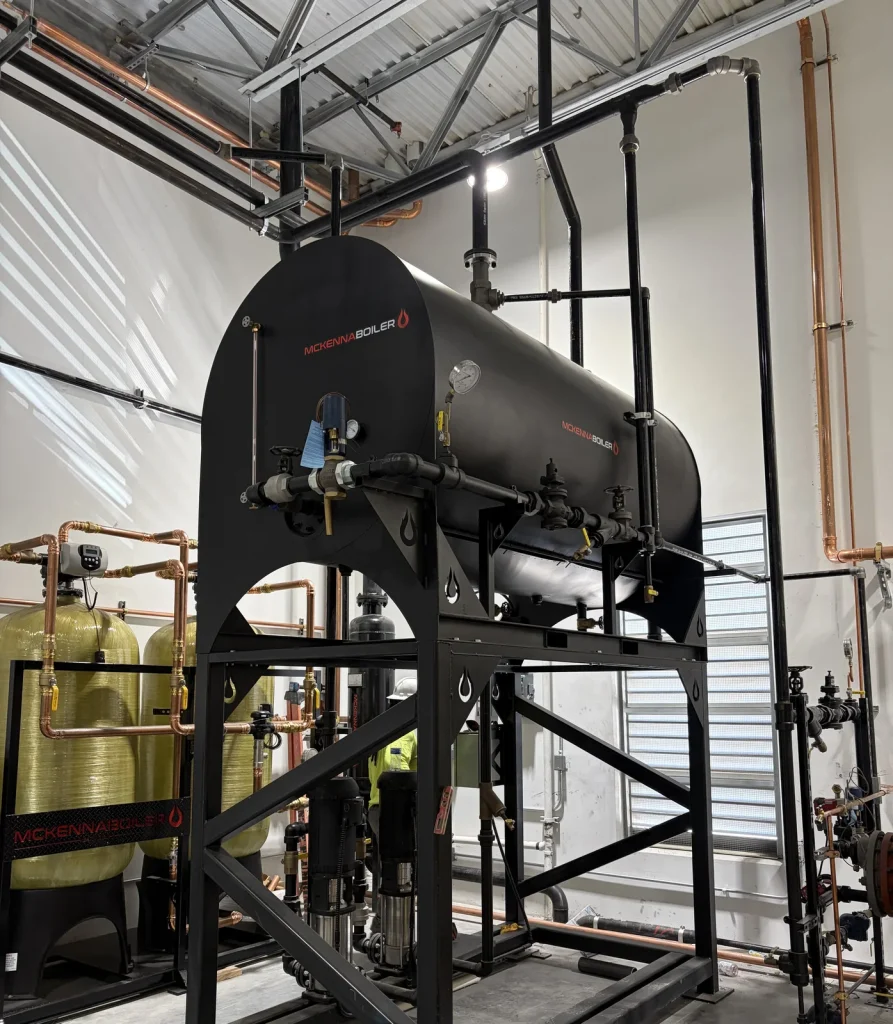


A warm steam boiler comes back on line in a fixed order: prove the water level, let the flame safeguard purge and light the burner, raise pressure at low fire, test the low water cutoff, and cut in to the steam header only when the pressures match. Taking it off line is the same sequence in reverse: shut the burner off at the control, isolate and drain the steam line, and hold the water level while the boiler cools. McKenna Boiler Works, Inc. trains operators on these sequences, and this post explains the reason behind each step so it gets done the same way every time.
This is a general outline. The boiler and burner manufacturer’s instructions and your plant’s written procedure come first. Anyone working on the boiler follows the site’s lockout/tagout procedure, and no step here ever involves bypassing or jumpering a safety control.
What makes a hot start different from a cold start?
A hot or warm start is a boiler that was taken off line recently, or kept on hot standby, so the water and steel are still near operating temperature. The metal has already expanded, so the long, slow warm-up a cold boiler needs is shorter. The hazards that remain are the ones that hurt people and equipment on a warm restart:
- Unburned fuel in the furnace. The prepurge exists to sweep the furnace and gas passes with air before ignition. Skipping or cutting it short is how furnace explosions happen.
- Condensate in the steam line. Steam left in the line between the boiler and the header condenses as it sits. Open a valve on that water and steam can drive it down the pipe as a slug, which is water hammer.
- Pressure mismatch at the header. Cutting a boiler in to a header that is at a different pressure causes a surge of steam into or out of the boiler, which can lift water into the steam line.
- Thermal stress. If the boiler has cooled a long way, treat it as a cold start. Firing hard on cool metal strains the tube-to-tubesheet joints and cracks refractory.
How do you bring a warm steam boiler on line?
- Check the gauge glass. Blow down the glass and the water column so you know the level you see is real; a plugged connection can show a normal level in a boiler that is low.
- Confirm the feedwater supply is available, the fuel supply pressure is within the burner’s range, combustion air openings are clear, and the stack damper, if there is one, is open.
- If the boiler has lost all pressure, open the boiler vent so air can escape as it heats. If it still holds pressure, leave the vent closed.
- Start the burner at the control and let the flame safeguard run its full prepurge, pilot trial, and main flame trial. Watch the flame through the sight port.
- Hold the burner at low fire and let pressure rise steadily. Close the vent once steam, not air, is coming out.
- Open the drains on the boiler’s steam outlet line, between the boiler and the header valve, to clear condensate.
- Test the low water cutoff the way the manufacturer specifies (see the next section).
- Cut in to the header. With a non-return valve, open the header stop valve as boiler pressure approaches header pressure; the non-return valve opens on its own once boiler pressure rises slightly above the header. With stop valves only, wait until the pressures are about equal and open the valve slowly.
- If your procedure calls for a try-lever test of the safety valve, do it only with boiler pressure at 75 percent or more of the valve’s set pressure, and only with the discharge piped to a safe place. If the valve does not lift, or does not reseat cleanly, take the boiler off line and call for service.
- Transfer the burner to automatic modulation and log the time, pressure, stack temperature, and water level.
How should the low water cutoff be tested?
The low water cutoff is what keeps the burner from firing on a boiler with too little water to cool the furnace and tubes. Under ASME CSD-1, where it applies, an automatically fired steam boiler needs two low water cutoffs, and the lower one has to be manual reset. Float-type cutoffs sit in a chamber that collects sludge, so the chamber is blown down to keep the float free and to prove the switch opens.
| Test | What it proves | Who and when |
|---|---|---|
| Gauge glass and water column blowdown | The connections are clear and the level reads true | Operator, every shift |
| Low water cutoff chamber blowdown | The float or probe is free and the switch opens the burner circuit | Trained operator, on the manufacturer’s schedule |
| Slow-drain or evaporation test | The cutoff trips at the right level under real operating conditions | Trained operator, on the manufacturer’s schedule |
Every one of these tests has a stop condition. If the burner does not shut off before the water drops out of sight at the bottom of the gauge glass, shut the burner off by hand at once with the burner switch or emergency stop. Do not add feedwater to a hot boiler whose water level has dropped out of sight while firing, because cold water on overheated steel can crack it or cause a steam explosion. Keep people clear, let the boiler cool, and call for service. Log every test and its result.
How do you take a hot boiler off line?
- Bring the burner to low fire. In a plant with several boilers, let the others pick up the load first.
- Shut the burner off at the control so the flame safeguard closes the safety shutoff valves and runs the postpurge. Close the manual fuel valves afterward if your procedure calls for it. Closing a manual gas valve with the burner firing skips the postpurge and leaves the control in a flame failure lockout.
- Close the header stop valve. A non-return valve closes as boiler pressure falls below the header, but the stop valve is what isolates the boiler.
- Open the drains on the boiler’s steam outlet line, and the superheater outlet drain if the boiler has one.
- Keep the feedwater system on and hold the normal water level as the boiler cools. Water shrinks as it cools, so the level drops even with nothing leaking.
- Open the vent when pressure falls close to zero, so the boiler does not pull a vacuum. A vacuum can draw water in through the feed lines and strain gaskets.
- Log the shutdown. Do not drain the boiler or open a handhole or manway until it is cool, fully depressurized, and locked and tagged out.
What to check
- The written start-up and shutdown procedure is posted at the boiler and matches the manufacturer’s manual.
- The gauge glass has been blown down and reads true before light-off.
- The flame safeguard runs its full prepurge. No limit, interlock, or flame scanner is jumpered or bypassed.
- After a lockout, check for the cause and reset once. If it locks out again, stop and call.
- The low water cutoff test is done and logged. If it fails, the burner is shut off by hand and the boiler stays off until it is repaired.
- Steam lines are drained before any header valve is opened.
- The safety valve is not weeping after cut-in, and its discharge piping is open to a safe place.
- Pressure, stack temperature, and water level are logged at start-up and shutdown.
Common questions
How is a hot start different from a cold start?
A hot start skips most of the slow warm-up because the steel is already near operating temperature. Every safety step still applies: the gauge glass check, the full prepurge, the low water cutoff test, and draining the steam line. If the boiler has cooled a long way, use the cold start procedure.
Why not shut the boiler off by closing the gas valve?
Closing the manual gas valve with the burner firing causes a flame failure lockout and skips the postpurge. Shutting off at the control lets the flame safeguard close the safety shutoff valves and purge the furnace. In an emergency, use the emergency stop.
What if the burner locks out during light-off?
Read the fault on the flame safeguard, look for an obvious cause such as low gas pressure or a closed valve, and reset once. If it locks out again, stop. Repeated resets can put unburned fuel in the furnace, so call a technician.
What do I do if the low water cutoff does not shut off the burner?
Shut the burner off by hand immediately. If the water has dropped out of sight in the gauge glass, do not add feedwater; let the boiler cool and keep people clear. The boiler stays off until the cutoff is repaired and retested.
Why open the vent near zero pressure during cooldown?
As the boiler cools, the steam inside condenses and the pressure falls below atmospheric. Opening the vent near zero lets air in so the boiler does not pull a vacuum. Opening it while there is still pressure only blows steam out of the vent.
McKenna offers boiler operator training on start-up, shutdown, and control testing for your own boilers, and handles startup and commissioning of new equipment. If a low water cutoff or flame safeguard will not test properly, see our emergency services or call (323) 987-1816. A live person answers 24/7.