

Every shift, an operator on an industrial boiler should make five checks: prove the water level and the low water cutoff, log pressure and stack temperature, look at the flame and the combustion air, walk the boiler for leaks, cracks, and weeping valves, and check the water treatment equipment against the program your water treatment company set. Written numbers matter more than a quick walk-around, because a slow change in a log is how scale, a drifting burner, or a failing steam trap shows up before it trips the boiler. McKenna Boiler Works, Inc. teaches these checks in operator training, and this post explains what each one tells you.
Follow the boiler and burner manufacturer’s instructions and your site’s procedures for every check. Anything that needs a panel opened, a burner part removed, or the boiler shut down belongs to scheduled service, with lockout/tagout, and no check ever involves bypassing a safety control.
1. Prove the water level and the low water cutoff
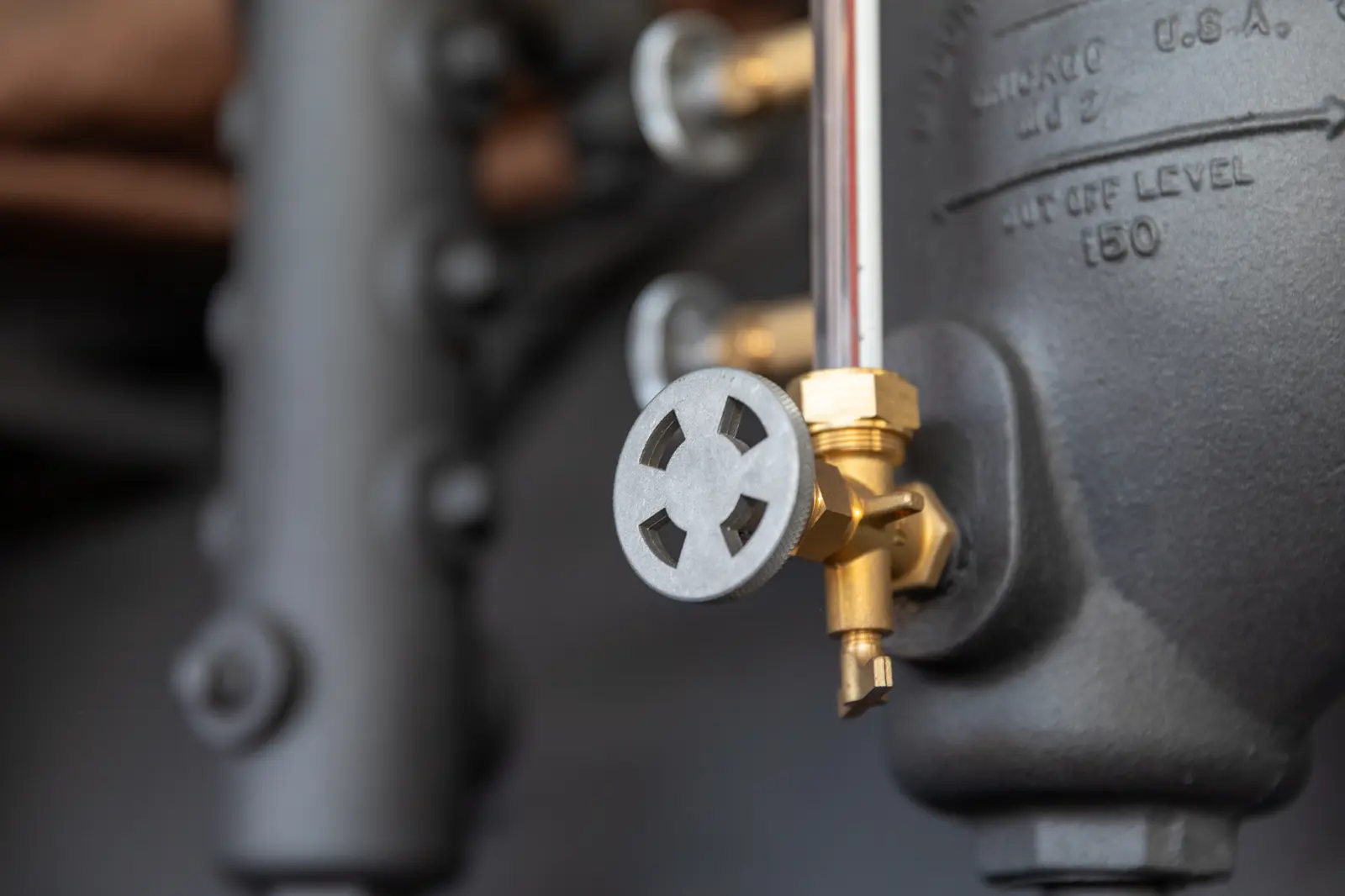
Water level is the most important number on a steam boiler. If the water drops below the top of the furnace or tubes, the steel loses its cooling and can overheat quickly. Start each shift by blowing down the gauge glass and water column so you know the level you see is real, since a plugged connection can show a normal level in a boiler that is low.
Then blow down the low water cutoff chamber the way the manufacturer specifies, confirm the burner shuts off, and log the result. On an automatically fired steam boiler covered by ASME CSD-1, there are two low water cutoffs, and the lower one has to be reset by hand after it trips. If the burner does not shut off before the water drops out of sight at the bottom of the gauge glass, shut it off by hand at once. Do not add feedwater to a hot boiler whose water has dropped out of sight while firing; let it cool, keep people clear, and call for service.
2. Log pressure, stack temperature, and firing rate
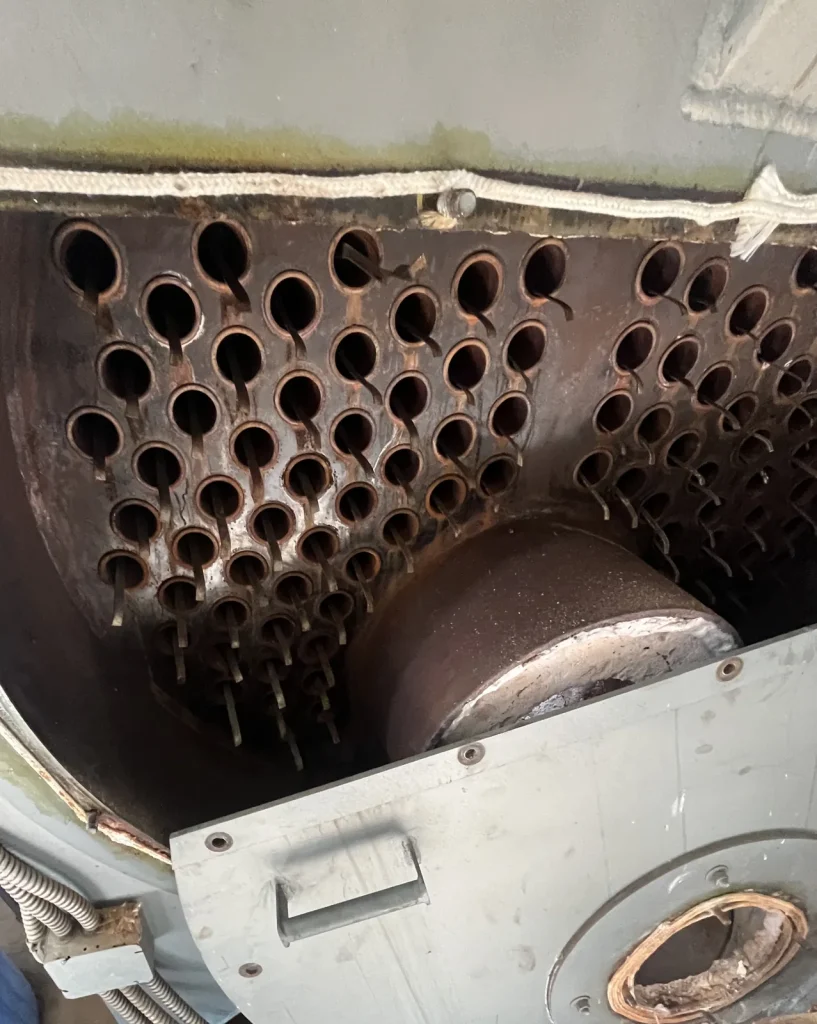
The stack temperature is the temperature of the flue gas leaving the boiler. Compared at the same firing rate, it is a reliable indicator of the boiler’s condition. Soot on the fire side and scale on the water side both insulate the tubes, so less heat goes into the water and more leaves up the stack. A stack temperature that climbs over weeks at the same firing rate points to one or the other.
| Log item | What to record | What a change can mean |
|---|---|---|
| Steam pressure or water temperature | Reading and set point | Swings or overshoot point to a control problem or a load the boiler cannot follow |
| Stack temperature | Reading with the firing rate at the time | A slow rise at the same firing rate points to soot or scale |
| Flue gas O2, if the controls display it | Reading at the firing rate | Drift means the fuel-air ratio has moved and the burner needs tuning |
| Feedwater temperature | Reading at the feedwater tank | A drop can mean less condensate is coming back |
| Makeup water meter | Daily total | A rise points to lost condensate, leaks, or failed steam traps |
| Low water cutoff test | Time, result, initials | Any failure means the boiler comes off line |
3. Look at the flame and the combustion air
Look at the flame through the sight port. A good gas flame is stable and stays clear of the furnace walls. A flame that is lazy, smoky, pulsing, or touching the furnace, soot around the burner or doors, or a smell of combustion products in the room all mean the burner needs a technician. So does a carbon monoxide alarm.
Check that the combustion air openings and louvers are clear. A boiler starved of air burns rich, makes soot and carbon monoxide, and can lock out. The electrodes, flame scanner, nozzles, and diffuser need a shutdown and a trained technician, so they belong to scheduled service. If the flame safeguard locks out, read the fault and reset once; if it locks out again, stop and call, because repeated resets can put unburned fuel in the furnace.
4. Walk the boiler for leaks, cracks, and weeping valves
Walk around the boiler and look for steam or water at handholes, manways, fittings, and blowdown valves, wet or stained insulation, and safety valve discharge lines that are wet or warm. A weeping safety valve is a repair item, and the valve is never adjusted or plugged. Smell for gas at the fuel train.
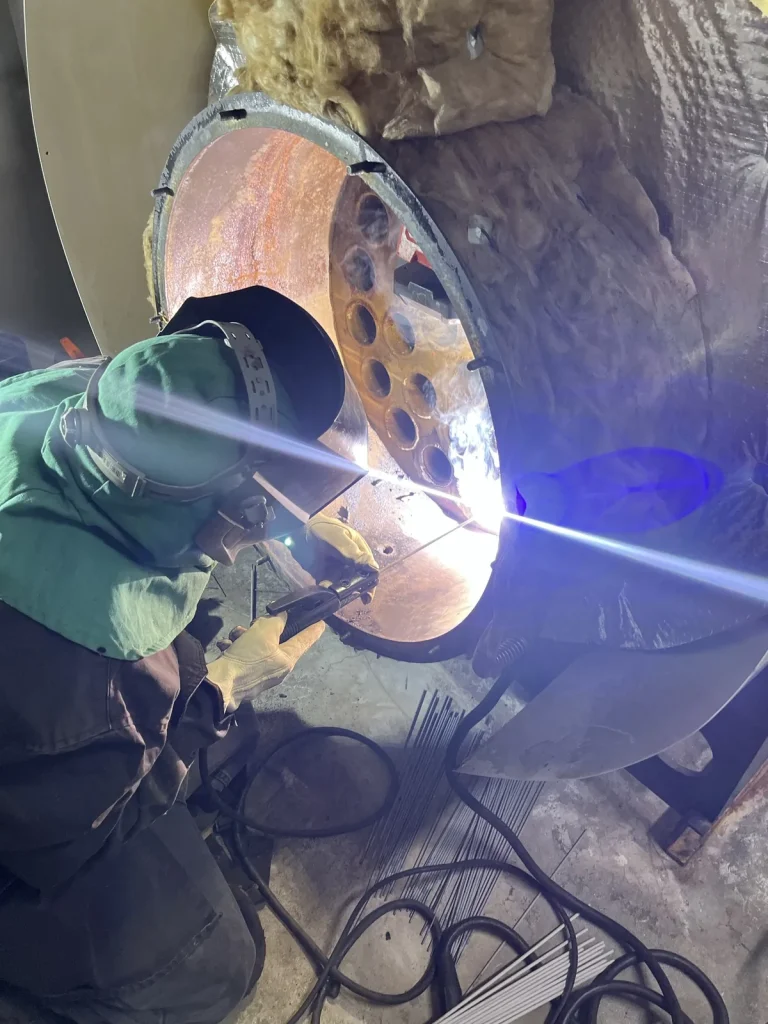
A crack, bulge, or leak in a pressure part is a safety problem. Take the boiler out of service using your shutdown procedure and have it inspected. A crack in a pressure part is repaired under NBIC Part 3 by a National Board R certificate holder, by a method the inspector accepts, never with patching compound, which is only for refractory.
5. Check the water treatment equipment and the blowdown log
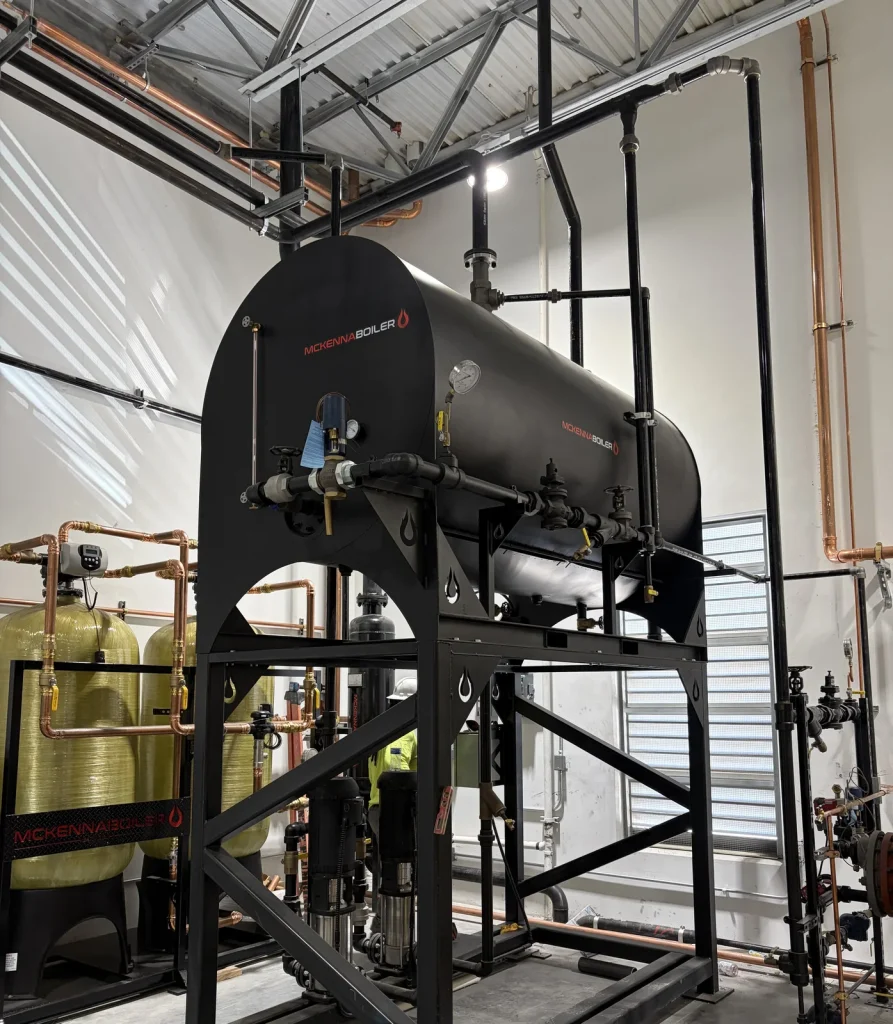
Your water treatment company sets the program: the softener’s hardness limit, the chemical feed, the boiler water limits, and the bottom blowdown schedule. The operator’s daily job is to confirm the equipment is doing what the program says. Test the softened water for hardness, check that the softener is regenerating and has salt, confirm the chemical feed pump is running and the tank is not empty, run the water tests the program calls for, and bottom blow down on schedule. If a result is out of range, call your water treatment company the same day.
What to do when a check fails
- Low water cutoff does not shut off the burner: shut the burner off by hand, do not add water if the level is out of sight, and call for service.
- Gauge glass will not show a clear level after blowdown: treat the level as unknown, shut the burner off, and call.
- Crack, bulge, or leak at a pressure part: take the boiler out of service using your shutdown procedure and call.
- Repeated flame safeguard lockouts: stop after one reset and call a technician.
- Soot, smoky flame, or a carbon monoxide alarm: follow your site’s alarm procedure, shut the burner down if it is safe to do so, and call.
- Weeping safety valve: report it, leave the valve alone, and schedule repair.
- Water test or softener out of range: call your water treatment company.
- Write every abnormal reading in the log, so the service technician sees the trend.
Common questions
How often should the low water cutoff be tested?
Follow the manufacturer’s schedule, and ASME CSD-1 where it applies. On steam boilers, blowing down the cutoff chamber and confirming the burner shuts off is commonly a daily or once-a-shift check. Log the result every time.
Why log numbers if the boiler is running fine?
Because most boiler problems develop slowly. A stack temperature that creeps up, makeup water that rises, or O2 that drifts is invisible from one day to the next and obvious over a month. The log turns those trends into planned service before they become a lockout.
Which daily checks should an operator leave to a technician?
Anything that means opening the burner, the flame safeguard, or the fuel train, or taking the boiler off line. That includes electrodes, scanners, nozzles, linkage, and gas valves. The operator watches, logs, and calls.
What should I do if I find a crack?
Take the boiler out of service using your shutdown procedure and have it inspected. Cracks in pressure parts are repaired under NBIC Part 3 by a National Board R certificate holder, never with patching compound.
What if the flame safeguard keeps locking out?
Reset once after looking for an obvious cause such as low gas pressure. If it locks out again, stop and call a technician. Repeated resets can put unburned fuel in the furnace.
McKenna teaches these checks in boiler operator training and handles the technician items through preventive maintenance and combustion tuning. If a daily check turns up something you are not sure about, call (323) 987-1816. A live person answers 24/7.