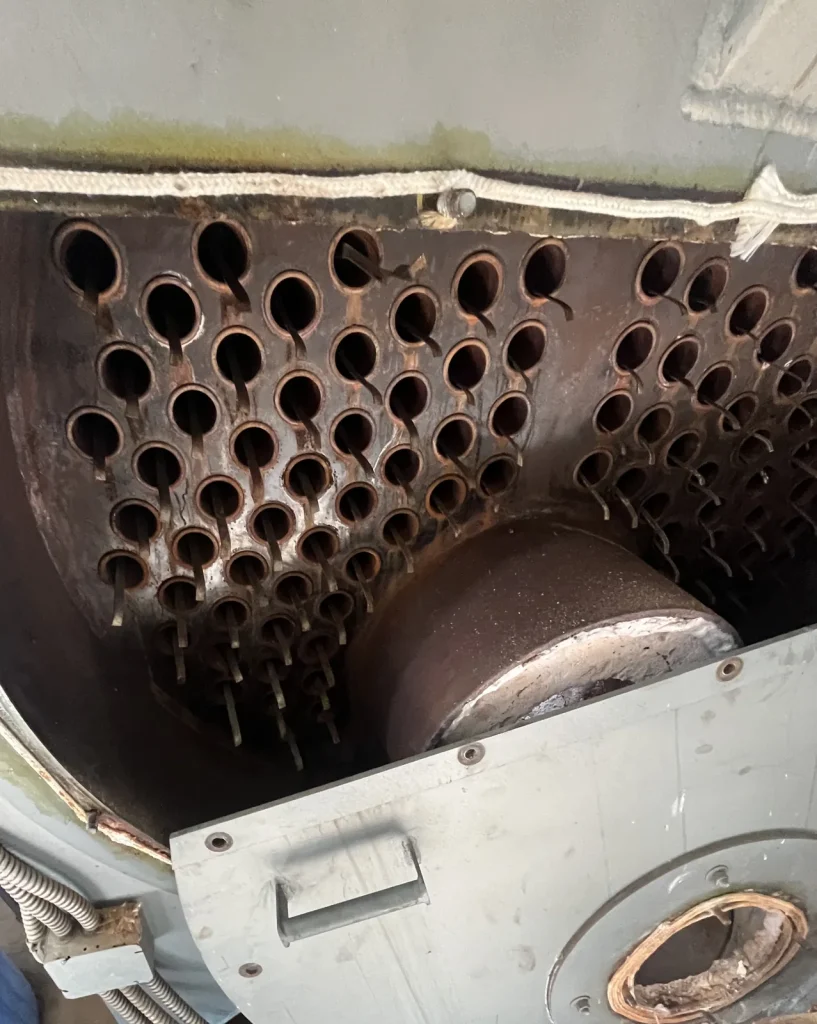


An industrial boiler maintenance program splits into two lists: what the operator checks every shift, week, and month, and what a qualified technician does at least once a year with the boiler off line. McKenna Boiler Works, Inc. builds and services industrial boilers, and the checklist below is the one McKenna would want a facility manager to have on the boiler room wall. Your boiler manufacturer’s instructions, your insurer, and your site’s procedures come first wherever they differ.

What rules set the maintenance requirements?
Three sets of rules shape a California boiler program. ASME CSD-1 covers controls and safety devices on automatically fired boilers with fuel input up to 12.5 million Btu per hour; NFPA 85 covers burner management on larger units. Both expect the safety controls to be tested on a schedule and the results recorded. Cal/OSHA’s Boiler and Fired Pressure Vessel Safety Orders (Title 8) require power boilers (steam above 15 psig) to be inspected internally and externally at least once a year under Labor Code 7682, with a permit to operate issued after inspection; the Division can extend the internal interval up to 36 months in some cases. Low-pressure boilers are exempt from the annual inspection and permit under 8 CCR 771, but only if their required automatic controls are fitted and kept working. Your air district permit adds combustion and record-keeping conditions, under South Coast AQMD Rules 1146, 1146.1, and 1146.2, San Joaquin Valley Rules 4306 and 4320, or Bay Area Regulation 9, Rule 7, depending on where the boiler is and its size.
What should operators check every shift and every week?
The point of daily checks is to catch a change. A boiler that needs more blowdown, burns more gas for the same load, or runs a higher stack temperature than last month is telling you something about the fire side or the water side.
| Frequency | Check | What it tells you |
|---|---|---|
| Every shift | Gauge glass level, steam pressure or water temperature, stack temperature, burner firing rate, alarms | Normal operation; a rising stack temperature at the same firing rate points to soot or scale |
| Every shift | Blow down the gauge glass and water column, per the manufacturer | Clear connections so the glass shows true level |
| Daily or weekly, per the control manufacturer | Blow down the float-type low water cutoff and confirm the burner stops | The cutoff works and its chamber is not filling with sludge |
| Daily | Water tests per your water treatment program; surface and bottom blowdown as the program sets | Dissolved solids, hardness, and treatment levels within the program’s limits |
| Weekly | Look for leaks at valves, flanges, manways and handholes, and the fuel train; listen to pumps and the blower | Small leaks found before they cut seats or gaskets |
| Monthly | Review the log for trends in fuel use, makeup water, and stack temperature | Rising makeup water means lost condensate or a leak |
Water treatment belongs to your water treatment company. They set the program, the test limits, and the blowdown rate within the limits in the boiler manufacturer’s manual, and they should be on site when the boiler is opened for inspection to check and monitor the water side.
What does a qualified technician do once a year?
The annual service is where the boiler gets opened, measured, and tuned. Before any door or cover is opened, the boiler is shut down, cooled, depressurized, and locked out per your site’s procedures, and nobody enters it without your confined space entry program. On most industrial firetube boilers it includes:
- Fire-side inspection: open the front and rear doors, check tubes, tube ends, the furnace, and refractory; brush tubes if soot is present.
- Water-side inspection: remove manway and handhole covers, look for scale, sludge, pitting, and caustic gouging, and clean as needed. This is usually timed with the Cal/OSHA or insurance inspection.
- Safety control testing: primary and auxiliary low water cutoffs (including an evaporation or slow-drain test where the manufacturer calls for one), high limit and operating controls, flame safeguard and scanner, fuel valve proving, combustion air and gas pressure switches.
- Combustion analysis and tuning: measure O2, CO, NOx where required, and stack temperature across the firing range, then set the fuel and air curve to meet the air permit limit. See combustion tuning.
- Safety valves: inspect, and test or replace on the interval your insurer and the valve manufacturer set. Only a qualified repair organization may adjust or repair a safety valve.
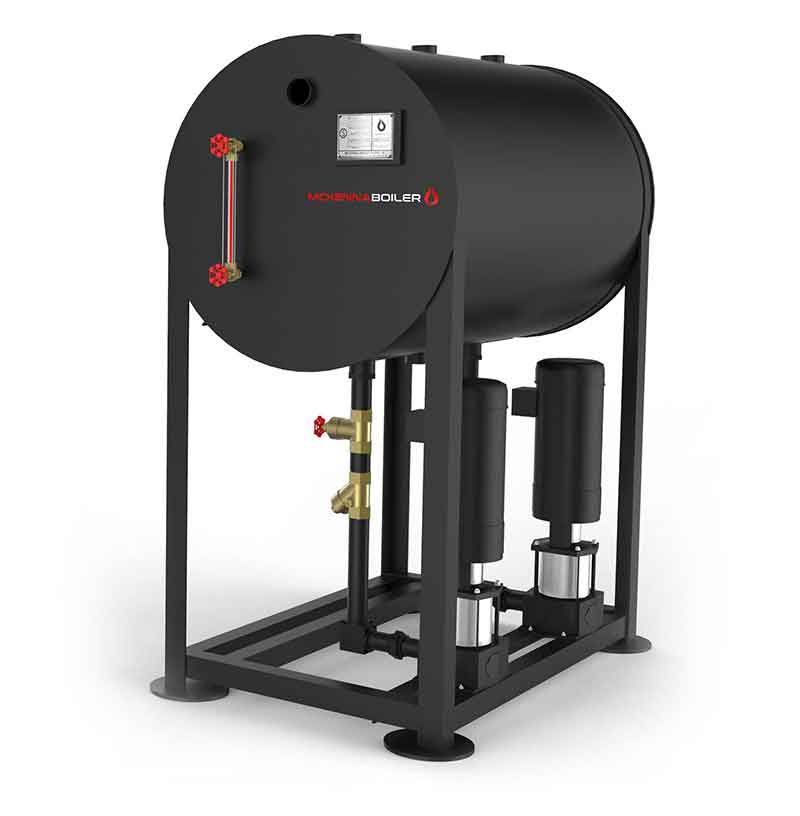
- Feedwater and blowdown equipment: pumps, check valves, the feedwater tank, and the blowdown tank or separator.
What to do: the operator’s rules
- Never bypass, jumper, or disable a low water cutoff, flame safeguard, or limit to keep production running.
- When you test a low water cutoff and the burner does not stop, shut the burner off manually, keep it off, and call for service.
- If water is out of sight in the gauge glass, shut off the burner and do not add feedwater to a hot boiler. Call for service.
- Follow lockout/tagout and the manufacturer’s instructions before opening any door, cover, or fuel component.
- Keep a written log of every test and reading. Inspectors and CSD-1 expect it, and it shows trends.
- Welded repairs on the pressure boundary (shell, tube sheets, nozzles, seal-welded tubes) are made only by an organization holding a National Board R certificate, with an Authorized Inspector accepting the repair under the NBIC. In most cases, replacing rolled and beaded tubes is not an R stamp repair; check with your Authorized Inspector.
- Book the annual inspection and service months ahead, and fix last year’s findings first.
Common questions
How often should an industrial boiler be serviced?
Operators check it every shift and log it. A qualified technician services it at least once a year, with combustion tuning and safety control testing. Boilers with heavy load swings, high run hours, or tight air permit limits may need more frequent tuning; your permit and the manufacturer set the minimum.
Does Cal/OSHA inspect every boiler every year?
Power boilers, meaning steam boilers above 15 psig, are inspected internally and externally at least yearly under Labor Code 7682, though the Division can extend the internal interval in some cases. Low-pressure boilers are exempt from the annual inspection and permit under 8 CCR 771 if their required controls are fitted and maintained. Check how your boiler is classified.
Who should test the low water cutoff?
Operators blow down float-type cutoffs on the schedule the control manufacturer sets and confirm the burner stops. The full test, including an evaporation test where called for, is done by a qualified technician during service. If a cutoff does not trip, shut the burner off manually and call for service.
What records should we keep?
A daily log of levels, pressures, temperatures, and blowdowns; water test results from your treatment program; safety control test results; combustion analysis reports; and inspection certificates. Air districts often require combustion and fuel records as permit conditions.
Does McKenna service boilers it did not build?
Yes. McKenna services and repairs boilers from other manufacturers and installs, sets up, and tunes burners and controls from any manufacturer. Code repairs on boilers and pressure vessels are made under McKenna’s National Board R certificate.
Setting up a maintenance program
McKenna can set up the annual work as a preventative maintenance visit or an annual service contract, timed with your boiler inspection. To schedule, call (323) 987-1816.