
Armstrong Steam Traps: Parts and Service
Some Armstrong parts on the shelf at our Oceanside, California, shop. McKenna technicians test, replace, and retest steam traps across California.
Image courtesy of Armstrong International.
Code-built boilers and vessels
Code repairs and alterations

Factory-authorized Tech Center

Factory-authorized Burner Tech Center

Fifth generation, family-owned
QUICK ANSWER
McKenna Boiler Works, Inc. keeps some Armstrong International parts on the shelf at its shop in Oceanside, California. Parts can be picked up, shipped, or installed. McKenna technicians test, replace, and retest Armstrong inverted bucket, float and thermostatic, and disc traps. They serve Los Angeles and all of California. Replacements are matched to the application and to the trap brand the plant already uses. McKenna is independent and is not an authorized Armstrong distributor. Call (323) 987-1816 or email info@mckennaboiler.com with the model number to confirm the exact part.
How they work
How an Armstrong steam trap works and why it fails.
A steam trap lets condensate and air out of a steam line and holds the steam in. Armstrong makes inverted bucket, float and thermostatic, disc, and thermostatic traps, plus trap valve stations.
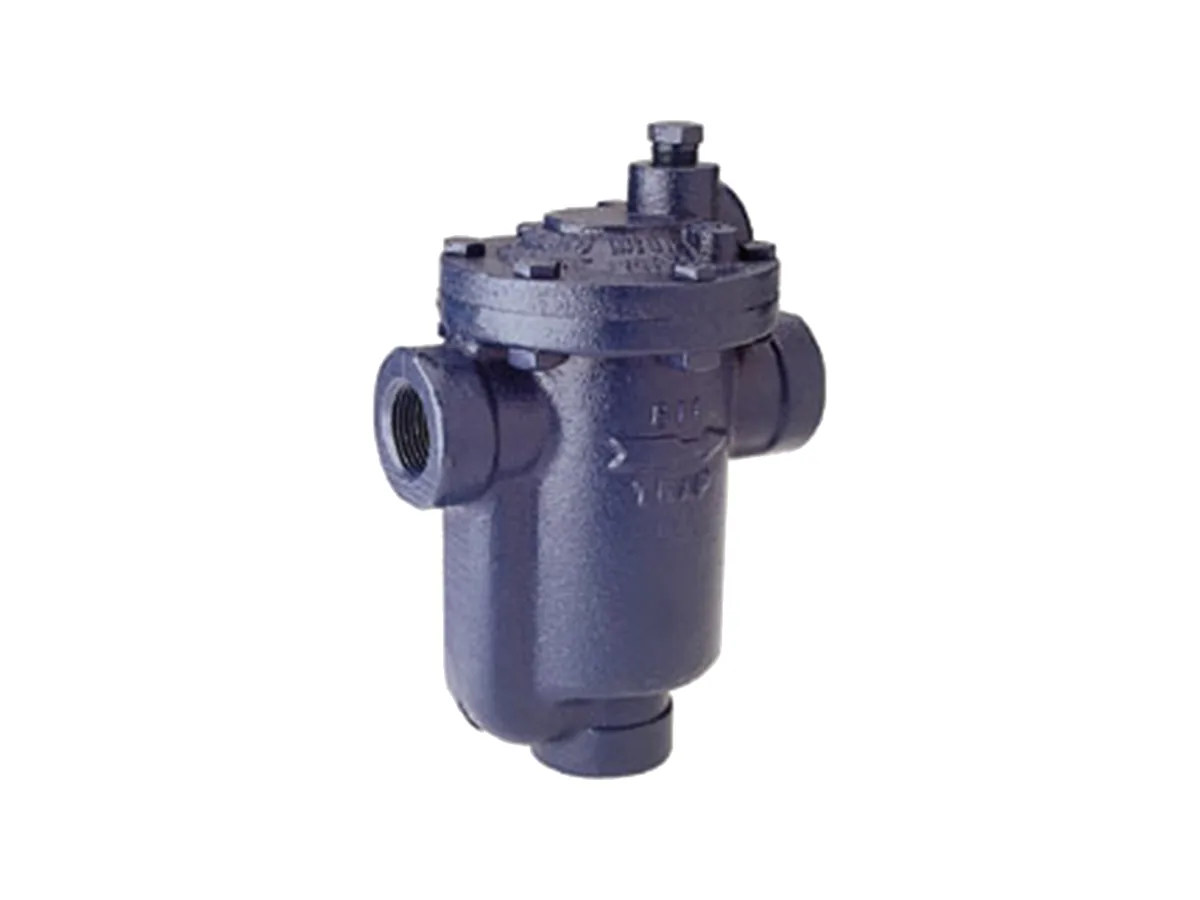
In an Armstrong inverted bucket trap, such as the 800 to 813 series, steam floats the bucket and closes the valve. Condensate fills the bucket, the bucket sinks, and a lever opens the valve. A small vent hole in the bucket passes air all the time.
Armstrong’s guidelines say an inverted bucket usually fails open, blowing steam into the condensate return. A float and thermostatic trap can fail closed from dirt and back condensate into the equipment. A sudden pressure drop can cost an inverted bucket its water seal, or prime. Armstrong lists a violent rattling of the bucket as the sign.
Sizing causes trouble too. An inverted bucket’s orifice is picked for the highest pressure the trap will see. At a higher pressure, the bucket can’t pull the valve open and condensate backs up. Armstrong also notes that an oversized trap wears faster and loses more steam when it fails.
Parts and service
What McKenna stocks and does.
- Some Armstrong parts on the shelf; call to confirm the exact part number
- Pickup at the Oceanside shop, or shipped to your plant
- Ultrasonic and temperature testing to find traps failed open, failed closed, or leaking
- Trap type and size checked against the application and the steam pressure
- Failed traps replaced, matched to the application and the brand your plant uses
- Traps on Armstrong trap valve stations replaced at the station's connector
- Each replaced trap retested in service, then tagged and logged
- Spirax Sarco and TLV traps tested and replaced too
Need every trap on the system tested? See Steam Trap Audits.
Read these off the trap before you call
Model number
Cast on the trap body or on its nameplate, for example 811 or 813. On an inverted bucket trap, letters after the number mark options. CV is an internal check valve, and T is a thermic vent bucket.
Trap type
Inverted bucket, float and thermostatic, disc, or thermostatic. A photo of the trap and its piping is the fastest way to match it.
Connection
Pipe size and end connection: screwed NPT, socketweld, buttweld, flanged, or a 2-bolt universal connector.
Pressure
The highest steam pressure the trap sees, and the back pressure in the condensate return.
What it drains
A steam main drip, a boiler header, a heat exchanger, a coil, or a tracer line.
Load
The condensate load in lb/hr if you know it, or the make and model of the equipment the trap drains.
Station
Whether the trap sits on a trap valve station, such as a TVS-6000UD, and the station’s model number.
Other brands
If the plant also runs Spirax Sarco or TLV traps, tell us. Replacements are matched to the brand already in the plant.
Armstrong products McKenna works on
Ratings are Armstrong International’s published figures. McKenna is an independent boiler company, not an authorized Armstrong distributor, representative, or service center.
800 to 813 series inverted bucket
Cast iron, side inlet and side outlet, for horizontal lines. Screwed, 1/2 in. to 1 in. Rated 250 psig at 450°F. Maximum operating pressure 150 psig on the 800, 250 psig on the 811 to 813.
TVS-6000UD trap valve station
Carbon steel, with two isolation valves on each side, bleeds, an integral strainer, a blowdown valve, and a test valve. The trap mounts on a 2-bolt universal connector. Rated 650 psig and 599°F, 1/2 in. to 1 in.
A and AI series float and thermostatic
Cast iron, screwed, 3/4 in. to 2 in. Models 30, 75, 125, and 175 match their maximum operating pressure in psig. Built for heat exchange equipment that has to vent air quickly.
CD-33 series controlled disc
Stainless steel, screwed, 3/8 in. to 1 in. Maximum operating pressure 600 psig. For steam main drips, process equipment, and heating equipment on constant pressure.
Sizing guidance
Armstrong’s guidelines use safety factors from 1.5:1 to 10:1, set by the application. Steam main drips use 2:1, or 3:1 at the end of a main.
On the shelf
Some Armstrong parts. Call to confirm the exact part number.
Service area
Pickup at 2601 Industry Street, Oceanside, California, or shipped. Technicians serve Los Angeles and all of California.
How a job runs
How a steam trap job runs.
01