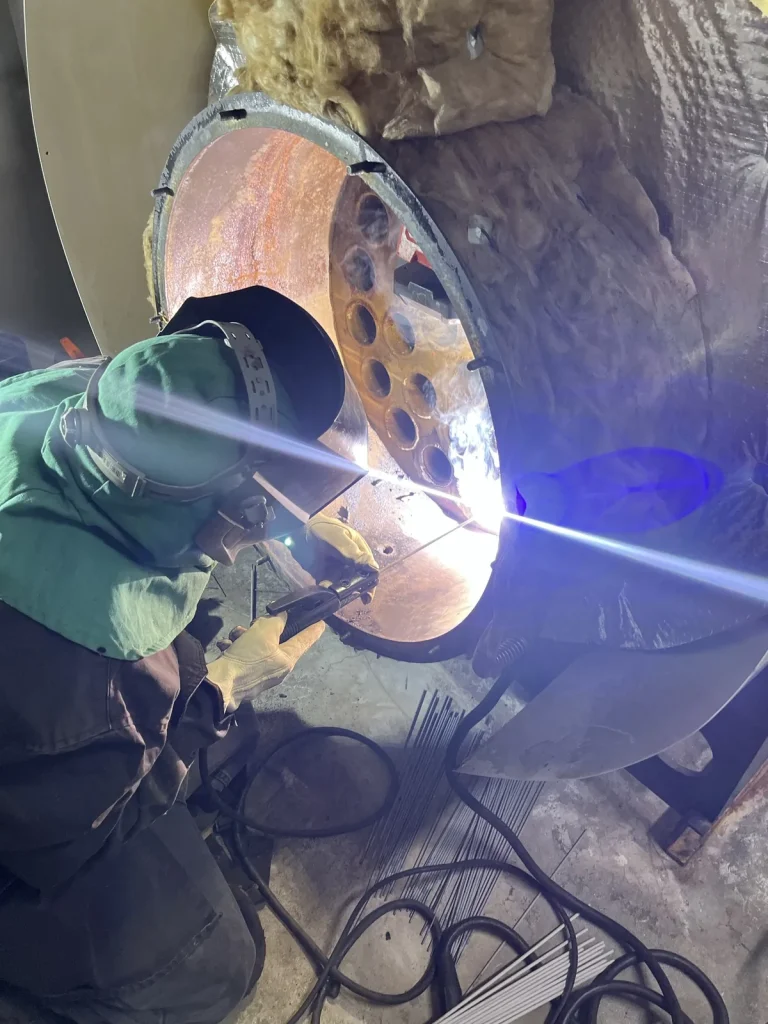

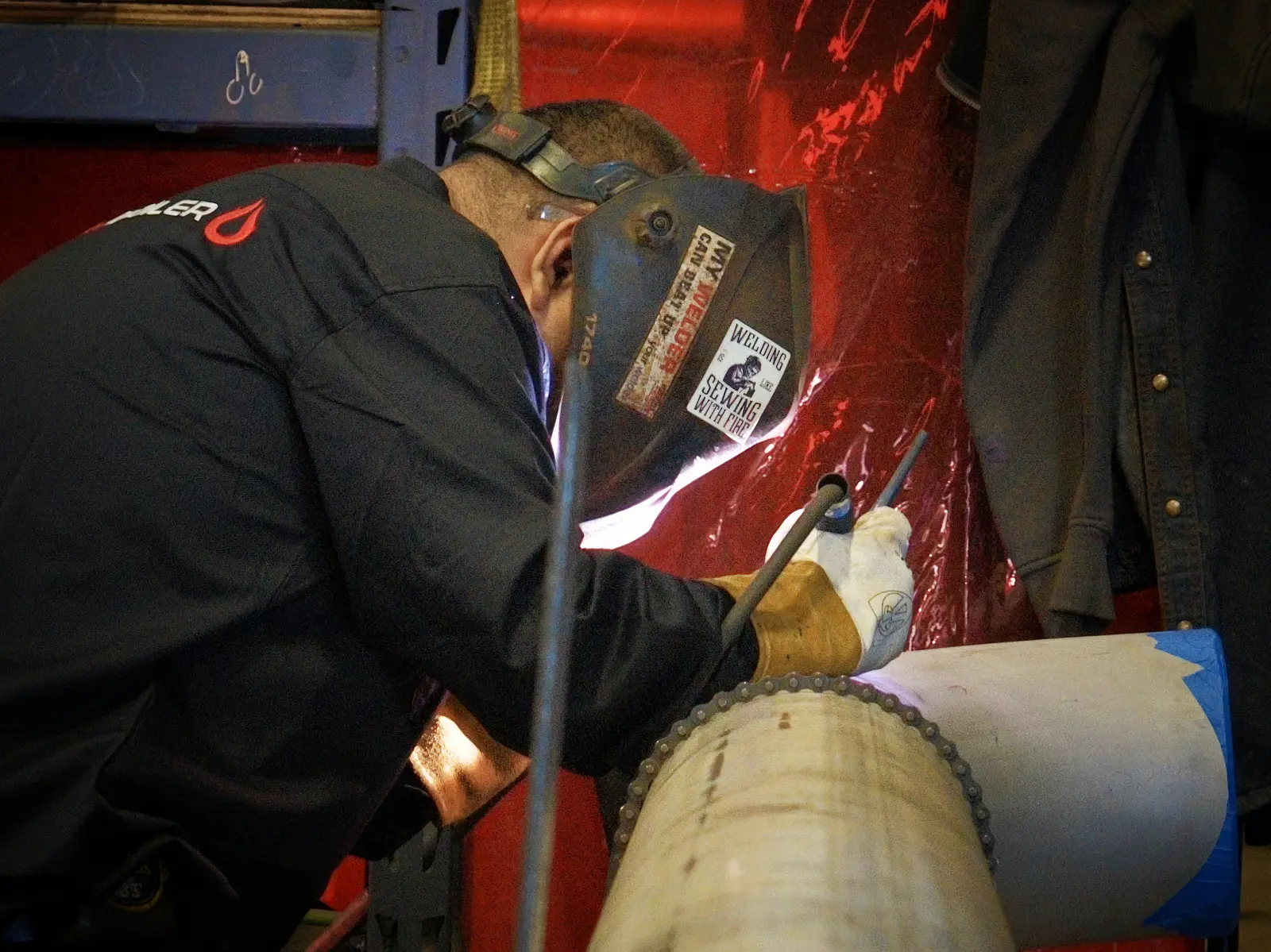
A weld on a boiler or pressure vessel is code-acceptable when it is made to a qualified welding procedure by a qualified welder, in code materials, examined the way the construction code requires, and accepted by an Authorized Inspector. New construction falls under ASME Section I, IV, or VIII, and weld repairs to equipment in service fall under the National Board Inspection Code (NBIC) Part 3. McKenna Boiler Works, Inc. holds ASME S, H, M, and U certificates and a National Board R certificate, and maintains a written quality control manual for its code work.
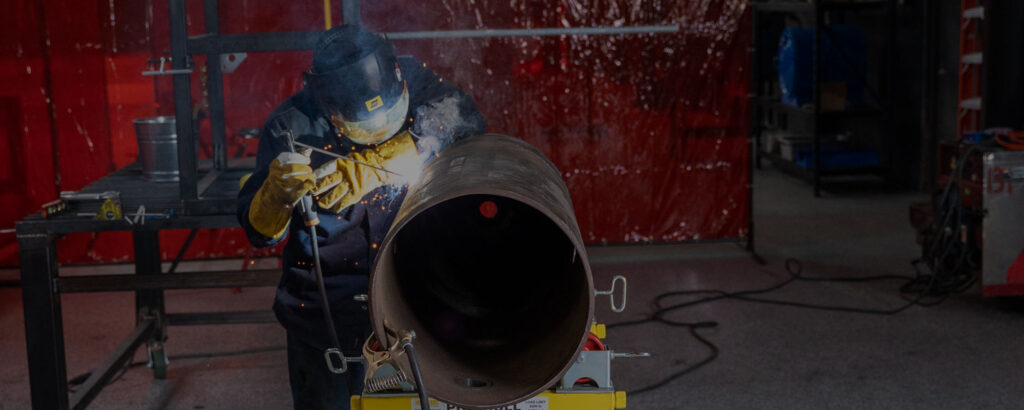
Which code governs the weld?
The equipment decides the construction code, and the code decides the certificate the manufacturer needs. Three other sections of the ASME Boiler and Pressure Vessel Code support all of them: Section II for materials, Section V for nondestructive examination methods, and Section IX for welding qualifications.
| Equipment | Code | Certificate |
|---|---|---|
| Power boilers: steam above 15 psig, or hot water above 160 psig or 250°F | ASME Section I | ASME S |
| Heating boilers: steam at 15 psig or less, hot water at 160 psig or less and 250°F or less | ASME Section IV | ASME H |
| Miniature boilers | ASME Section I | ASME M |
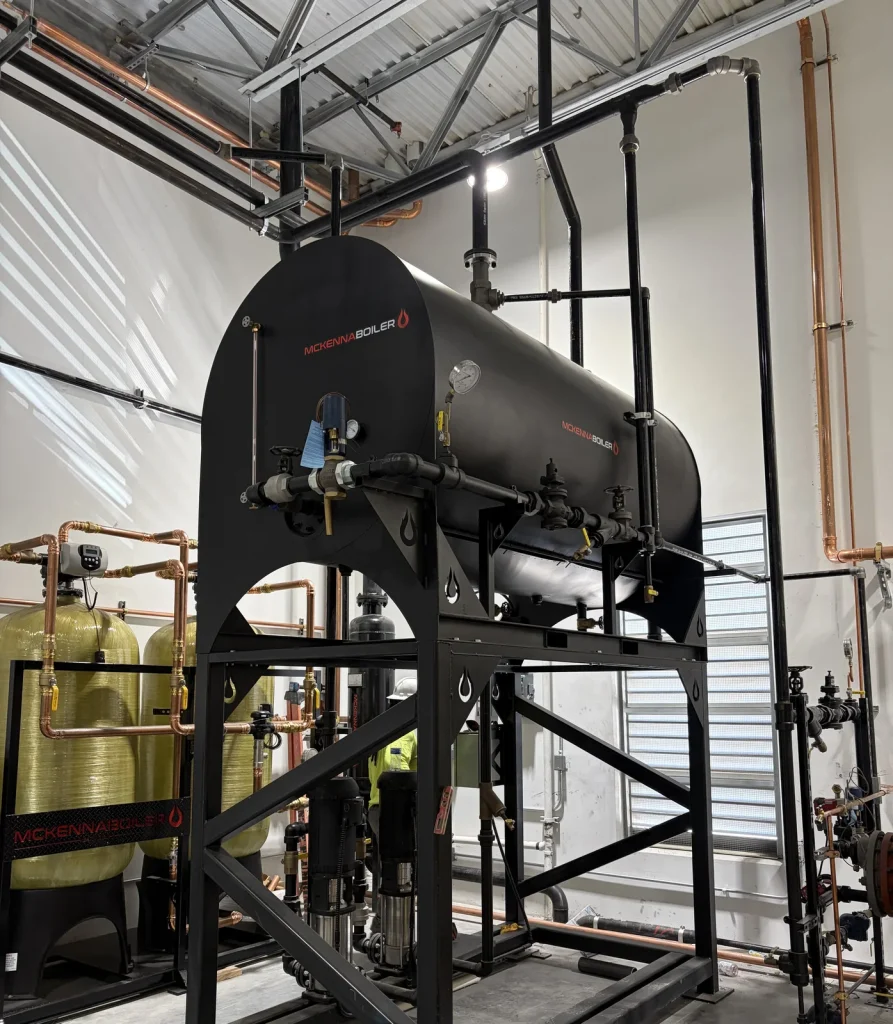
| Pressure vessels: blowdown separators, receivers, tanks | ASME Section VIII, Division 1 | ASME U |
| Repairs and alterations to equipment in service | NBIC Part 3 | National Board R |
How are welding procedures and welders qualified?
Section IX separates the procedure from the person.
- Welding Procedure Specification (WPS): the written instructions for a weld. It lists the process, base metal and filler metal groups, thickness range, positions, preheat and interpass temperature, postweld heat treatment, and electrical settings.
- Procedure Qualification Record (PQR): the record of a test coupon welded to that procedure and then tested, typically by tension and bend tests, to prove the procedure produces sound metal with the required strength and ductility.
- Welder Performance Qualification (WPQ): proof that a specific welder can make a sound weld with that process, by bend test or radiography. A welder’s qualification lapses if the welder goes six months without using the process.
Changing an essential variable, such as the base metal group, the process, or a preheat or heat treatment requirement, means the procedure has to be requalified. That is why a shop cannot simply pick up a new material or process for a pressure part without first qualifying it.
The common processes are shielded metal arc (stick), gas tungsten arc (TIG) for root passes and tube work, gas metal and flux-cored arc for production welding, and submerged arc for long seams on heavy plate.
What makes a pressure weld different?
Materials come from Section II, with material test reports traceable to each plate, tube, and pipe. Typical firetube boiler materials are SA-516 Grade 70 plate for shells and tubesheets, SA-178 or SA-192 tube, and SA-106 pipe.
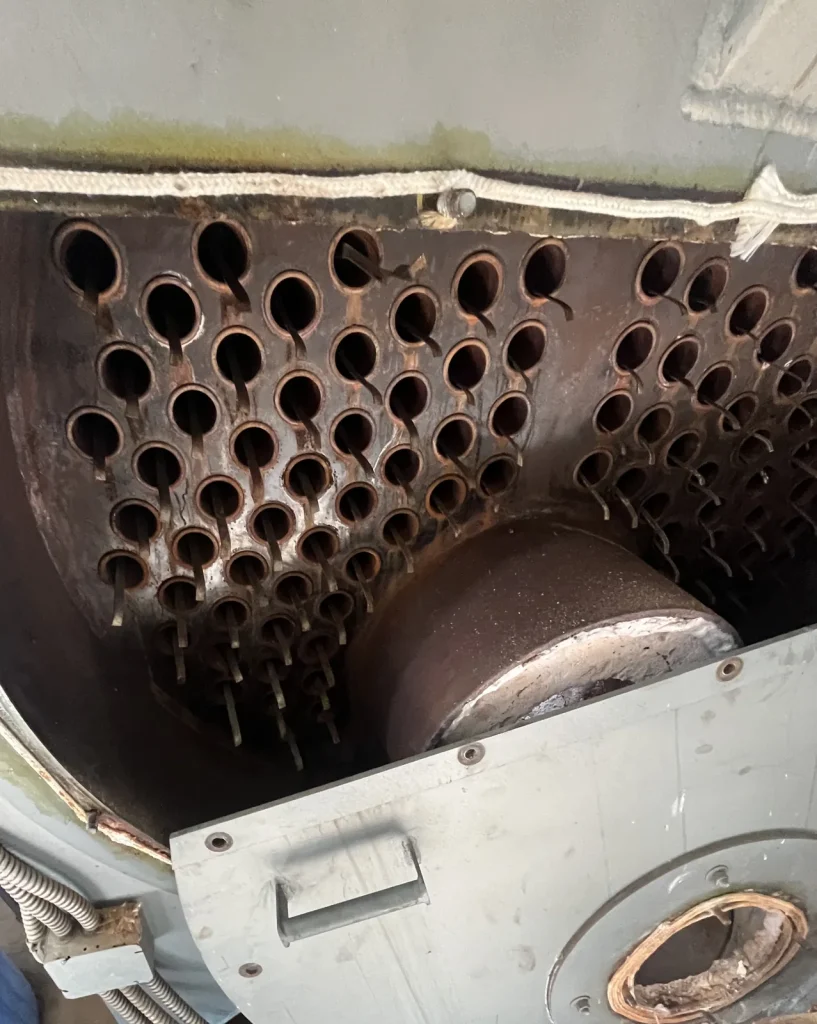
Joint design follows the construction code. Longitudinal and circumferential seams on shells are full penetration butt welds. Nozzles and openings have their own attachment and reinforcement rules. Fire tubes are expanded into the tubesheets and then beaded, seal welded, or both, to match the boiler’s design.
Heat control matters. Preheat slows cooling and drives off moisture, which reduces the risk of hydrogen cracking in thick sections, and low-hydrogen electrodes are kept dry in ovens. Postweld heat treatment relieves residual stress, and the construction code requires it above set thicknesses for each material group. Welding sequence and fixturing control distortion, so heads, tubesheets, and shells stay in alignment.
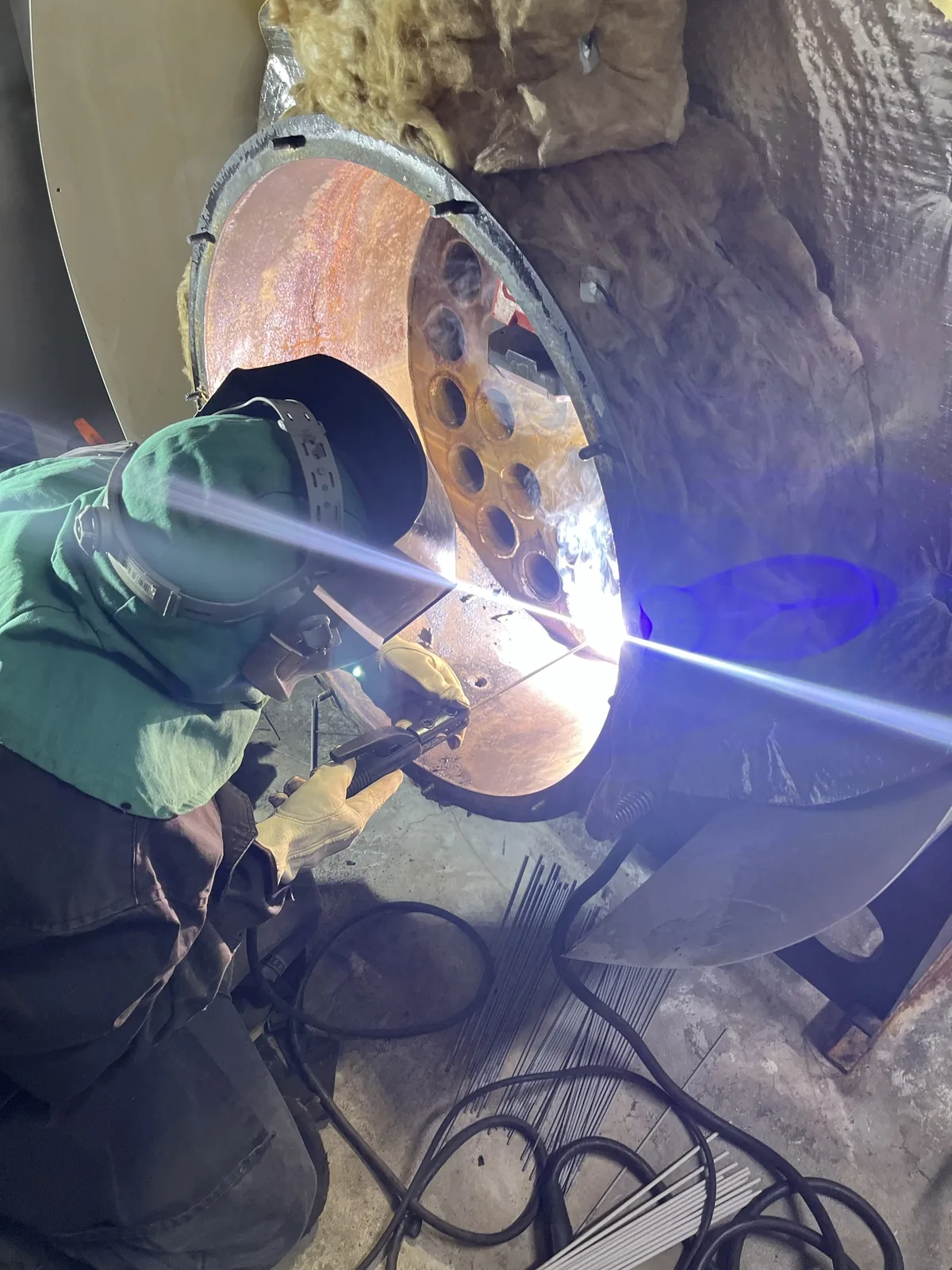
How are welds examined and accepted?
- Visual examination of every weld, for cracks, undercut, porosity, lack of fusion at the surface, and alignment.
- Radiographic (RT) or ultrasonic (UT) examination of butt welds where the code requires it, to find internal defects. Under Section VIII, Division 1, the extent of radiography sets the joint efficiency used in the thickness calculation: 1.00 for full radiography of a double-welded butt joint, 0.85 for spot, and 0.70 for none.
- Magnetic particle (MT) or liquid penetrant (PT) examination for surface and near-surface cracks, where the code or the procedure calls for it.
- A hydrostatic test of the finished vessel. Section I sets it at 1.5 times the maximum allowable working pressure, and Section VIII, Division 1 at 1.3 times, with a stress ratio adjustment.
An Authorized Inspector from an Authorized Inspection Agency monitors the manufacturer’s quality control program, reviews the work, witnesses the hydrostatic test, and signs the Manufacturer’s Data Report. The nameplate is then stamped, and the boiler or vessel is registered with the National Board where the jurisdiction or the owner requires it.
How do weld repairs work on a boiler in service?
Weld repairs and alterations to pressure-retaining parts of a boiler in service are made under NBIC Part 3 by an organization holding a National Board R certificate. In most cases, replacing rolled and beaded tubes is not an R stamp repair; check with your Authorized Inspector. The Authorized Inspector is involved before the work starts, accepts the repair method, inspects the finished work, decides whether a pressure test is needed, and signs the form. Repairs are documented on Form R-1 and alterations on Form R-2. In California, Cal/OSHA is the jurisdiction.
Typical weld repairs include replacing seal-welded tubes, patches in a furnace or shell, building up wasted areas on a tubesheet, and replacing nozzles. Each uses a qualified WPS and qualified welders, the same as new construction. McKenna makes code repairs under its National Board R certificate, including retubes that involve welding, on boilers and pressure vessels from any manufacturer.
What to check before anyone welds on your boiler
- Ask for the firm’s National Board R certificate, its number, and its expiration date.
- Confirm the Authorized Inspector has been notified and has accepted the repair before work starts.
- Ask which WPS will be used and confirm the welders are qualified to it.
- Make the boiler safe: cooled, depressurized, drained, and isolated, with lockout/tagout on fuel, electrical, and water. Follow your site’s hot work and confined space procedures, and ventilate the furnace for welding inside it.
- After the repair, get a copy of the signed R-1 or R-2 and keep it with the boiler records and the original data report.
- Do not allow welding on a pressure part outside the code, whatever the schedule pressure. Let your inspector and insurer know about the repair as they require.
Common questions
Can a certified welder repair my boiler without an R certificate?
Welder qualification covers the person. A code repair also needs a firm with a National Board R certificate, a qualified procedure, and an Authorized Inspector who accepts the work. Without those, the repair is outside the NBIC.
What is the difference between a repair and an alteration?
A repair restores the boiler or vessel to its original design. An alteration changes the design, such as the pressure rating, and needs engineering and the inspector’s acceptance before work begins. Repairs go on Form R-1 and alterations on Form R-2.
What is a seal weld on a boiler tube?
A seal weld is a small weld around the tube end at the tubesheet that makes the joint leak-tight. The tube is expanded into the tubesheet for strength, and the boiler’s design and code of construction set whether the end is beaded, seal welded, or both.
Does every weld repair need a hydrostatic test?
Not always. Under NBIC Part 3, the Authorized Inspector decides whether a pressure test is needed and at what pressure, based on the repair. Alterations generally need one.
What do ASME S, H, M, and U mean?
They are ASME certificates to build to the code: S for power boilers, H for heating boilers, M for miniature boilers, and U for pressure vessels. McKenna Boiler Works, Inc. holds all four, plus a National Board R certificate for repairs and alterations.
For a weld repair on a boiler or pressure vessel, see code repairs or call (323) 987-1816. For new construction, see McKenna firetube boilers.