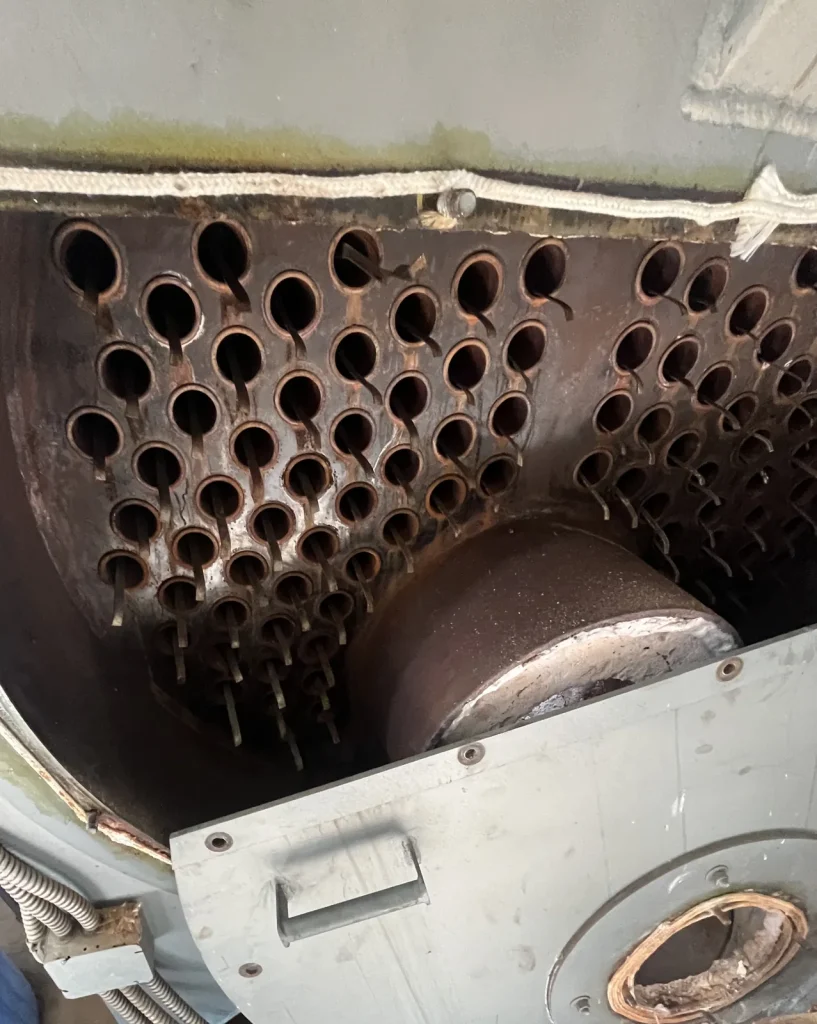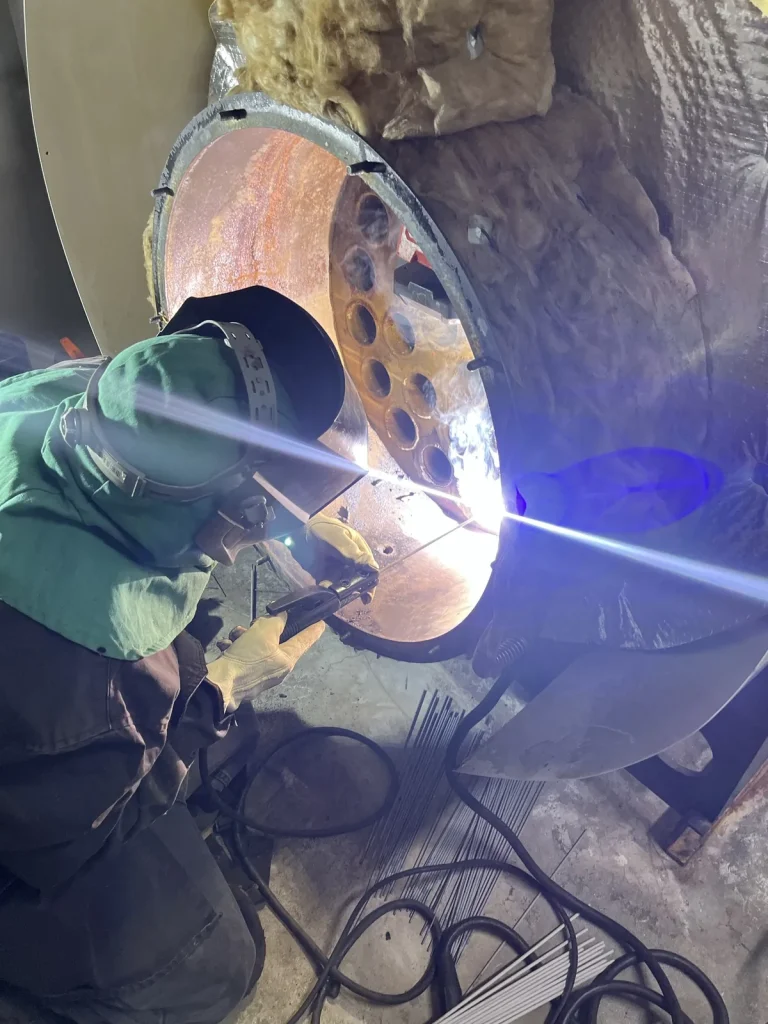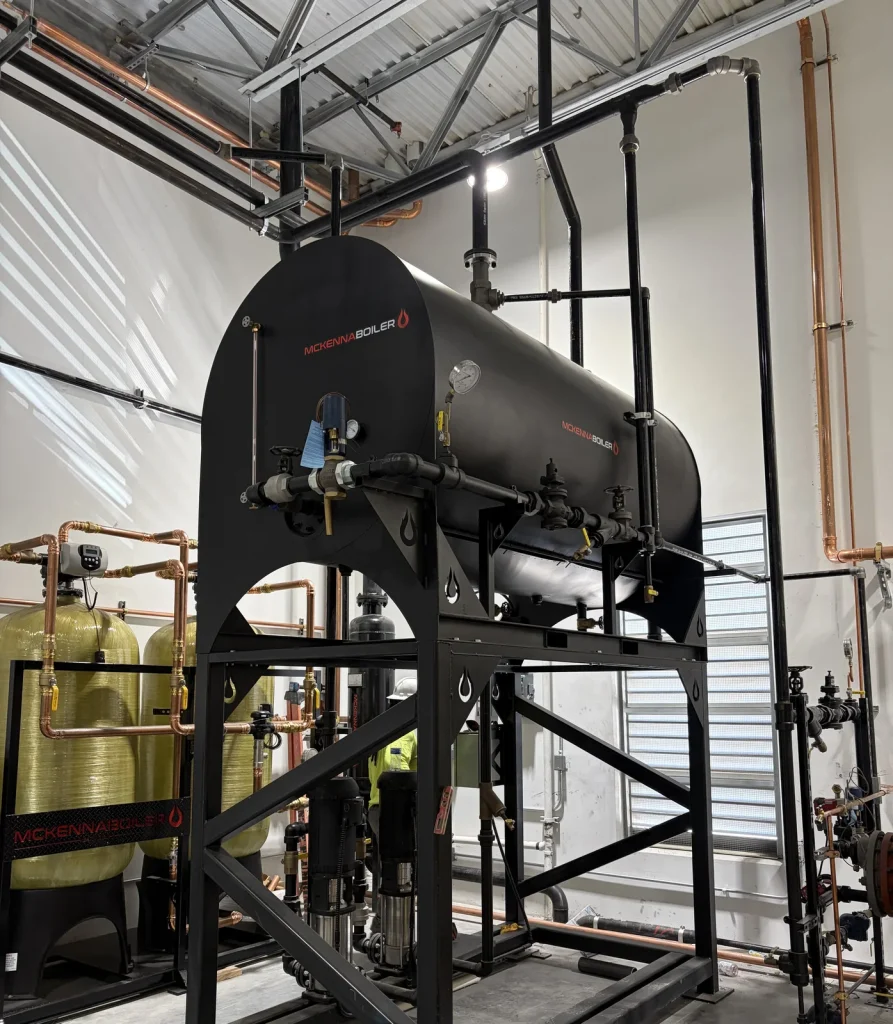


Before a rental boiler arrives, settle the load it has to carry, the utilities it will connect to, where it will sit, the permits you will need, who insures it, and who moves it. McKenna Boiler Works, Inc. rents boilers, and some of McKenna’s rental units already carry South Coast AQMD permits; this post covers what to have ready on your side.
Do define the load before you call
The rental has to match the plant, so start with numbers. Having them in hand when you call shortens the conversation and the lead time:
- Steam or hot water. For steam, the operating pressure and the lowest-rated component in the system. For hot water, supply and return temperatures and flow.
- Peak and minimum load in lb/hr of steam or Btu/hr. One boiler horsepower is 34.5 lb/hr of steam from and at 212°F, or about 33,475 Btu/hr. A boiler sized only for the peak may short-cycle on nights and weekends.
- Fuel. The gas pressure and volume available at the connection point. A rental burner needs a minimum inlet pressure at full fire, and a long temporary run can lose more than expected. A temporary regulator may be needed.
- Duration. A two-week outage and a six-month replacement project lead to different decisions about permits, insurance, and tie-ins.
The rental’s safety valves must protect your system. If the rental’s design pressure is higher than your piping or equipment, either its safety valves are set at or below your lowest-rated component, or a pressure reducing station with its own relief valve sits between them. The boiler sizing calculator helps convert a load into boiler horsepower.
Do plan the tie-ins and the pad
- Steam or water connection. Where the rental ties into your header, with an isolation valve and a check valve where needed.
- Feedwater. Whether the rental feeds from your feedwater tank and pumps or brings its own, and whether softened makeup water is available.
- Condensate. Whether condensate returns to your system or the rental’s.
- Blowdown. Boiler blowdown is hot and under pressure. The California Plumbing Code (Section 810.1) does not allow water above 140°F to be discharged under pressure directly into a drainage system, and your sewer agency may set its own limits, so plan for a blowdown tank or separator.
- Electrical. Voltage, phase, and amperage for the burner fan, feed pump, and controls.
- Stack. Stack height and its distance from building air intakes, windows, and roof edges.
- Pad and access. A level surface that can carry the loaded weight, with room for the truck or crane that sets it.
Don’t overlook the permits
A rental boiler is still a boiler. In California, a steam power boiler (above 15 psig) needs a Cal/OSHA permit to operate; low-pressure boilers are exempt from the annual inspection and permit under 8 CCR 771 if their required controls are fitted and maintained. The burner needs air district approval where it runs. In the South Coast AQMD, Rules 1146, 1146.1, and 1146.2 set NOx limits by boiler size. Some McKenna rental boilers already carry South Coast AQMD permits; ask whether a given unit’s permit fits your site and how long you need it. The San Joaquin Valley APCD and the Bay Area AQMD have their own rules, so check with the district before the boiler is set.
The customer is responsible for all permits for a McKenna rental. Ask McKenna for the unit’s ratings, data plate information, and emissions data that the applications need.
Don’t skip insurance and transport
Settle in writing who carries the risk while the boiler is on the road, while it sits on your site, and while it runs. Rental agreements often require the customer to insure the unit on site, and your boiler and machinery insurer may want notice before a temporary boiler is connected. Ask who arranges the truck, the crane, and the rigging, and who pays for each.
Do plan startup, operation, and return
A technician should start up the rental, set the burner, and test the safety controls before it goes on line. Once it runs, it needs the same care as a permanent boiler: a trained operator on each shift, daily checks, and your water treatment company setting the chemical program for the water the rental will use. When the rental leaves, it is shut down, depressurized, and cooled before it is drained, and returned in the condition the agreement calls for.
What to have ready: a rental checklist
- Load: steam pressure or water temperatures, peak and minimum load, and duration.
- Utilities: gas pressure and volume at the connection, electrical service, softened makeup water.
- Tie-in points: steam or water, feedwater, condensate, blowdown drain.
- Location: pad, access, stack clearance, photos of the area.
- Permits: Cal/OSHA and air district, filed by the customer.
- Insurance and transport, agreed in writing.
- Operators and water treatment company lined up before startup.
Any work on the tie-ins, fuel, or water level follows the manufacturer’s instructions, lockout/tagout, and your site’s procedures.
Common questions
How quickly can a rental boiler be running?
It depends on the unit available, the permits, and how ready the site is. A site with the load defined, a pad ready, and tie-in points identified moves much faster. Call early, even before you are sure you need it.
Who gets the permits for a rental boiler?
A steam power boiler (above 15 psig) needs a Cal/OSHA permit to operate, and the burner needs air district approval where it runs. The customer is responsible for all permits. Ask McKenna for the unit’s ratings, data plate information, and emissions data. Some McKenna rentals already carry South Coast AQMD permits, which can shorten that step.
Does a rental boiler need water treatment?
Yes. It is exposed to the same scale and oxygen as a permanent boiler. Your water treatment company should set the program for the rental before it starts.
Can a rental boiler connect to our existing steam header?
Usually, through a temporary connection with an isolation valve. The rental’s pressure rating and safety valve settings have to suit the system it feeds. A technician confirms that before startup.
What information should we have when we call?
The load, pressure, fuel, available utilities, how long you need the boiler, and photos of where it will sit. That is enough to match a unit and start on permits.
McKenna rents boilers for planned outages, replacements, and failures. To check availability, see boiler rentals, or for a failed boiler, emergency service. Call (323) 987-1816.